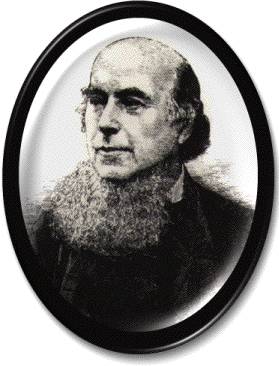
|
||||||||||||||||||||||||||||||
 |
||||||||||||||||||||||||||||||
|
||||||||||||||||||||||||||||||
|
||||||||||||||||||||||||||||||
 |
||||||||||||||||||||||||||||||
|
||||||||||||||||||||||||||||||
|
||||||||||||||||||||||||||||||
|
||||||||||||||||||||||||||||||
|
||||||||||||||||||||||||||||||
|
||||||||||||||||||||||||||||||
|
||||||||||||||||||||||||||||||
|
||||||||||||||||||||||||||||||
|
||||||||||||||||||||||||||||||
|
||||||||||||||||||||||||||||||



|
Page 4 |
|


| Chapter 46 | The Holy Fathers- New Mental Troubles at not finding the Doctines of my Church in their Writings- Purgatory and the Sucking Pig of the Poor Man of Varennes |
| Chapter 47 | Letter from the Rev. Bishop Vandeveld, of Chicago- Vast Project of the Bishop of the United States to take Possession of the Rich Valley of the Mississippi and the Prairies of the West to Rule that Great Republic- They want to put me at the Heart of the Work- My Lectures on Temperance at Detroit- Intemperance of the Bishops and Priests of that City |
| Chapter 48 | My Visit to Chicago in 1857- Bishop Vandeveld- His Predecessor Poisoned- Magnificent Prairies of the West- Return to Canada- Bad feelings of Bishop Bourget- I decline sending a Rich Woman to the Nunnery to enrich the Bishop- A Plot to destroy me |
| Chapter 49 | The Plot to destroy me- The Interdict- The Retreat at the Jesuit's College- The Lost Girl, employed by the Bishop, Retracts- The Bishop Confounded, sees his Injustice, makes Amends- Testimonial Letters- The Chalice- The Benediction before I leave Canada |
| Chapter 50 | Address presented me at Longueuil- I arrive at Chicago- I select the spot for my Colony- I build the first Chapel- Jealousy and Opposition of the Priests of Bourbounais and Chicago- Great Success of the Colony |
| Chapter 51 | Intrigues, Impostures, and Criminal Life of the Priests in Bourbounais- Indignation of the Bishop- The People ignominiously turn out the Criminal Priest from their Parish- Frightful Scandal- Faith in the Church of Rome seriously shaken |
| Chapter 52 | Correspondence with the Bishop |
| Chapter 53 | The Immaculate Conception of the Virgin Mary |
| Chapter 54 | The Abominations of Auricular Confession |
| Chapter 55 | The Ecclesiastical Retreat- Conduct of the Priests- The Bishop forbids me to distribute the Bible |
| Chapter 56 | Public Acts of Simony- Thefts and Brigandage of Bishop O'Regan- General Cry of Indignation- I determine to Resist him to his Face- He employs Mr. Spink again to send me to Gaol, and he Fails- Drags me as a Prisoner to Urbana in the Spring of 1856, and Fails again- Abraham Lincoln defends me- My dear Bible becomes more than ever my Light and my Counsellor |
| Chapter 57 | Bishop O'Regan sells the Parsonage of the French Canadians of Chicago, pockets the Money, and turns them out when they ocme to complain- He determines to turn me out of my Colony and send me to Kahokia- He forgets it the next day and publishes that he has interdicted me- My People send a Deputation to the Bishop- His Answers- The Sham Excommunication by Three Drunken Priests |
| Chapter 58 | Address from my People, asking me to Remain- I am again dragged as a Prisoner by the Sheriff to Urbana- Abraham Lincoln's Anxiety about the issue of the Prosecution- My Distress- The Rescue- Miss Philomene Moffat sent by God to save me- Lebel's Confession and Distress- My Innocence acknowledged- Noble Words and Conduct of Abraham Lincoln- The Oath of Miss Philomene Moffat |
CHAPTER 46 Back
to Top
The most desolate work of a sincere Catholic priest is the study of the Holy Fathers.
He does not make a step in the labyrinth of their discussions and controversies without
seeing the dreams of his theological studies and religious views disappear as the
thick morning mist, when the sun rises above the horizon. Bound as he is, by a solemn
oath, to interpret the Holy Scriptures only according to the unanimous consent of
the Holy Fathers, the first thing which puzzles and distresses him is their absolute
want of unanimity on the greater part of the subjects which they discuss. The fact
is, that more than two-thirds of what one Father has written is to prove that what
some other Holy Father has written is wrong and heretical.
The student of the Fathers not only detects that they do not agree with one another,
but finds that many of them do not even agree with themselves. Very often they confess
that they were mistaken when they said this or that; that they have lately changed
their minds; that they now hold for saving truth what they formerly condemned as
a damning error!
What becomes of the solemn oath of every priest in presence of this undeniable fact?
How can he make an act of faith when he feels that its foundation is nothing but
falsehood?
No words can give an idea of the mental tortures I felt when I saw positively that
I could not, any longer, preach on the eternity of the suffering of the damned, nor
believe in the real presence of the body, soul, and divinity of Christ in the sacrament
of communion; nor in the supremacy of the sovereign Pontiff of Rome, nor in any of
the other dogmas of my church, without perjuring myself! For there was not one of
those dogmas which had not been flatly and directly denied by some Holy Fathers.
It is true, that in my Roman Catholic theological books I had long extracts of Holy
Fathers, very clearly supporting and confirming my faith in those dogmas. For instance,
I had the apostolic liturgies of St. Peter, St. Mark, and St. James, to prove that
the sacrifice of the mass, purgatory, prayers for the dead, transubstantiation, were
believed and taught from the very days of the apostles. But what was my dismay when
I discovered that those liturgies were nothing else than vile and audacious forgeries
presented to the world, by my Popes and my church, as gospel truths. I could not
find words to express my sense of shame and consternation, when I became sure that
the same church which had invented those apostolical liturgies, had accepted and
circulated the false decretals of Isidore, and forged innumerable additions and interpolations
to the writings of the Holy Fathers, in order to make them say the very contrary
of what they intended.
How many times, when alone, studying the history of the shameless fabrications, I
said to myself: "Does the man whose treasury is filled with pure gold, forge
false coins, or spurious pieces of money? No! How, then, is it possible that my church
possess the pure truth, when she has been at work during so many centuries, to forge
such egregious lies, under the names of liturgies and decretals, about the holy mass,
purgatory, the supremacy of the Pope, ect. If those dogmas could have been proved
by the gospel and the true writings of the Fathers, where was the necessity of forging
lying documents? Would the Popes and councils have treasuries with spurious bank
bills, if they had had exhaustless mines of pure gold in hand? What right has my
church to be called holy and infallible, when she is publicly guilty of such impostures."
From my infancy I had been taught, with all the Roman Catholics, that Mary is the
mother of God, and many times, every day, when praying to her, I used to say, "Holy
Mary, mother of God, pray for me." But what was my distress when I read in the
"Treatise on Faith and Creed," by Augustine, Chapter iv. 9, these very
words: "When the Lord said, 'Woman, what have I to do with thee? Mine hour is
not yet come' (John ii. 4), He rather admonishes us to understand that, in respect
of His being God, there was no mother for Him."
This was so completely demolishing the teachings of my church, and telling me that
it was blasphemy to call Mary mother of God, that I felt as if struck with a thunderbolt.
Several volumes might be written, if my plan were to give the story of my mental
agonies, when reading the Holy Fathers. I found their furious battles against each
other, and reviewed their fierce divisions on almost every subject. The horror of
many of them, at the dogmas which my church had taught to make me believe from my
infancy, as the most solemn and sacred revelations of God to man, such as transubstantiation,
auricular confession, purgatory, the supremacy of Peter, the absolute supremacy of
the Pope over the whole Church of Christ. Yes! what thrilling pages I would give
to the world, were it my intention to portray, in their true colours, the dark clouds,
the flashing lights and destructive storms which, during the long and silent hours
of many nights I spent in comparing the Fathers with the Word of God and the teachings
of my church. Their fierce and constant conflicts; their unexpected, though undeniable
oppositions to many of the articles of the faith I had to believe and preach, were
coming to me, day after day, as the barbed darts thrown at the doomed whale when
coming out of the dark regions of the deep to see the light and breathe the pure
air.
Thus, as the unexpected contradictions of the Holy Fathers to the tenets of my church,
and their furious and uncharitable divisions among themselves, were striking me,
I plunged deeper and deeper in the deep waters of the Fathers and the Word of God,
with the hope of getting rid of the deadly darts which were piercing my Roman Catholic
conscience. But, it was in vain. The deeper I went, the more the deadly weapons would
stick to the flesh and bone of my soul. How deep was the wound I received from Gregory
the Great, one of the most learned Popes of Rome, against the supremacy and universality
of the power of the Pope of Rome as taught today, the following extracts from his
writings will show: "I say confidently, Whosoever calls himself Universal Priest,
or desires so to be called, is in his pride the forerunner of Antichrist, because,
in his pride, he sets himself before the rest." [*]
These words wounded me very painfully. I showed them to Mr. Brassard, saying: "Do
you not see here the incontrovertible proof of what I have told you many times, that,
during the first six centuries of Christianity, we do not find the least proof that
there was anything like our dogma of the supreme power and authority of the Bishop
of Rome, or any other bishop, over the rest of the Christian world? If there is anything
which comes to the mind with an irresistible force, when reading the Fathers of the
first centuries, it is that, not one of them had any idea that there was, in the
church, any man chosen by God, to be, in fact or name, the universal and supreme
Pontiff. With such an undeniable fact before us, how can we believe and say that
the religion we profess and teach is the same which was preached from the beginning
of Christianity?"
"My dear Chiniquy," answered Mr. Brassard, "did I not tell you, when
you bought the Holy Fathers, that you were doing a foolish and dangerous thing? In
every age, the man who singularizes himself and walks out of the common tracks of
life is subject to fall into ridicule. As you are the only priest in Canada who has
the Holy Fathers, it is thought and said, in many quarters, that it is through pride
you got them; that it is to raise yourself above the rest of the clergy, that you
study them, not at home, but that you carry some wherever you go. I see, with regret,
that you are fast losing ground in the mind, not only of the bishop, but of the priests
in general, on account of your indomitable perseverance in giving all your spare
time to their study. You are also too free and imprudent in speaking of what you
call the contradictions of the Holy Fathers, and their want of harmony with some
of our religious views. Many say that this too great application to study, without
a moment of relaxation, will upset your intelligence and trouble your mind. They
even whisper that there is danger ahead of your faith, which you do not suspect,
and that they would not be surprised if the reading of the Bible and the Holy Fathers
would drive you into the abyss of Protestantism. I know that they are mistaken, and
I do all in my power to defend you. But, I thought, as your most devoted friend,
that it was my duty to tell you those things, and warn you before it is too late."
I replied: "Bishop Prince told me the very same things, and I will give you
the answer he got from me; 'When you ordain a priest, do you not make him swear that
he will never interpret the Holy Scriptures except according to the unanimous consent
of the Holy Fathers? Ought you not, then, to know what they teach? For, how can we
know their unanimous consent without studying them? Is it not more than strange that,
not only the priests do not study the Holy Fathers, but the only one in Canada who
is trying to study them, is turned into ridicule and suspected of heresy? Is it my
fault if that precious stone, called 'unanimous consent of the Holy Fathers,' which
is the very foundation of our religious belief and teaching, is to be found nowhere
in them? Is it my fault if Origen never believed in the eternal punishment of the
damned; if St. Cyprian denied the supreme authority of the Bishop of Rome; if St.
Augustine positively said that nobody was obliged to believe in purgatory; if St.
John Chrysostom publicly denied the obligation of auricular confession, and the real
presence of the body of Christ in the eucharist? Is it my fault if one of the most
learned and holy Popes, Gregory the Great, has called by the name of Antichrist,
all his successors, for taking the name of supreme Pontiff, and trying to persuade
the world that they had, by divine authority, a supreme jurisdiction and power over
the rest of the church?"
"And what did Bishop Prince answer you?" rejoined Mr. Brassard.
"Just as you did, by expressing his fears that my too great application to the
study of the Bible and the Holy Fathers, would either send me to the lunatic asylum,
or drive me into the bottomless abyss of Protestantism."
I answered him, in a jocose way: "That if the too great study of the Bible and
the Holy Fathers were to open me the gates of the lunatic asylum, I feared I would
be left alone there, for I know that they are keeping themselves at a respectable
distance from those dangerous writings." I added seriously, "So long as
God keeps my intelligence sound, I cannot join the Protestants, for the numberless
and ridiculous sects of these heretics are a sure antidote against their poisonous
errors. I will not remain a good Catholic on account of the unanimity of the Holy
Fathers, which does not exist, but I will remain a Catholic on account of the grand
and visible unanimity of the prophets, apostles, and the evangelists with Jesus Christ.
My faith will not be founded upon the fallible, obscure, and wavering words of Origen,
Tertullian, Chrysostom, Augustine, or Jerome; but on the infallible word of Jesus,
the Son of God, and of His inspired writers: Matthew, Mark, Luke, John, Peter, James,
and Paul. It is Jesus, and not Origen, who will now guide me; for the second was
a sinner, like myself, and the first is for ever my Saviour and my God. I know enough
of the Holy Fathers to assure your lordship that the oath we take of accepting the
Word of God according to their unanimous consent is a miserable blunder, if not a
blasphemous perjury. It is evident that Pius IV., who imposed the obligation of that
oath upon us all, never read a single volume of the Holy Fathers. He would not have
been guilty of such an incredible blunder, if he had known that the Holy Fathers
are unanimous in only one thing, which is to differ from each other on almost everything;
except, we suppose, that, like the last Pope, he was too fond of good champagne,
and that he wrote that ordinance after a luxurious dinner."
I spoke this last sentence in a half-serious and half-joking way.
The Bishop answered: "Who told you that about our last Pope?" "Your
lordship," I answered, "told me that, when you complimented me on the apostolical
benediction which the present Pope sent me through my Lord Baillargeon, 'that his
predecessor would not have given me his benediction for preaching temperance, because
he was too fond of wine!'"
"Oh yes! yes! I remember it now," answered the bishop. "But it was
a bad joke on my part, which I regret."
"Good or bad joke," I replied, "it is not the less a fact that our
last Pope was too fond of wine. There is not a single priest of Canada who has gone
to Rome without bringing that back as a public fact from Italy."
"And what did my Lord Prince say to that," asked again Mr. Brassard.
"Just as when he was cornered by me, on the subject of the Virgin Mary, he abruptly
put an end to the conversation by looking at his watch, and saying that he had a
call to make at that very hour."
Not long after that painful conversation about the Holy Fathers, it was the will
of God, that a new arrow should be thrust into my Roman Catholic conscience, which
went through and through, in spite of myself.
I had been invited to give a course of three sermons at Vareness. The second day,
at tea time, after preaching and hearing confessions for the whole afternoon, I was
coming from the church with the curate, when, half-way to the parsonage, we were
met by a poor man, who looked more like one coming out of the grave, than a living
man; he was covered with rags, and his pale and trembling lips indicated that he
was reduced to the last degree of human misery. Taking off his hat, through respect
for us, he said to Rev. Primeau, with a trembling voice: "You know, Mr. le Cure,
that my poor wife died, and was buried ten days ago, but I was too poor to have a
funeral service sung the day she was buried, and I fear she is in purgatory, for
almost every night I see her, in my dreams, wrapped up in burning flames. She cries
to me for help, and asks me to have a high mass sung for the rest of her soul. I
come to ask you to be so kind as to sing that high mass for her."
"Of course," answered the curate, "your wife is in the flames of purgatory,
and suffers there the most unspeakable tortures, which can be relieved only by the
offering of the holy sacrifice of mass. Give me five dollars and I will sing that
mass to-morrow morning."
"You know very well, Mr. le Cure," answered the poor man, in a most supplicating
tone, "that my wife has been sick, as well as myself, a good part of the year.
I am too poor to give you five dollars!"
"If you cannot pay, you cannot have any mass sung. You know it is the rule.
It is not in my power to change it."
These words were said by the curate with a high and unfeeling tone, which were in
absolute contrast with the solemnity and distress of the poor sick man. They made
a very painful impression upon me, for I felt for him. I know the curate was well-off,
at the head of one of the richest parishes of Canada; that he had several thousand
dollars in the bank. I hoped, at first, that he would kindly grant the petition presented
to him without speaking of the pay, but I was disappointed. My first thought, after
hearing this hard rebuke, was to put my hand in my pocket and take out one of the
several five-dollar gold pieces I had, and give it to the poor man, that he might
be relieved from his terrible anxiety about his wife. It came also to my mind to
say to him: "I will sing you high mass for nothing to-morrow." But alas!
I must confess, to my shame, I was too cowardly to do that noble deed. I had a sincere
desire to do it, but was prevented by the fear of insulting that priest, who was
older than myself, and for whom I had always entertained great respect. It was evident
to me that he would have taken my action as a condemnation of his conduct. When I
was feeling ashamed of my own cowardice, and still more indignant against myself
than against the curate, he said to the disconcerted poor man: "That woman is
your wife; not mine. It is your business, and not mine, to see how to get her out
of purgatory."
Turning to me, he said, in the most amiable way: "Please, sir, come to tea."
We hardly started, when the poor man, raising his voice, said, in a most touching
way: "I cannot leave my poor wife in the flames of purgatory; if you cannot
sing a high mass, will you please say five low masses to rescue her soul from those
burning flames?"
The priest turned towards him and said: "Yes, I can say five masses to take
the soul of your wife out of purgatory, but give me five shillings; for you know
the price of a low mass is one shilling."
The poor man answered: "I can no more give one dollar than I can five. I have
not a cent; and my three poor little children are as naked and starving as myself."
"Well! well," answered the curate, "when I passed this morning before
your house, I saw two beautiful sucking pigs. Give me one of them, and I will say
your five low masses."
The poor man said: "These small pigs were given me by a charitable neighbour,
that I might raise them to feed my poor children next winter. They will surely starve
to death, if I give my pigs away."
But I could not listen any longer to that strange dialogue; every word of which fell
upon my soul as a shower of burning coals. I was beside myself with shame and disgust.
I abruptly left the merchant of souls finishing his bargains, went to my sleeping-room,
locked the door, and fell upon my knees to weep to my heart's content.
A quarter of an hour later, the curate knocked at my door, and said, "Tea is
ready; please come down!" I answered: "I am not well; I want some rest.
Please excuse me if I do not take my tea to-night."
It would require a more eloquent pen than mine, to give the correct history of that
sleepless night. The hours were dark and long.
"My God! my God!" I cried, a thousand times, "is it possible that,
in my so dear Church of Rome, there can be such abominations as I have seen and heard
today? Dear and adorable Saviour, if Thou wert still on earth, and should see the
soul of a daughter of Israel fallen into a burning furnace, wouldst Thou ask a shilling
to take it out? Wouldst Thou force the poor father, with his starving children, to
give their last morsel of bread, to persuade Thee to extinguish the burning flames?
Thou hast shed the last drop of Thy blood to save her. And how cruel, how merciless,
we, Thy priests, are, for the same precious soul! But are we really Thy priests?
Is it not blasphemous to call ourselves Thy priests, when not only we will not sacrifice
anything to save that soul, but will starve the poor husband and his orphans? What
right have we to extort such sums of money from Thy poor children to help them out
of purgatory? Do not Thy apostles say that Thy blood alone can purify the soul?
"Is it possible that there is such a fiery prison for the sinners after death,
and that neither Thyself nor any of Thy apostles has said a word about it? Several
of the Fathers consider purgatory as of Pagan origin. Tertullian spoke of it only
after he had joined the sect of the Montanists, and he confesses that it is not through
the Holy Scriptures, but through the inspiration of the Paraclete of Montanus that
he knows anything about purgatory. Augustine, the most learned and pious of the Holy
Fathers, does not find purgatory in the Bible, and positively says that its existence
is dubious; that every one may believe what he thinks proper about it. Is it possible
that I am so mean as to have refused to extend a helping hand to that poor distressed
man, for fear of offending the cruel priest? "We priests believe, and say that
we can help souls out of the burning furnace of purgatory, by our prayers and masses:
but instead of rushing to their rescue, we turn to the parents, friends, the children
of those departed souls, and say: 'Give me five dollars; give me a shilling, and
I will put an end to those tortures; but if you refuse us that money, we will let
your father, husband, wife, child, or friend endure those tortures, hundreds of years
more! Would not the people throw us into the river, if they could once understand
the extent of our meanness and avarice? Ought we not to be ashamed to ask a shilling
to take out of the fire a human being who calls us to the rescue? Who, except a priest,
can descend so low in the regions of depravity?"
It would take too long to give the thoughts which tortured me during that terrible
night. I literally bathed my pillow with my tears. Before saying my mass next morning,
I went to confess my criminal cowardice and want of charity towards that poor man,
and also the terrible temptation against my faith which tortured my conscience during
the long hours of that night! And I repaired my cowardice by giving five dollars
to that poor man.
I spent the morning in hearing confessions till ten o'clock, when I delivered a very
exciting sermon on the malice of sin, proved by the sufferings of Christ on the cross.
This address gave a happy diversion to my mind, and made me forget the sad story
of the sucking pig. After the sermon, the curate took me by the hand to his dining-room,
where he gave me, in spite of myself, the place of honour.
He had the reputation of having one of the best cooks of Canada, in the widow of
one of the governors of Nova Scotia, whom he had as his housekeeper. The dishes before
our eyes did not diminish his good reputation. The first dish was a sucking pig,
roasted with an art and perfection as I had never seen; it looked like a piece of
pure gold, and its smell would have brought water to the lips of the most penitent
anchorite.
I had not tasted anything for the last twenty-four hours; had preached two exciting
sermons, and spent six hours in hearing confessions. I felt hungry; and the sucking
pig was the most tempting thing to me. It was a real epicurean pleasure to look at
it and smell its fragrance. Besides, that was a favourite dish with me. I cannot
conceal that it was with real pleasure that I saw the curate, after sharpening his
long, glittering knife on the file, cutting a beautiful slice from the shoulder,
and offering it to me. I was too hungry to be over patient. My knife and fork had
soon done their work. I was carrying to my mouth the tempting and succulent mouthful
when, suddenly, the remembrance of the poor man's sucking pig came to my mind. I
laid the piece on my plate, and with painful anxiety, looked at the curate and said:
"Will you allow me to put you a question about this dish?"
"Oh! yes: ask me not only one, but two questions, and I will be happy to answer
you to the best of my ability," answered he, with his fine manners.
"Is this the sucking pig of the poor man of yesterday?" I asked.
With a convulsive fit of laughter, he replied: "Yes; it is just it. If we cannot
take away the soul of the poor woman out of the flames of purgatory, we will, at
all events, eat a fine sucking pig!" The other thirteen priests filled the room
with laughter, to show their appreciation of their host's wit.
However, their laughter was not of long duration. With a feeling of shame and uncontrollable
indignation, I pushed away my plate with such force, that it crossed the table and
nearly fell on the floor; saying, with a sentiment of disgust which no pen can describe:
"I would rather starve to death than eat of that execrable dish; I see in it
the tears of the poor man; I see the blood of his starving children; it is the price
of a soul. No! no, gentlemen; do not touch it. You know, Mr. Curate, how 30,000 priests
and monks were slaughtered in France, in the bloody days 1792. It was for such iniquities
as this that God Almighty visited the church in France. The same future awaits us
here in Canada, the very day that people will awaken from their slumber and see that,
instead of being ministers of Christ, we are the vile traders of souls, under the
mask of religion."
The poor curate, stunned by the solemnity of my words, as well as by the consciousness
of his guilt, lisped some excuse. The sucking pig remained untouched; and the rest
of the dinner had more the appearance of a burial ceremony than of a convivial repast.
By the mercy of God, I had redeemed my cowardice of the day before. But I had mortally
wounded the feelings of that curate and his friends, and for ever lost their goodwill.
It is in such ways that God was directing the steps of His unprofitable servant through
ways unknown to him. Furious storms were constantly blowing around my fragile bark,
and tearing my sails into fragments. But every storm was pushing me, in spite of
myself, towards the shores of eternal life, where I was to land safely, a few years
later.
.
CHAPTER 47 Back
to Top
On the 15th of December, 1850, I received the following letter:
"Chicago, Ill., December 1st, 1850.
"Rev. Father Chiniquy:
"Apostle of Temperance of Canada.
"Dear Sir: When I was in Canada, last fall, I intended to confer with you on
a very important subject, but you were then working in the diocese of Boston, and
my limited time prevented me from going so far to meet you. You are aware that the
lands of the State of Illinois and the whole valley of the Mississippi are among
the richest and most fertile of the world. In a near future, those regions, which
are now a comparative wilderness, will be the granary, not only of the United States,
but of the whole world; and those who will possess them will not only possess the
very heart and arteries of this young and already so great republic, but will become
its rulers.
"It is our intention, without noise, to take possession of those vast and magnificent
regions of the west in the name and for the benefit of our holy Church. Our plan
to attain that object, is as sure as easy. There is, every year, an increasing tide
of emigration from the Roman Catholic regions of Europe and Canada towards the United
States. Unfortunately, till now, our emigrants have blindly scattered themselves
among the Protestant populations, which too often absorb them and destroy their faith.
"Why should we not direct their steps to the same spot? Why should we not, for
instance, induce them to come and take possession of these fertile states of Illinois,
Missouri, Iowa, Kansas, ect. They can get those lands now, at a nominal price. If
we succeed, as I hope we will, our holy Church will soon count her children here
by ten and twenty millions, and through their numbers, their wealth and unity, they
will have such a weight in the balance of power that they will rule everything.
"The Protestants, always divided among themselves, will never form any strong
party without the help of the united vote of our Catholic people; and that party
alone, which will ask and get our help by yielding to our just demands, will rule
the country. Then, in reality, though not in appearance, our holy Church will rule
the United States, as she is called by our Saviour Himself to rule the whole world.
There is, today, a wave of emigrants from Canada towards the United States, which,
if not stopped or well directed, is threatening to throw the good French Canadian
people into the mire of Protestantism. Your countrymen, when once mixed with the
numberless sects which try to attract them, are soon shaken in their faith. Their
children sent to Protestant schools, will be unable to defend themselves against
the wily and united efforts made to pervert them.
"But put yourself at the head of the emigrants from Canada, France and Belgium;
prevent them from settling any longer among the Protestants, by inducing them to
follow you to Illinois, and with them, you will soon see here, a Roman Catholic people,
whose number, wealth and influence will amaze the world. God Almighty has wonderfully
blessed your labours in Canada in that holy cause of temperance. But now the work
is done, the same Great God presents to your Christian ambition a not less great
and noble work for the rest of your life. Make use of your great influence over your
countrymen to prevent them from scattering any longer among Protestants, by inducing
them to come here, in Illinois. You will then lay the foundation of a Roman Catholic
French people, whose piety, unity, wealth and number will soon renew and revive,
on this continent, the past and fading glories of the Church of France.
"We have already, at Bourbonnais, a fine colony of French Canadians. They long
to see and hear you. Come and help me to make that comparatively small, though thriving
people, grow with the immigrants from the French-speaking countries of Europe and
America, till it covers the whole territory of Illinois with its sturdy sons and
pious daughters. I will ask the Pope to make you my coadjutor, and you will soon
become my successor, for I already feel too weak and unhealthy to bear alone the
burden of my too large diocese.
"Please consider what I propose to you before God, and answer me. But be kind
enough to consider this overture as strictly confidential between you and me, till
we have brought our plans into execution.
"Truly yours, Olvi Vandeveld,
"Bishop of Chicago."
I answered him that the Bishops of Boston, Buffalo and Detroit, had already advised
me to put myself at the head of the French Canadian immigration, in order to direct
its tide towards the vast and rich regions of the west. I wrote him that I felt as
he did, that it was the best way to prevent my countrymen from falling into the snares
laid before them by Protestants, among whom they were scattering themselves. I told
him that I would consider it a great honour and privilege to spend the last part
of my life in extending the power and influence of our holy Church over the Untied
States, and that I would, in June next, pay my respects to him in Chicago, when on
my way towards the colony of my countrymen at Bourbonnais Grove. I added that after
I should have seen those territories of Illinois and the Mississippi valley, with
my own eyes, it would be more easy to give him a definite answer. I ended my letter
by saying: "But I respectfully request your lordship to give up the idea of
selecting me for your coadjutor, or successor. I have already twice refused to become
a bishop. That high dignity is too much above my merits and capacities to be ever
accepted by me. I am happy and proud to fight the battles of our holy Church; but
let my superiors allow me to continue to remain in her ranks as a simple soldier,
to defend her honour and extend her power. I may, then, with the help of God, do
some good. But I feel, and know that I would spoil everything, if raised to an elevated
position, for which I am not fit."
Without speaking to anybody of the proposition of the Bishop of Chicago, I was preparing
to go and see the new field where he wanted me to work, when, in the beginning of
May, 1851, I received a very pressing invitation from my Lord Lefebre, Bishop of
Detroit, to lecture on temperance to the French Canadians who were, then, forming
the majority of the Roman Catholics of that city.
That bishop had taken the place of Bishop Rese, whose public scandals and infamies
had covered the whole Catholic Church of America with shame. During the last years
he had spent in his diocese, very few weeks had past without his being picked up
beastly drunk in the lowest taverns, and even in the streets of Detroit, and dragged,
unconscious to his place.
After long and vain efforts to reform him, the Pope and bishops of America had happily
succeeded in persuading him to go to Rome, and pay his respects to the so-called
vicar of Jesus Christ. This was a snare too skillfully laid to be suspected by the
drunken bishop. He had hardly set his feet in Rome when the inquisitors threw him
into one of their dungeons, where he remained till the republicans set him at liberty,
in 1848, after Pope Pius IX. had fled to Civita Vecchia. In order to blot out from
the face of his Church the black spots with which his predecessor had covered it,
Bishop Lefebre made the greatest display of zeal for the cause of temperance. As
soon as he was inducted, he invited his people to follow his example and enroll themselves
under its banners, in a very powerful address on the evils caused by the use of intoxicating
drinks. At the end of his eloquent sermon, laying his right hand on the altar, he
made a solemn promise never to drink any alcoholic liquors.
His telling sermon on temperance, with his solemn and public promise, were published
through almost all the papers of that time, and I read it many times to the people
with good effect. When, on my way to Illinois, I reached the city of Detroit to give
the course of lectures demanded by the bishop, in the first week of June. Though
the bishop was absent, I immediately began to preach to an immense audience in the
Cathedral. I had agreed to give five lectures, and it was only during the third one
that Bishop Lefebre arrived. After paying me great compliments for my zeal and success
in the temperance cause, he took me by the hand to his dining-room, and said: "Let
us go and refresh ourselves."
I shall never forget my surprise and dismay when I perceived the long dining table,
covered with bottles of brandy, wine, beer, ect., prepared for himself and his six
or seven priests, who were already around it, joyfully emptying their glasses. My
first thought was to express my surprise and indignation, and leave the room in disgust,
but by a second and better thought I waited a little to see more of that unexpected
spectacle. I accepted the seat offered me by the bishop at his right hand.
"Father Chiniquy," he said, "this is the sweetest claret you ever
drank." And before I could utter a word, he had filled my large glass with the
wine, and drank his own to my health.
Looking at the bishop in amazement, I said, "What does this mean, my lord?"
"It means that I want to drink with you the best claret you ever tasted."
"Do you take me for a comedian?" I replied, with lips trembling with indignation.
"I did not invite you to play a comedy," he answered. "I invited you
to lecture on temperance to my people, and you have done it in a most admirable way,
these last three days. Though you did not see me, I was present at this evening's
address. I never heard anything so eloquent on that subject as what you said. But
now that you have fulfilled your duty, I must do mine, which is to treat you as a
gentleman, and drink that bottle of wine with you."
"But, my lord, allow me to tell you that I would not deserve to be called or
treated as a gentleman, were I vile enough to drink wine after the address I gave
this evening."
"I beg your pardon for differing from you," answered the bishop. "Those
drunken people to whom you spoke so well against the evils on intemperance, are in
need of the stringent and bitter remedies you offer them in your teetotalism. But
here we are sober men and gentlemen, we do not want such remedies. I never thought
that the physicians were absolutely bound to take the pills they administered to
their patients."
"I hope your lordship will not deny me the right you claim for yourself, to
differ with me in this matter. I entirely differ from you, when you say that men
who drink as you do with your priests, have a right to be called sober men."
"I fear, Mr. Chiniquy, that you forget where you are, and to whom you speak
just now," replied the bishop.
"It may be that I have made a blunder, and that I am guilty of some grave error
in coming here, and speaking to you as I am doing, my lord. In that case, I am ready
to ask your pardon. But before I retract what I have said, please allow me to respectfully
ask you a very simple question."
Then taking from my pocket-book his printed address, and his public and solemn promise
never to drink, neither to offer any intoxicating drinks to others, I read it aloud,
and said: "Are you the same Bishop of Detroit, called Lefebre, who has made
this solemn promise? If you are not the same man, I will retract and beg your pardon,
but if you are the same, I have nothing to retract."
My answer fell upon the poor bishop as a thunderbolt.
He lisped some unintelligible and insignificant explanation, which, however, he ended
by a coup d'etat, in saying:
"My dear Mr. Chiniquy, I did not invite you to preach to the bishop, but only
to the people of Detroit."
"You are right, my lord, I was not called to preach to the bishop, but allow
me to tell you that if I had known sooner, that when the Bishop of Detroit, with
his priests, solemnly, publicly, and with their right hand on the altar, promised
that they would never drink any intoxicating drinks, it means that they will drink
and fill themselves with those detestable liquors, till their brains shiver with
their poisonous fumes, I would not have troubled you with my presence or my remarks
here. However, allow me to tell your lordship to be kind enough to find another lecturer
for your temperance meetings. For I am determined to take the train to-morrow morning
for Chicago."
There is no need to say that, during that painful conversation, the priests (with
only one exception) were as full of indignation against me as they were full of wine.
I left the table and went to my sleeping apartment, overwhelmed with sadness and
shame.
Half an hour later, the bishop was with me, conjuring me to continue my lectures,
on account of the fearful scandals which would result from my sudden and unexpected
exit from Detroit, when the whole people had the assurance from me, that very night,
that I would continue to lecture the two following evenings. I acknowledged that
there would be a great scandal, but I told him that he was the only one responsible
for it by his want of faith and consistency.
He, at first, tried to persuade me that he was ordered to drink, by his own physicians,
for his health; but I showed him that this was a miserable illusion. He then said
that he regretted what had occurred, and confessed that it would be better if the
priests practiced what they preached to the people. After which, he asked me, in
the name of our Lord Jesus Christ, to forget the errors of the bishops and priests
of Detroit, in order to think only of the good which the conversion of the numberless
drunkards of that city would do to the people.
He spoke to me with such earnestness of the souls saved, the tears dried, the happiness
restored to hundreds of families, by temperance, that he touched the most sensitive
chords of my heart, and got from me the promise that I would deliver the other two
expected lectures. He was so glad, that he pressed me on his bosom, and gave me,
what we call in France, Le baiser de paix (kiss of peace), to show me his esteem
and gratitude.
When alone, I tried to drown in a sound sleep the sad emotions of that evening; but
it was impossible. That night was to be again a sleepless one to me. The intemperance
of that high dignitary and his priests filled me with an unspeakable horror and disgust.
Many times, during the dark hours of that night, I head as if it were a voice saying
to me, "Do you not see that the bishops and priests of your church do not believe
a word of their religion? Their only object is to throw dust in the eyes of the people,
and live a jolly life. Do you not see that you do not follow the Word of God, but
only the vain and lying traditions of men in the Church of Rome? Come out of it.
Break the heavy yoke which is upon you, and follow the simple, pure religion of Jesus
Christ."
I tried to silence that voice by saying to myself: "These sins are not the sins
of my holy church; they are the sins of individuals. It was not the fault of Christ
if Judas was a thief! It is not more the fault of my holy church if this bishop and
his priests are drunkards and worldly men. Where will I go if I leave my church?
Will I not find drunkards and infidels everywhere I may go in search of a better
religion?"
The dawn of the next day found me feverish, and unable to get any rest in my bed.
Hoping that the first fresh air of the morning would do me good, I went to the beautiful
garden, covered with fruit trees of all kinds, which was, then, around the episcopal
residence. But what was my surprise to see the bishop leaning on a tree, with his
handkerchief over his face, and bathed in tears. I approached him with the least
noise possible. I saw that he did not perceive me. By the motion of his head and
shoulders, it became evident to me that he was in anguish of soul. I said to him:
"My dear bishop, what is the matter? Why do you weep and cry at such an earl
hour?"
Pressing my hand convulsively in his, he answered:
"Dear Father Chiniquy, you do not yet know the awful calamity which has befallen
me this night?"
"What calamity?" I asked.
"Do you not remember," he answered, "that young priest who was sitting
at your right hand last evening? Well! he went away, during the night, with the wife
of a young man, whom he had seduced, and stole four thousand dollars from me before
he left."
"I am not at all surprised at that, when I remember how that priest emptied
his glasses of beer and wine last night," I answered. "When the blood of
a man is heated by those fiery liquors, it is sheer absurdity to think that he will
keep his vow of chastity."
"You are right! You are right! God Almighty has punished me for breaking the
public pledge I had taken never to drink any intoxicating drinks. We want a reform
in our midst, and we will have it,'" he answered. "But what horrible scandal!
One of my young priests gone with that young wife, after stealing four thousand dollars
from me! Great God! Must we not hide our face now, in this city?"
I could say nothing to alleviate the sorrow of the poor bishop, but to mingle my
tears of shame and sorrow with his. I went back to my room, where I wept a part of
the day, to my heart's content, on the unspeakable degradations of that priesthood
of which I had been so proud, and about which I had such exalted views when I entered
its ranks, before I had an inside view of its dark mysteries.
Of course, the next two days that I was the guest of Bishop Lefebre, not a single
drop of intoxicating drink was seen on the table. But I know that not long after,
that representative of the Pope forgot again his solemn vows, and continued with
his priests, drinking, till he died a most miserable death in 1875.
.
CHAPTER 48 Back
to Top
The journey from Detroit to Chicago, in the month of June, 1851, was not so pleasant
as it is today. The Michigan Central Railroad was completed, then, only to New Buffalo.
We took the steamer there and crossed Lake Michigan to Chicago, where we arrived
the next morning, after nearly perishing in a terrible storm. On the 15th of June,
I first landed, with the greatest difficulty, on a badly wrecked wharf, at the mouth
of the river. Some of the streets I had to cross in order to reach the bishop's place
were almost impassable. In many places loose planks had been thrown across them to
prevent people from sinking in the mud and quicksands.
The first sight of Chicago, was then far from giving an idea of what that city has
become in 1884. Though it had rapidly increased the last ten years, its population
was then not much more than 30,000. The only line of railroad finished was from Chicago
to Aurora, about forty miles. The whole population of the State of Illinois was then
not much beyond 200,000. today, Chicago alone numbers more than 500,000 souls within
her limits. Probably more grain, lumber, beef and pork, are now bought and sold in
a single day in Chicago than were then in a whole year.
When I entered the miserable house called the "bishop's palace," I could
hardly believe my eyes. The planks of the lower floor, in the diningroom, were floating,
and it required a great deal of ingenuity to keep my feet dry while dining with him
for the first time. But the Christian kindness and courtesy of the bishop, made me
more happy in his poor house, than I felt, later, in the white marble palace built
by his haughty successor, C. Regan.
There were, then, in Chicago about 200 French Canadian families, under the pastorate
of the Rev. M. A. Lebel, who, like myself, was born in Kamouraska. The drunkenness
and other immoralities of the clergy, pictured to me by that priest, surpassed all
I had ever heard known.
After getting my promise that I would never reveal the fact before his death, he
assured me that the last bishop had been poisoned by one of his grand vicars in the
following way. He said, the grand vicar, being father confessor of the nuns of Loretto,
had fallen in love with one of the so-called virgins, who died a few days after becoming
the mother of a still-born child.
This fact having transpired, and threatening to give a great deal of scandal, the
bishop thought it was his duty to make an inquest, and punish his priest, if he should
be found guilty. But the grand vicar, seeing that his crime was to be easily detected,
found that the shortest way to escape exposure was to put an end to the inquest by
murdering the poor bishop. A poison very difficult to detect, was administered, and
the death of the prelate soon followed, without exciting any surprise in the community.
Horrified by the long and minute details of that mystery of iniquity, I came very
near returning to Canada, immediately, without going any further. But after more
mature consideration, it seemed to me that these awful iniquities on the part of
the priests of Illinois was just the reason why I should not shut my eyes to the
voice of God, if it were His will that I should come to take care of the precious
souls He would trust to me. I spent a week in Chicago lecturing on temperance every
evening, and listening during the days to the grand plans the bishop was maturing,
in order to make our Church of Rome the mistress and ruler of the magnificent valley
of the Mississippi, which included the States of Minnesota, Iowa, Missouri, Kansas,
Mississippi, ect. He clearly demonstrated to me, that once mistress of the incalculable
treasures of those rich lands, through the millions of her obedient children, our
church would easily command the respect and the submission of the less favoured States
of the east. My zeal for my church was so sincere that I would have given, with pleasure,
every drop of my blood, in order to secure to her such a future of power and greatness.
I felt really happy and thankful to God that He should have chosen me to help the
Pope and the bishops realize such a noble and magnificent project. Leaving Chicago,
it took me nearly three days to cross that vast prairies, which were then a perfect
wilderness, between Chicago and Bourbonnais, where I spent three weeks in preaching
and exploring the country, extending from Kankakee river to the south-west, towards
the Mississippi. It was only then that I plainly understood the greatness of the
plans of the bishop, and that I determined to sacrifice the exalted position God
had given me in Canada to guide the steps of the Roman Catholic emigrants from France,
Belgium and Canada, towards the regions of the west, in order to extend the power
and influence of my church all over the United States. On my return to Chicago, in
the second week of July, all was arranged with the bishop of my coming back in the
autumn, to help him to accomplish his gigantic plans. However, it was understood
between us that my leaving Canada for the United States, would be kept a secret till
the last hour, on account of the stern opposition I expected from my bishop. The
last thing to be done, on my return to Canada, in order to prepare the emigrants
to go to Illinois, rather than any other part of the United States, was to tell them
through the press the unrivaled advantages which God had prepared for them in the
west. I did so by a letter, which was published not only by the press of Canada,
but also in many papers of France and Belgium. The importance of that letter is such,
that I hope my readers will bear with me in reproducing the following extracts from
it.
Montreal, Canada East.
August 13th, 1851.
It is impossible to give our friends, by narration, an idea of what we feel, when
we cross, for the first time, the immense prairies of Illinois. It is a spectacle
which must be seen to be well understood. As you advance in the midst of these boundless
deserts, where your eyes perceive nothing but lands of inexhaustible richness, remaining
in the most desolating solitude, you feel something which you cannot express by any
words. Is your soul filled with joy, or your heart broken by sadness? You cannot
say; you lift up your eyes to heaven, and the voice of your soul is chanting a hymn
of gratitude. Tears of joy are trickling down your cheeks, and you bless God, whose
curse seems not to have fallen on the land where you stand: "Cursed is the ground
for thy sake;" "thorns also and thistles shall it bring forth to thee"
(Gen. iii. 17, 18).
You see around you the most luxuriant verdure; flowers of every kind, and magnificent
above description. But, if in the silence of meditation, you look with new attention
on those prairies, so rich, so magnificent, you feel an inexpressible sentiment of
sadness, and addressing yourself to the blessed land, you say, "Why art thou
so solitary? Why is the wild game alone here to glorify my God?" And if you
continue to advance through those immense prairies, which, like a boundless ocean,
are spreading their rolling waves before you, and seem to long after the presence
of man, to cover themselves with incalculable treasures, you remember your friends
in Canada, and more particularly those among them who, crushed down by misery, are
watering with the sweat of their brow a sterile and desolated soil, you say: "Ah!
if such and such of my friends were here, how soon they would see their hard and
ungrateful labours changed into the most smiling and happy position.
Perhaps I will be accused then of trying to depopulate my country, and drive my countrymen
from Canada to the United States. No! no. I never had so perverse a design. Here
is my mind about the subject of emigration, and I see no reason to be ashamed of
it, or to conceal it. It is a fact that a great number (and much greater than generally
believed) of French Canadians are yearly emigrating from Canada, and nobody regrets
it more than I do; but as long as those who govern Canada will not pay more attention
to that evil, it will be an incurable one, and every year Canada will lose thousands
and thousands of its strongest arms and noblest hearts, to benefit our happy neighbours.
With many others, I had the hope that the eloquent voice of the poor settlers of
our eastern townships would be heard, and that the government would help them; but
that hope is gone like a dream, and we have now every reason to fear that our unfortunate
settlers of the east will be left to themselves. The greatest part of them, for the
want of roads to the markets of Quebec and Montreal, and still more by the tyranny
of their cruel landlords, will soon be obliged to bid an eternal adieu to their country,
and with an enraged heart against their haughty oppressors, they will seek, in exile
to a strange land, the protection they could not find in their own country. Yes!
If our Canadian government continues a little longer to show the same incomprehensible
and stupid apathy for the welfare of its own subjects, emigration will increase every
year from Canada, to swell the ranks of the American people.
Since we cannot stop that emigration, is it not our first duty to direct it in such
a way that it will be, to the poor emigrants, as beneficial as possible? Let us do
everything to hinder them from going to the large cities of the United States. Drowned
in the mixed population of American cities, our unfortunate emigrating countrymen
would be too much exposed to losing their morality and their faith. Surely there
is not another country under the heavens where space, bread, and liberty are so universally
assured to every member of the community, as the United States. But it is not in
the great cities of the United States that our poor countrymen will sooner find these
three gifts. The French Canadian who will stop in the large cities, will not, with
a very few exceptions, raise himself above the unenviable position of a poor journeyman.
But those among them who will direct their steps toward the rich and extensive prairies
of Bourbonnais, will certainly find a better lot. Many in Canada would believe that
I am exaggerating, were I to publish how happy, prosperous, and respectable is the
French Canadian population of Bourbonnais. The French Canadians of Bourbonnais have
had the intelligence to follow the good example of the industrious American farmers,
in the manner of cultivating the lands. On their farms as well as on those of their
neighbours, you will find the best machinery to cut their crops, to thresh their
grain. They enjoy the just reputation of having the best horses of the country, and
very few can beat them for the number and quality of their cattle.
Now, what can be the prospect of a young man in Canada, if he has not more than two
hundred dollars? A whole life of hard labour and continued privation is his too certain
lot. But, let that young man go directly to Bourbonnais, and if he is industrious,
sober, and religious, before a couple of years he will see nothing to envy in the
most happy farmer of Canada.
As the land he will take in Illinois is entirely prepared for the plough, he has
no trees to cut or eradicate, no stones to move, no ditch to dig; his only work is
to fence and break his land and sow it, and the very first year the value of the
crop will be sufficient to pay for his farm. Holy Providence has prepared everything
for the benefit of the happy farmers of Illinois. That fertile country is well watered
by a multitude of rivers and large creeks, whose borders are generally covered with
the most rich and extensive groves of timber of the best quality, as black oak, maple,
white oak, burr oak, ash, ect. The seeds of the beautiful acacia (locust), after
five or six years, will give you a splendid tree. The greatest variety of fruits
are growing naturally in almost every part of Illinois; coal mines have been discovered
in the very heart of the country, more than sufficient for the wants of the people.
Before long, a railroad from Chicago to Bourbonnais will bring our happy countrymen
to the most extensive market, the Queen city of the west Chicago.
I will then say to my young countrymen who intend emigrating from Canada: "My
friend, exile is one of the greatest calamities that can befall a man. Young Canadian,
remain in the country, keep thy heart to love it, thy intelligence to adorn it, and
thine arms to protect it. Young and dear countrymen, remain in thy beautiful country;
there is nothing more grand and sublime in the world than the waters of the St. Lawrence.
It is on its deep and majestic waters that, before long, Europe and America will
meet and bind themselves to each other by the blessed bonds of an eternal peace;
it is on its shores that they will exchange their incalculable treasures. Remain
in the country of thy birth, my dear son. Let the sweat of thy brow continue to fertilize
it, and let the perfume of thy virtues bring the blessing of God upon it. But, my
dear son, if thou has no more room in the valley of the St. Lawrence, and if, by
the want of protection from the Government, thou canst not go to the forest without
running the danger of losing thy life in a pond, or being crushed under the feet
of an English or Scotch tyrant, I am not the man to invite thee to exhaust thy best
days for the benefit of the insolent strangers, who are the lords of the eastern
lands. I will sooner tell thee, 'go my child,' there are many extensive places still
vacant on the earth, and God is everywhere. That great God calleth thee to another
land, submit thyself to His Divine will. But, before you bid a final adieu to thy
country, engrave on thy heart and keep as a holy deposit, the love of thy holy religion,
of thy beautiful language, and of the dear and unfortunate country of thy birth.
On thy way to the land of exile, stop as little as possible in the great cities,
for fear of the many snares thy eternal enemy has prepared for thy perdition. But
go straight to Bourbonnais. There you will find many of thy brothers who have erected
the cross of Christ; join thyself to them, thou shalt be strong of their strength;
go and help them to conquer to the Gospel of Jesus those rich countries, which shall,
very soon, weigh more than is generally believed, in the balance of the nations.
"Yes, go straight to Illinois. Thou shalt not be entirely in a strange and alien
country. Holy Providence has chosen thy fathers to find that rich country, and to
reveal to the world its admirable resources. More than once that land of Illinois
has been sanctified by the blood of thy ancestors. In Illinois thou shalt not make
a step without finding indestructible proof of the perseverance, genius, bravery,
and piety of the French forefathers. Go to Illinois, and the many names of Bourbonnais,
Joliet, Dubuque, Le Salle, St. Charles, St. Mary, ect., that you will meet everywhere,
will tell you more than my words, that that country is nothing but the rich inheritance
which your fathers have found for the benefit of their grandchildren.
"C. Chiniquy."
I would never have published this letter, if I had foreseen its effects on the
farmers of Canada. In a few days after its appearance, their farms fell to half their
value. Every one, in some parishes, wanted to sell their lands and emigrate to the
west. It was only for want of purchasers that we did not see an emigration which
would have surely ruined Canada. I was frightened by its immediate effect on the
public mind. However, while some were praising me to the skies for having published
it, others were cursing me and calling me a traitor. The very day after its publication,
I was in Quebec, where the Bishops of Canada were met in council. The first one I
met was my Lord De Charbonel, Bishop of Toronto. After having blessed me, he pressed
my hand in his, and said:
"I have just read your admirable letter. It is one of the most beautiful and
eloquently written articles I ever read. The Spirit of God has surely inspired every
one of its sentences. I have, just now, forwarded six copies of it to different journals
of France and Belgium, where they will be republished, and do an incalculable amount
of good, by directing the French-speaking Catholic emigrants towards a country where
they will run no risk of losing their faith, with the assurance of securing a future
of unbounded prosperity for their families. Your name will be put among the names
of the greatest benefactors of humanity."
Though these compliments seemed to me much exaggerated and unmerited, I cannot deny
that they pleased me, by adding to my hopes and convictions that great good would
surely come from the plan I had of gathering all the Roman Catholic emigrants on
the same spot, to form such large and strong congregations; that they would have
nothing to fear from heretics. I thanked the bishop for his kind and friendly words,
and left him to go and present my respectful salutations to Bishop Bourget, of Montreal,
and give him a short sketch of my voyage to the far west. I found him alone in his
room, in the very act of reading my letter. A lioness, who had just lost her whelps,
would not have broken upon me with more angry and threatening eyes than that bishop
did.
"Is it possible," he said, "Mr. Chiniquy, that your hand has written
and signed such a perfidious document? How could you so cruelly pierce the bosom
of your own country, after her dealing so nobly with you? Do you not see that your
treasonable letter will give such an impetus to emigration that our most thriving
parishes will soon be turned into solitude? Though you do not say it, we feel at
every line of that letter that you will leave your country, to give help and comfort
to our natural enemies."
Surprised by this unexpected burst of bad feeling, I kept my sang froid, and answered:
"My lord, your lordship has surely misunderstood me, if you have found in my
letter my treasonable plan to ruin our country. Please read it again, and you will
see that every line has been inspired by the purest motives of patriotism, and the
highest views of religion. How is it possible that the worthy Bishop of Toronto should
have told me that the Spirit of God Himself had directed every line of that letter,
when my good bishop's opinion is so completely opposite?" The abrupt answer
the bishop gave to these remarks, clearly indicated that my absence would be more
welcome than my presence. I left him, after asking his blessing, which he gave me
in the coldest manner possible.
On the 25th of August, I was back at Longueuil, from my voyage to Quebec, which I
had extended as far as Kamouraska, to see again the noblehearted parishioners, whose
unanimity in taking the pledge of temperance, and admirable fidelity in keeping it
then, had filled my heart with such joy.
I related my last interview with Bishop Bourget to my faithful friend Mr. Brassard.
He answered me: "The present bad feelings of the Bishop of Montreal against
you are not a secret to me. Unfortunately the lowminded men who surround and counsel
him are as unable as the bishop himself to understand your exalted views in directing
the steps of the Roman Catholics towards the splendid valley of the Mississippi.
They are besides themselves, because they see that you will easily succeed in forming
a grand colony of French-speaking people in Illinois. Now, I am sure of what I say,
though I am not free to tell you how it came to my knowledge, there is a plot somewhere
to dishonour and destroy you at once. Those who are at the head of that plot hope
that if they can succeed in destroying your popularity, nobody will be tempted to
follow you to Illinois. For, though you have concealed it as well as you could, it
is evident to everyone now, that you are the man selected by the bishops of the west
to direct the uncertain steps of the poor emigrants towards those rich lands."
"Do you mean, my dear Mr. Brassard," I replied, "that there are priests
around the Bishop of Montreal, cruel and vile enough to forge calumnies against me,
and spread them before the country in such a way that I shall be unable to refute
them?"
"It is just what I mean," answered Mr. Brassard; "mind what I tell
you; the bishop has made use of you to reform his diocese. He likes you for that
work. But your popularity is too great today for your enemies; they want to get rid
of you, and no means will be too vile or criminal to accomplish your destruction,
if they can attain their object."
"But, my dear Mr. Brassard, can you give me any details of the plots which are
in store against me?" I asked.
"No! I cannot, for I know them not. But be on your guard; for your few, but
powerful enemies, are jubilant. They speak of the absolute impotency to which you
will soon be reduced, if you accomplish what they so maliciously and falsely call
your treacherous objects."
I answered: "Our Saviour has said to all His disciples: 'In the world ye shall
have tribulation. But be of good cheer, I have overcome the world' (John xvi. 33).
I am more determined than ever to put my trust in God, and to fear no man."
Two hours after this conversation, I received the following from the Rev. M. Pare,
secretary to the bishop:
To the Rev. Mr. Chiniquy,
Apostle of Temperance.
My Dear Sir, My Lord Bishop of Montreal would like to see you upon some important
business. Please come at your earliest convenience.
Yours truly,
Jos. Pare, Secretary.
The next morning I was alone with Monseigneur Bourget, who received me very kindly.
He seemed at first to have entirely banished the bad feelings he had shown in our
last interview at Quebec. After making some friendly remarks on my continual labours
and success in the cause of temperance, he stopped for a moment, and seemed embarrassed
how to resume the conversation. At last he said:
"Are you not the father confessor of Mrs. Chenier?"
"Yes, my lord. I have been her confessor since I lived in Longueuil."
"Very well, very well," he rejoined, "I suppose that you know that
her only child is a nun, in the Congregation Convent?"
"Yes! my lord, I know it," I replied.
"Could you not induce Mrs. Chenier to become a nun also?" asked the bishop.
"I never thought of that, my lord," I answered, "and I do not see
why I should advise her to exchange her beautiful cottage, washed by the fresh and
pure waters of the St. Lawrence, where she looks so happy and cheerful, for the gloomy
walls of the nunnery."
"But she is still young and beautiful; she may be deceived by temptations when
she is there, in that beautiful house, surrounded by all the enjoyments of her fortune,"
replied the bishop.
"I understand your lordship. Yes, Mrs. Chenier has the reputation of being rich;
though I know nothing of her fortune; she has kept well the charms and freshness
of her youth. However, I think that the best remedy against the temptations you seem
to dread so much for her, is to advise her to marry. A good Christian husband seems
to me a much better remedy against the dangers to which your lordship alludes, than
the cheerless walls of a nunnery."
"You speak just as a Protestant," rejoined the bishop, with an evident
nervous irritation. "We remark that, though you hear the confessions of a great
number of young ladies, there is not a single one of them who has ever become a nun.
You seem to ignore that the vow of chastity is the shortest way to a life of holiness
in this world and happiness in the next."
"I am sorry to differ from your lordship, in that matter," I replied. "But
I cannot help it, the remedy you have found against sin is quite modern. The old
remedy offered by our God Himself, is very different and much better, I think."
"'It is not good that the man should be alone; I will make an help meet for
him' (Gen. ii. 18)., said our Creator in the earthly paradise. 'Nevertheless, to
avoid fornication, let every man have his own wife, and let every woman have her
own husband' (1 Cor. vii. 2), said the same God, through His Apostle Paul."
"I know too well how the great majority of nuns keep their vows of chastity,
to believe that the modern remedy against the temptations you mention, is an improvement
on the old one found and given by our God!" I answered.
With an angry look, the bishop replies: "This is Protestantism, Mr. Chiniquy.
This is sheer Protestantism."
"I respectfully ask your pardon for differing from your lordship. This is not
Protestantism. It is simply and absolutely the 'pure Word of God.' But, my lord,
God knows that it is my sincere desire, as it is my interest and my duty, to do all
in my power to deserve your esteem. I do not want to vex nor disobey you. Please
give me a good reason why I should advise Mrs. Chenier to enter a monastery, and
I will comply with you request the very first time she comes to confess."
Resuming his most amiable manner, the bishop answered me, "My first reason is,
the spiritual good which she would receive from her vows of perpetual chastity and
poverty in a nunnery. The second reason is, that the lady is rich, and we are in
need of money. We would soon possess her whole fortune; for her only child is already
in the Congregation Convent."
"My dear bishop," I replied, "you already know what I think of your
first reason. After having investigated that fact, not in the Protestant books, but
from the lips of the nuns themselves, as well as from their father confessors, I
am fully convinced that the real virtue of purity is much better kept in the homes
of our Christian mothers, married sisters, and female friends than in the secret
rooms, not to say prisons, where the poor nuns are enchained by the heavy fetters
assumed by their vows, which the great majority curse when they cannot break them.
And for the second reason, your lordship gives me to induce Mrs. Chenier becoming
a nun, I am again sorry to say that I cannot conscientiously accept it. I have not
consecrated myself to the priesthood to deprive respectable families of their legal
inheritance in order to enrich myself, or anybody else. I know she has poor relations
who need her fortune after her death."
"Do you pretend to say that your bishop is a thief?" angrily rejoined the
bishop.
"No, my lord! By no means. No doubt, for your high standpoint of view, your
lordship may see things in a very different aspect, from what I see them, in the
low position I occupy in the church. But, as your lordship is bound to follow the
dictates of his conscience in everything, I also feel obligated to give heed to the
voice of mine."
This painful conversation had already lasted too long. I was anxious to see the end
of it; for I could easily read in the face of my superior, that every word I uttered
was sealing my doom. I rose up to take leave of him, and said: "My lord, I beg
your pardon for disappointing your lordship."
He coldly answered me: "It is not the first time; though I would it were the
last, that you show such a want of respect and submission to the will of your superiors.
But, as I feel it is a conscientious affair on your part, I have no ill-will against
you, and I am happy to tell you that I entertain for you all my past esteem. The
only favour I ask from you just now is, that this conversation may be kept secret."
I answered: "It is still more to my interest than your to keep this unfortunate
affair a secret between us. I hope that neither your lordship nor the great God,
who alone has heard us, will ever make it an imperious duty for me to mention it."
"What good news do you bring me from the bishop's palace?" asked my venerable
friend, Mr. Brassard, when I returned, late in the afternoon.
"I would have very spicy, though unpalatable news to give you, had not the bishop
asked me to keep what has been said between us a secret."
Mr. Brassard laughed outright at my answer, and replied: "A secret! a secret!
Ah! but it is a gazette secret; for the bishop has bothered me, as well as many others,
with that matter, frequently, since your return from Illinois. Several times he has
asked us to persuade you to advise your devoted penitent, Mrs. Chenier, to become
a nun. I knew he invited you to his palace yesterday for that object. The eyes and
heart of our poor bishop," continued Mr. Brassard, "are too firmly fixed
on the fortune of that lady. Hence, his zeal about the salvation of her soul through
the monastic life. In vain I tried to dissuade the bishop from speaking to you on
that subject, on account of your prejudices against our good nuns. He would not listen
to me. No doubt you have realized my worst anticipations; you have, with your usual
stubbornness, refused to yield to his demands. I fear you have added to his bad feelings,
and consummated your disgrace."
"What a deceitful man that bishop is!" I answered, indignantly. "He
has given me to understand that this was a most sacred secret between him and me,
when I see, by what you say, that it is nothing else than a farcical secret, known
by the hundreds who have heard of it. But, please, my dear Mr. Brassard, tell me,
is it not a burning shame that our nunneries are changed into real traps, to steal,
cheat, and ruin so many unsuspecting families? I have no words to express my disgust
and indignation, when I see that all those great demonstrations and eloquent tirades
about the perfection and holiness of the nuns, on the part of our spiritual rulers,
are nothing else, in reality, than a veil to conceal their stealing operations. Do
you not feel, that those poor nuns are the victims of the most stupendous system
of swindling the world has ever seen? I know that there are some honourable exceptions.
For instance, the nunnery you have founded here is an exception. You have not built
it to enrich yourself, as you have spent your last cent in its erection. But you
and I are only simpletons, who have, till now, ignored the terrible secrets which
put that machine of the nunneries and monkeries in motion. I am more than ever disgusted
and terrified, not only by the unspeakable corruptions, but also by the stupendous
system of swindling, which is their foundation stone. If the cities of Quebec and
Montreal could know what I know of the incalculable sums of money secretly stolen
through the confessional, to aid our bishops in building the famous cathedrals and
splendid palaces; or to cover themselves with robes of silk, satin, silver, and gold:
to live more luxurious than the Pashas of Turkey; they would set fire to all those
palatial buildings; they would hang the confessors, who have thrown the poor nuns
into these dungeons under the pretext of saving their souls, when the real motive
was to lay hands on their inheritance, and raise their colossal fortunes. The bishop
has opened before me a most deplorable and shameful page of the history of our church.
It makes me understand many facts which were a mystery to me till today. Now I understand
the terrible wrath of the English people in the days of old, and of the French people
more recently, when they so violently wrenched from the hands of the clergy the enormous
wealth they had accumulated during the dark ages. I have condemned those great nations
till now. But, today, I absolve them. I am sure that those men, though blind and
cruel in their vengeance, were the ministers of the justice of God. The God of Heaven
could not, for ever, tolerate a sacrilegious system of swindling, as I know, now,
to be in operation from one end to the other, not only of Canada, but of the whole
world, under the mask of religion. I know that the bishop and his flatterers will
hate and persecute me for my stern opposition to his rapacity. But I do feel happy
and proud of his hatred. The God of truth and justice, the God of the gospel, will
be on my side when they attack me. I do not fear them; let them come. That bishop
surely did not know me, when he thought that I would consent to be the instrument
of his hypocrisy, and that, under the false pretext of a delusive perfection, I would
throw that lady into a dungeon for her life, that he might become rich with her inheritance."
Mr. Brassard answered me: "I cannot blame you for your disobeying the bishop,
in this instance. I foretold him what has occurred; for I knew what you think of
the nuns. Though I do not go so far as you in that, I cannot absolutely shut my eyes
to the facts which stare us in the face. Those monkish communities have, in every
age, been the principal cause of the calamities which have befallen the church. For
their love of riches, their pride and laziness, with their other scandals, have always
been the same. Had I been able to foresee what has occurred inside the walls of the
nunnery I built up here, I never would have erected it. However, now that I have
built it, it is as the child of my old age, I feel bound to support it to the end.
This does not prevent me from being afflicted when I see the facility with which
our poor nuns yield to the criminal desires of their too weak confessors. Who could
have thought, for instance, that that lean and ugly superior of the Oblates, Father
Allard, could have fallen in love with his young nuns, and that so many would have
lost their hearts on his account. Have you heard how the young men of our village,
indignant at his spending the greater part of the night with the nuns, have whipped
him, when he was crossing the bridge, not long before his leaving Longueuil for Africa?
It is evident that our bishop multiplies too fast those religious houses. My fear
is that they will, sooner than we expect, bring upon our Church of Canada the same
cataclysms which have so often desolated her in England, France, Germany, and even
in Italy."
The clock struck twelve just when this last sentence fell from the lips of Mr. Brassard.
It was quite time to take some rest. When leaving me for his sleeping room he said:
"My dear Chiniquy, gird your loins well, sharpen your sword for the impending
conflict. My fear is that the bishop and his advisers will never forget your wrenching
from their hands the booty they were coveting so long. They will never forgive the
spirit of independence with which you have rebuked them. In fact, the conflict is
already begun, may God protect you against the open blows, and the secret machinations
they have in store for you."
I answered him: "I do not fear them. I put my trust in God. It is for His honour
I am fighting and suffering. He will surely protect me from those sacrilegious traders
in souls."
.
CHAPTER 49 Back
to Top
The first week of September, 1851, I was hearing confessions in one of the churches
of Montreal, when a fine-looking girl came to confess sins, whose depravity surpassed
anything I had ever heard. Though I forbade her twice to do it, she gave me the names
of several priests who were the accomplices of her orgies. The details of her iniquities
were told with such cynical impudence, that the idea struck me at once, that she
was sent by some one to ruin me. I abruptly stopped her disgusting stories by saying:
"The way you confess your sins is a sure indication that you do not come here
to reconcile yourself to God, but to ruin me. By the grace of God, you will fail.
I forbid you to come any more to my confessional. If I see you again among my penitents,
I will order the beadle to turn you out of the church."
I instantly shut the door of the small aperture through which she was speaking to
me. She answered something which I could not understand. But the tone of her voice,
the shaking of her hands and head, with her manner of walking, when she left the
confessional, indicated that she was beside herself with rage, as she went to speak
a few words to a carter who was in the church, preparing himself to confess.
The next evening, I said to Rev. Mr. Brassard that I suspected that a girl was sent
to my confessional to ruin me.
He answered: "Did I not warn you, some time ago, that there was a plot to destroy
you? I have not the least doubt but that that girl was hired to begin that diabolical
work. You have no idea of my anxiety about you. For I know your enemies will not
shrink from any iniquity to destroy your good name, and prevent you from directing
the tide of emigration from Canada to the valley of Mississippi."
I replied, "That I could not partake of his fears; that God knew my innocence
and the purity of my motives; He would defend and protect me."
"My dear Chiniquy," replied Mr. Brassard, "I know your enemies. They
are not numerous, but they are implacable, and their power for mischief knows no
limits. Surely, God can save you from their hands; but I cannot share your security
for the future. Your answer to the bishop, in reference to Mrs. Chenier, when you
refused to send her to the nunnery, that he might inherit her fortune, has for ever
alienated him from you. Bishop Bourget has the merited reputation of being the most
revengeful man in Canada. He will avail himself of the least opportunity to strike
you without mercy."
I answered, "Though there should be a thousand Bishops Bourget to plot against
me, I will not fear them, so long as I am in the right, as I am today." As the
clock struck twelve, I bade him good-night, and ten minutes later, I was sound asleep.
The following days, I went to deliver a course of lectures on temperance to several
parishes south of Laprairie, till the 28th of September, after which I came back
from St. Constant to rest for a few days, and prepare to start for Chicago. On my
arrival, I found, on my table, a short letter from Bishop Bourget telling me, that,
for a criminal action, which he did not want to mention, committed with a person
he would not name, he had withdrawn all my priestly powers and interdicted me. I
handed the letter to Mr. Brassard and said: "Is not this the fulfillment of
your prophecies? What do you think of a bishop who interdicts a priest without giving
him a single fact, and without even allowing him to know his accusers?"
"It is just what I expected from the implacable vengeance of the Bishop of Montreal.
He will never give you the reasons of your interdict, for he knows well you are innocent,
and he will never confront you with your accusers; for it would be too easy for you
to confound them."
"But is not this against all the laws of God and man? Is it not against the
laws of the church?" I replied.
"Of course it is," answered he, "but do you not know that, on this
continent of America, the bishops have, long ago, thrown overboard all the laws of
God and man, and all the laws of the church, to rule and enslave the priests?"
I replied: "If it be so, are not Protestants correct, when they say that our
church has rejected the Word of God to follow the traditions of man? What can we
answer them when they tell us that our church has no right to be called the church
of God? Would the Son of God have given up His life on the cross to save men, that
they might be the property of a few lawless tyrants, who should have the right to
take away their honour and life?"
"I am not ready to answer those puzzling questions," he answered, "but
this is the fact. Though it is absolutely against all the laws of the church to condemn
a priest without showing him his guilt, and confronting him with his accusers, our
modern bishops, every week, condemn some of their priests without specifying any
fact, or even giving them the names of their accusers."
"Mind what I tell you," I replied. "I will not allow the bishop to
deal with me in that way. If he dares to trample the laws of the Gospel under his
feet, to accomplish my ruin, and satisfy his vengeance, I will teach him a lesson
that he will never forget. Thanks be to God, it is not the gory cross of the bloody
Inquisition, but the emblem of the British Lion, which I see there floating on the
tower, to protect our honour and life, in Canada. I am innocent; God knows it. My
trust is in Him; He will not forsake me. I will go immediately to the bishop. If
he never knew what power there is in an honest priest, he will learn it today."
Two hours later, I was knocking at the bishop's door. He received me with icy politeness.
"My lord," I said, "you already know why I am in your presence. Here
is a letter from you, accusing me of a crime which is not specified, under the testimony
of accusers whom you refuse to name! And before hearing me, and confronting me with
my accusers, you punish me as guilty! You not only take away my honour with that
unjust sentence, but my life! I come in the name of God, and of His Son, Jesus Christ,
to respectfully ask you to tell me the crime of which I am accused, that I may show
you my innocence. I want to be confronted with my accusers, that I may confound them."
The bishop was, at first, evidently embarrassed by my presence; his lips were pale
and trembling, but his eyes were dry and red, like the tiger's eyes, in the presence
of his prey. He answered: "I cannot grant your request, sir."
Opening then my New Testament, I read: "Receive no accusation against a priest,
except under two or three witnesses" (1st Tim. v. 19). I added: "It was
after I had heard this voice of God, and of His holy church, that I consented to
be a priest. I hope it is not the intention of your lordship to put aside this Word
of God and of His church. It is not your intention to break that solemn covenant
made by Christ with His priests, and sealed with His blood?"
With an air of contempt and tyrannical authority, which I had never suspected to
be possible in a bishop, he answered: "I have no lesson of Scripture or canonical
law to receive from you, sir, and no answer to give to your impertinent questions;
you are interdicted! I have nothing to do with you."
These words, uttered by the man whom I was accustomed to consider as my superior,
had a strange effect upon me. I felt as if awakening from a long and painful dream.
For the first time, I understood the sad prophecies of the Rev. Mr. Brassard, and
I realized the honour of my position. My ruin was accomplished. Though I knew that
that high dignitary was a monster of hypocrisy, injustice and tyranny, he had, among
the masses, the reputation of a saint. His unjust sentence would be considered as
just and equitable by the multitude over whom he was reigning supremely; at a nod
of his head the people would fall at his feet, and obey his commands to crush me.
All ears would be shut, and all hearts hardened against me. In that fatal hour, for
the first time in my life, my moral strength and courage failed me. I felt as if
I had just fallen into a bottomless abyss, out of which it was impossible to escape.
What would my innocence, known only to God, avail me, when the whole world would
believe me guilty? No words can give an idea of the mental torture of that horrible
hour.
For more than a quarter of an hour, not a word was exchanged between the bishop and
me. He seemed very busy writing letters, while I was resting my head between my hands,
and shedding torrents of tears. At last I fell on my knees, took the hands of the
bishop in mine, and, with a voice half-choked with sighs, I said: "My lord,
in the name of our Lord Jesus Christ, and in the presence of God, I swear that I
have done nothing which could bring such a sentence against me. I again implore your
lordship to confront me with my accusers, that I may show you my innocence."
With a savage insolence, the bishop withdrew his hands, as if I had contaminated
them, and said, after rising from his chair: "You are guilty; go out of my presence."
A thousand times since I have thanked my God that I had no dagger with me, for I
would have plunged it into his heart. But, strange to say, the diabolical malice
and dishonesty of that depraved man suddenly brought back my former self-respect
and courage. I, at once took the stern resolution to face the storm. I felt, in my
soul, that giant strength which often God Himself implants in the breast of the oppressed,
when he is in the presence of his merciless tyrants. It seemed that a flash of lightning
had passed through my soul, after having written in letters of fire, on the walls
of the palace: "Mystery of iniquity."
Relying entirely on the God of truth and justice, who knew my innocence and the great
perversity of my oppressor, I left the room, without saying a word, and hastened
back to Longueuil, to acquaint the Rev. Mr. Brassard with my firm resolution to fight
the bishop to the end. He burst into tears when I told him what had occurred in the
bishop's palace.
"Though innocent, you are condemned," he said. "The infallible proof
of your innocence is the cruel refusal of allowing you to be confronted with your
accusers. Were you guilty, they would be too glad to show it, by confounding you
before those witnesses. But the perversity of your accusers is so well known, that
they are ashamed of giving their names. The bishop prefers to crush you under the
weight of his unmerited reputation for justice and holiness; for very few know him
as we do. My fear is that he will succeed in destroying you. Though innocent, you
are condemned and lost; you will never be able to contend against such a mighty adversary."
"My dear Mr. Brassard, you are mistaken," I replied. "I never was
so sure of coming out victorious from a conflict as today. The monstrous iniquity
of the bishop carries its antidote with itself. It was not a dream I saw when he
so ignominiously turned me out of his room. A flash of lightning passed before my
eyes, and wrote, as if on the walls of the palace: 'Mystery of iniquity!' When Canada,
the whole of Christendom, shall know the infamous conduct of that dignitary; when
they shall see the 'mystery of iniquity,' which I shall stamp upon his forehead,
there will be only one cry of indignation against him! Oh! If I can only find out
the names of my accusers! How I will force that mighty tyrant to withdraw that sentence,
at double quick. I am determined to show, not only to Canada, but to the whole world,
that this infamous plot is but the work of the vile male and female slaves by whom
the bishop is surrounded. My first thought was to start immediately for Chicago,
where Bishop Vandeveld expected me. But I am resolved not to go until I have forced
my merciless oppressor to withdraw his unjust sentence. I will immediately go to
the Jesuit College, where I purpose spending the next eight days in prayer and retreat.
The Jesuits are the ablest men under heaven to detect the most hidden things. I hope
they will help me to unearth that dark mystery of iniquity, and expose it to the
world."
I am glad to see that you do not fear that terrible storm which is upon you, and
that your sails are so well trimmed," answered Mr. Brassard. "You do well
in putting your trust in God first, and in the Jesuits afterwards. The fearless way
in which you intend to meet the attacks of your merciless enemies, will give you
an easy victory. My hope is that the Jesuits will help you to find out the names
of your false accusers, and that you will make use of them to hurl back in the face
of the bishop the shame and dishonour he had prepared for you."
At six p.m., in a modest, well-lighted and ventilated room of the Jesuit College,
I was alone with the venerable Mr. Schneider, its director. I told him how the Bishop
of Montreal, four years before, after giving up his prejudices against me when I
had left the Oblates, had earnestly supported me in my labours. I acquainted him
also with the sudden change of those good feelings into the most uncontrollable hatred,
from the day I had refused to force Mrs. Chenier to become a nun, that he might secure
her fortune. I told him also how those bad feelings had found new food in my plan
to consecrating the rest of my life to direct the tide of the French Catholic emigration
towards the Mississippi Valley. I exposed to him my suspicions about that miserable
girl I had turned out from my confessional. "I have a double object in view,"
I added. "The first is to spend the last eight days of my residence in Canada
in prayer. But my second is to ask the help of your charity, wisdom, and experience
in forcing the bishop to withdraw his unjust sentence against me. I am determined,
if he does not withdraw it, to denounce him before the whole country, and to challenge
him, publicly, to confront me with my accusers."
"If you do that," answered Mr. Schneider, "I fear lest you not only
do an irreparable damage to the Bishop of Montreal, but to our holy church also."
I replied: "Our holy church would indeed suffer an irreparable damage, if she
sanctioned the infamous conduct of the bishop; but this is impossible."
"You are correct," rejoined the Jesuit. "Our holy church cannot sanction
such criminal conduct. She has, hundreds of times, condemned those tyrannical and
unjust actions in other bishops. Such want of common honesty and justice will be
condemned everywhere, as soon as it is known. The first thing we have to do it to
find out the names of your accusers. I have not the least doubt that they are the
blind instruments of Machiavelist plots against you. But those plots have only to
be brought to light, to vanish away. My impression is, that the miserable girl you
have so abruptly and so wisely turned out of your confessional, knows more than the
bishop wants us to find out, about the plots. It is a pity you did not ask her name
and residence. At all events, you may rely on my efforts to persuade our bishop that
his personal interest, as well as the interest of our holy religion, is, that he
should speedily withdraw that sentence, which is a nullity by itself. It will not
be difficult for me to show him that he is fallen into the very pit he has dug under
your feet. He has taken a position against you which is absolutely untenable. Before
your retreat is at an end, no doubt he will be too happy to make his peace with you.
Only trust in God, and in the blessed Virgin Mary, and you have nothing to fear from
your conflict. Our bishop has put himself above all the laws of man and God, to condemn
the priest he had himself officially named 'the Apostle of Temperance of Canada.'
There is not a single man in the Church, who will allow him to stand on that ground.
The 200,000 soldiers you have enrolled under the holy banners of temperance, will
force him to retreat his too hasty and unjust sentence."
It would be too long to repeat here all the encouraging words which that wise Jesuit
uttered. Father Schneider was a European priest, who was in Montreal only since 1849.
He had won my confidence the very first time I met him, and I had chosen him, at
once, for my confessor and adviser. The third day of my retreat, Father Schneider
came to my room earlier than usual, and said:
"I have worked hard the last two days, to find out the name and residence of
the carter to whom that miserable girl spoke in the church, after you had turned
her out of your confessional, and I have it. If you have no objection I will send
for him. He may know that girl and induce her to come here."
"By all means, dear father," I answered, "do it without losing a moment."
Two hours later, the carter was with me. I recognized him as one of those dear countrymen
whom our society of temperance had transformed into a new man. I asked him if he
remembered the name of the girl who, a few days before, had spoken to him in the
church, after going out of my confessional.
"Yes sir! I know her well. She has a very bad name, though she belongs to a
respectable family."
I added: "Do you think you can induce her to come here, by telling her that
a priest, in the Jesuit College, wants to see her? But do not give her my name."
He answered: "Nothing is more easy. She will be here in a couple of hours, if
I find her at home."
At three p.m., the carter was again knocking at my door, and said, with a low voice:
"The girl you want is in the parlour; she has no idea you are here, for she
told me that you were now preaching in St. Constant, she seems to be very angry against
you, and bitterly complains against your want of courtesy, the very first time she
went to confess to you."
"Is it possible that she told you that?" I replied.
"Yes sir! She told me that to explain her terrible excitement when coming out
of your confessional, the other day; she then requested me to drive her home. She
was really beside herself, and swore that she would make you pay for your harsh words
and rude manners towards her. You will do well to be on your guard with her. She
is one of the most depraved girls of Montreal, and has a most dangerous tongue, though
to the shame of our holy religion, she is daily seen in the bishop's palace."
I immediately went to Father Schneider, and said: "My dear father, by the mercy
of God, the girl we want to see is in the parlour. But what I have just heard from
the carter who drove her, I have not the least doubt but that she is the one employed
by the bishop to slander me, and get a pretext for what he has done. Please come
with me to witness my innocence. But, take your Gospel, ink, paper and pen with you."
"All right," answered the wise Jesuit.
Two minutes later we were in her presence. It is impossible to describe her dismay
when she saw me. She came near fainting. I feared she would not be able to utter
a word. I spoke to her very kindly, and ran to get a glass of cold water, which did
her good. When she recovered, I said to her, with a tone of mixed authority and kind
firmness: "You are here in the presence of God and of two of His priests. That
great God will hear every word which will fall from your lips. You must speak the
truth. You have denounced me to the bishop as guilty of some great iniquity. You
are the cause of my being interdicted. You, alone, can repair the iniquity you have
done me. That injury is very great; but it can be easily repaired by you. In the
presence of that venerable priest, say whether or not, I am guilty of the crime you
have brought to my charge!"
At these words, the unfortunate girl burst into tears. She hid her face in her handkerchief,
and with a voice half-suffocated with sighs, she said: "No sir! You are not
guilty."
I added: "Confess another thing. Is it not a fact that you had come to my confessional
more with the intention of tempting me to sin, than to reconcile yourself to God?"
"Yes sir!" she added, "this was my wicked intention."
"Continue to tell the truth, and our great and merciful God will forgive you.
Is it not to revenge yourself for my rebuking you, that you have brought the false
accusations to the bishop in order that he might interdict me?"
"Yes sir! that is the only reason I had for accusing you."
After Father Schneider had made four copies of those declarations, signed by him
as witness, and after she had sworn on the Gospel, I forgave her the injury she had
done me, I gave her some good advice and dismissed her.
"Is it not evident," I said to Father Schneider, "that our merciful
God never forsakes those who trust in Him?"
"Yes, I never saw the interposition of God so marvelously manifested as in this
perfect deliverance from the hands of your enemies. But, please, tell me why you
requested me to make four copies of her sworn declaration of your innocence; was
not one sufficient?" asked Mr. Schneider.
I answered: "One of those copies was for the bishop; another will remain in
your hands, Mr. Brassard will have one, and I need one for myself. For the dishonesty
of the bishop is so evident to me, now, that I think him able to destroy the copy
I will send him, with the hope, after its destruction, of keeping me at his feet.
If he does that new act of iniquity, I will confound him with the three other authentic
copies which will remain. Besides, this unfortunate girl may die sooner than we expect.
In that case, I would find myself again with the bishop's knife on my throat, if
I had no other retractation to the perjured declaration which he has persuaded her
to give him."
"You are right," replied Father Schneider; "now the only thing for
you to do is to send that retractation to the bishop, with a firm and polite request
to retract his unjust sentence against you. Let me do the rest with him. The battle
is over. It has been fierce, but short. However, thanks be to God, you have a most
complete victory over your unjust aggressors. The bishop will do all in his power,
no doubt, to make you forget the darkest page of his life."
The shrewd Jesuit was correct in his previsions. Never did any bishop receive me
with so many marks, not only of kindness, but I dare say of respect, than Bishop
Bourget, when, after my retreat, I went to take leave of him, before my departure
from Canada for the United States.
"I trust, my lord," I said, "that, today, I can hope to possess the
confidence and friendly feelings of your lordship?"
"Certainly, my dear Mr. Chiniquy, certainly; you possess my full confidence
and friendship. I dare say more; you possess my most sincere gratitude, for what
you have done in my diocese."
I answered: "I am much obliged to your lordship for this expression of your
kind feelings. But, now, I have two new favours to ask from your lordship. The first,
is a written document expressive of those kind feelings. The second, is a chalice
from your hands to offer the holy sacrifice of mass the rest of my life."
"I will grant you your request with the utmost pleasure," answered the
bishop; and without losing a moment, he wrote the following letter, which I reproduce
here, on account of its importance:
Translation.
Montreal, Oct. 13th. 1851.
Sir, You request me to give you permission to leave my diocese, in order to go and
offer your service to the Bishop of Chicago. As you still belong to the diocese of
Quebec, I think you ought to address yourself to my lord of Quebec, to get the extract
you want. As for me, I cannot but thank you for what you have done in our midst;
and in my gratitude towards you, I wish you the most abundant blessing from heaven.
Every day of my life I will remember you. You will always be in my heart, and I hope
that on some future day the providence of God will give me some opportunity of showing
you all the feelings of gratitude I feel towards you.
I remain, your most obedient servant, Ignace,
Rev. C. Chiniquy.
Bishop of Montreal.
Though that letter was a most perfect recantation of all he had said and done
against me, and was of immense value to me in such circumstances, the bishop added
to its importance by the exceedingly kind manner in which he handed it to me.
As he was going into another room he said: "I will give you the silver chalice
you want, to offer the holy sacrifice of mass the rest of your days." But he
came back and said: "My secretary is absent, and has the key of the trunk which
contains those vases."
"It makes no difference, my lord," I replied, "please order your secretary
to put that chalice in the hands of Rev. Mr. Brassard, who will forward it, with
a box of books which he has to send me to Chicago next week."
The bishop very kindly promised to do so; and he fulfilled his promise. The next
day, that precious gift was put in the hands of Mr. Brassard, in presence of several
priests. It was sent, the following week, to Chicago, where I got it, and that fine
silver chalice is still in my possession.
I then fell on my knees, and said: "My lord, I am just leaving Canada for the
Far West, please give me your benediction." He blessed me and pressed me to
his heart with the tenderness of a father, saying, "May God Almighty bless you,
wherever you go and in everything you do, till the end of your life."
.
CHAPTER 50 Back
to Top
Though I had kept my departure from Canada as secret as possible, it had been suspected by many; and Mr. Brassard, unable to resist the desire that his people should give me the expression of their kind feelings, had let the secret slip from his lips two days before I left. I was not a little surprised a few hours before my taking leave of him, to see his whole parish gathered at the door of his parsonage, to present me the following address:
To the Rev. Father Chiniquy.
Venerable Sir, It is only three years since we presented you with your portrait,
not only as an expression of our gratitude for your labours and success in the cause
of temperance in our midst, but also as a memorial, which would tell our grandchildren
the good you have done to our country. We were, then, far from thinking that we were
so near the day when we would have the sorrow to see you separating yourself from
us.
Your unforeseen exit from Canada fills us with a regret and sadness, which is increased
by the fear we have, that the reform you have started, and so gloriously established
everywhere, will suffer from your absence. May our merciful God grant that your faithful
co-labourers may continue it, and walk in your footsteps.
While we submit to the decrees of Providence, we promise that we will never forget
the great things you have done for the prosperity of our country. Your likeness,
which is in every Canadian family, will tell to the future generations what Father
Chiniquy has done for Canada.
We console ourselves by the assurance that, wherever you go, you will rise the glorious
banners of temperance among those of our countrymen who are scattered in the land
of exile. May these brethren put on your forehead the crown of immortality, which
you have so well deserved for your noble work in our midst.
Signed,
L. M. Brassard, Priest and Curate.
H. Hicks, Vicar, and 300 others.
I answered:
Gentlemen, I thank you for the honour you do me by your address. But allow me to
tell you, that the more I look upon the incalculable good resulting from the Temperance
Reform I have established, nearly from one end of Canada to the other, the more I
would deceive myself, were I to attribute to myself the whole merit of that blessed
work.
If our God has chosen me, His so feeble servant, as the instrument of His infinite
mercies towards our dear country, it is because He wanted us to understand that He
alone could make the marvelous change we see everywhere, and that we shall give all
the glory to Him.
It is more to the fervent prayers, and to the good examples of our venerable bishops
and curates, than to my feeble efforts, that we owe the triumph of temperance in
Canada; and it is my firm conviction that that holy cause will lose nothing by my
absence.
Our merciful God has called me to another field. I have heard His voice. Though it
is a great sacrifice for me to leave my own beloved country, I must go to work in
the midst of a new people, in the distant lands of Illinois.
From many parts of Europe and Canada multitudes are rushing towards the western territories
of the United States, to secure to their families the incalculable treasures which
the good providence of God has scattered over those broad prairies.
Those emigrants are in need of priests. They are like those little ones of whom God
speaks in His Word, who wanted bread and had nobody to give them any: "I have
heard their cries, I have seen their wants." And in spite of the great sacrifice
I am called upon to make, I must bless the Good Master who calls me to work in that
vineyard, planted by His own hands in those distant lands.
If anything can diminish the sadness of my feelings, when I bid adieu to my countrymen,
it is the assurance given me by the noble people of Longueuil, that I have in Canada
many friends whose fervent prayers will constantly ascend to the throne of grace,
to bring the benedictions of heaven upon me wherever I go.
C. Chiniquy.
I arrived at Chicago on the 29th of October, 1851, and spent six days with Bishop
Vandeveld, in maturing the plans of our Catholic colonization. He gave me the wisest
advices, with the most extensive powers which a bishop can give a priest, and urged
me to begin at once the work, by selecting the most suitable spot for such an important
and vast prospect. May heart was filled with uncontrollable emotions when the hour
came to leave my superior and go to the conquest of the magnificent State of Illinois,
for the benefit of my church. I fell at his knees to ask his benediction, and requested
him never to forget me in his prayers. He was not less affected than I was, and pressing
me to his bosom, bathed my face with his tears, and blessed me.
It took me three days to cross the prairies from Chicago to Bourbonnais. Those prairies
were then a vast solitude, with almost impassable roads. At the invitation of their
priest, Mr. Courjeault, several people had come long distances to receive and overwhelm
me with the public expressions of their joy and respect.
After a few days of rest, in the midst of their interesting young colony, I explained
to Mr. Courjeault that, having been sent by the bishop to found a settlement for
Roman Catholic immigrants, on a sufficiently grand scale to rule the government of
Illinois, it was my duty to go further south, in order to find the most suitable
place for the first village I intended to raise. But to my unspeakable regret, I
saw that my proposition filled the heart of that unfortunate priest with the most
bitter feelings of jealousy and hatred. It had been just the same thing with Rev.
Lebel, at Chicago.
The very moment I told him the object of my coming to Illinois, I felt the same spirit
of jealousy had turned him into an implacable enemy. I had expected very different
things from these two priests, for whom I had entertained, till then, most sincere
sentiments of esteem. So long as they were under the impression that I had left Canada
to help them increase their small congregations, by including the immigrants to settle
among them, they loaded me, both in public and in private, with marks of their esteem.
But the moment they saw that I was going to found, in the very heart of Illinois,
settlements of such a large scale, they banded together to paralyze and ruin my efforts.
Had I suspected such opposition from the very men on whose moral help I had relied
for the success of my colonizing schemes, I would have never left Canada, for Illinois.
But it was now too late to stop my onward march. Trusting in God alone for success,
I felt that those two men were to be put among those unforeseen obstacles which Heaven
wanted me to overcome, if I could not avoid them. I persuaded six of the most respectable
citizens of Bourbonnais to accompany me, in three wagons, in search of the best site
for the centre of my future colony. I had a compass, to guide me through those vast
prairies, which were spread before me like a boundless ocean. I wanted to select
the highest point in Illinois for my first town, in order to secure the purest air
and water for the new immigrants. I was fortunate enough, under the guidance of God,
to succeed better than I expected, for the government surveyors have lately acknowledged
that the village of St. Anne occupies the very highest point of that splendid state.
To my great surprise, ten days after I had selected that spot, fifty families from
Canada had planted their tents around mine, on the beautiful site which forms today
the town of St. Anne. We were at the end of November, and though the weather was
still mild, I felt I had not an hour to lose in order to secure shelters for every
one of those families, before the cold winds and chilly rains of winter should spread
sickness and death among them. The greater part were illiterate and poor people,
without any idea of the dangers and incredible difficulties of establishing a new
settlement, where everything had to be created. There were, at first, only two small
houses, one 25 by 30, and the other 16 by 20 feet, to lodge us. With the rest of
my dear immigrants, wrapped in buffalo robes, with my overcoat for my pillow, I slept
soundly, many nights on the bare floor, during the three months which it took to
get my first house erected.
Having taken the census of the people on the first of December, I found two hundred
souls, one hundred of whom were adults. I said to them: "There are not three
of you, if left alone, able to prepare a shelter for your families, this winter;
but if, forgetting yourselves, you work for each other, as true friends and brethren,
you will increase your strength tenfold, and in a few weeks, there will be a sufficient
number of small, but solid buildings, to protect you against the storms and snow
of the winter which is fast coming upon us. Let us go to the forest together and
cut the wood, today; and to-morrow we will draw that timber to one of the lots you
have selected, and you will see with what marvelous speed the house will be raised,
if your hands and hearts are perfectly united to work for each other, under the eyes
and for the love of the merciful God who gives us this splendid country for our inheritance.
But before going to the forest, let us kneel down to ask our Heavenly Father to bless
the work of our hands, and grant us to be of one mind and one heart, and to protect
us against the too common accidents of those forest and building works."
We all knelt on the grass, and, as much with our tears as with our lips, we sent
to the mercy seat a prayer, which was surely heard by the One who said "Ask
and it shall be given you" (Matt. vii. 7), and we started for the forest.
The readers would scarcely believe me, were I to tell them with what marvelous rapidity
the first forty small, but neat houses were put up on our beautiful prairies. Whilst
the men were cutting timber, and raising one another's houses, with a unity, a joy,
a good-will and rapidity, which many times drew from me tears of admiration, the
women would prepare the common meals. We obtained our flour and pork from Bourbonnais
and Momence, at a very low price; and, as I was a good shot, one or two friends and
I used to kill, every day, enough prairie chickens, quails, ducks, wild geese, brants
and deer, to feed more people than there were in our young colony.
Those delicious viands, which would have been welcomed on the table of the king,
and which would have satisfied the most fastidious gourmand, caused many of my poor,
dear immigrants to say: "Our daily and most common meals here are more sumptuous
and delicate than the richest ones in Canada, and they cost almost nothing."
When I saw that a sufficient number of houses had been built to give shelter to every
one of the first immigrants, I called a meeting, and said:
"My dear friends, by the great mercy of God, and in almost a miraculous way
(thanks to the unity and charity which have bound you to each other till now, as
members of the same family) you are in your little, but happy homes, and you have
nothing to fear from the winds and snow of the winter. I think that my duty now is
to direct your attention to the necessity of building a two-story house. The upper
part will be used as the schoolhouse for your children on week days, and for a chapel
on Sundays, and the lower part will be my parsonage. I will furnish the money for
the flooring, shingles, and nails, and the windows, and you will give your work gratis
to cut and draw the timber and put it up. I will also pay the architect, without
asking a cent from you. It is quite time to provide a school for your children; for
in this country, as in any other place, there is no possible prosperity or happiness
for a people, if they neglect the education of their children. Now, we are too numerous
to continue having our Sabbath worship in any private house, as we have done till
now. What do you think of this?"
They unanimously answered: "Yes! after you have worked so hard to give a home
to every one of us, it is just that we should help you to make one for yourself.
We are happy to hear that it is your intention to secure a good education for our
children. Let us begin the work at once." This was the 16th of January, 1852.
The sun was as warm as on a beautiful day of May in Canada. We again fell upon our
knees to implore the help of God, and sang a beautiful French hymn.
The next day, we were seventy-two men in a neighbouring forest, felling the great
oaks; and on the 17th of April, only three months later, that fine two-story building,
nearly forty feet square, was blessed by Bishop Vandeveld. It was surmounted by a
nice steeple, thirty feet high, in which we had put a bell, weighing 250 pounds,
whose solemn sound was to tell our joys and sorrows over the boundless prairies.
On that day, instead of being only fifty families, as at the last census, we numbered
more than one hundred, among whom more than five hundred persons were adults. The
chapel which we thought at first would be too large, was filled to its utmost capacity
on the day of its consecration to God.
Not a month later, we had to speak of making an addition of forty feet more, which,
when finished, six months later, was found to be still insufficient for the accommodation
of the constantly increasing flood of immigration, which came, not only from Canada,
but from Belgium and France. It soon became necessary to make a new centre, and expand
the limits of my first colony; which I did by planting a cross at l'Erable, about
fifteen miles south-west of St. Anne, and another at a place we call St. Mary, twelve
miles south-east, in the country of Iroquois. These settlements were soon filled;
for that very spring more than one thousand new families came from Canada to join
us.
No words can express the joy of my heart, when I saw with what rapidity my (then)
so dear Church of Rome was taking possession of those magnificent lands, and how
soon she would be unrivaled mistress, not only of the State of Illinois, but of the
whole valley of the Mississippi. But the ways of men are not the ways of God. I had
been called by the Bishops of Rome to Illinois, to extend the power of that church.
But my God had called me there, that I might give to that church the most deadly
blow she has ever received on this Continent.
My task is now to tell my readers, how the God of Truth, and Light, and Life, broke,
one after another, all the charmed bonds by which I was kept a slave at the feet
of the Pope; and how He opened my eyes, and those of my people, to the unsuspected
and untold abominations of Romanism.
.
CHAPTER 51 Back
to Top
"Please accompany me to Bourbonnais; I have to confer with you and the Rev.
Mr. Courjeault, on important matters," said the bishop, half an hour before
leaving St. Anne, after having blessed the chapel.
"I intended, my lord, to ask your lordship to grant me that honour, before you
offered it," I answered.
Two hours of good driving took us to the parsonage of the Rev. Mr. Courjeault, who
had prepared a sumptuous dinner, to which several of the principal citizens of Bourbonnais
had been invited.
When all the guests had departed, and the bishop, Mr. Courjeault, and I, were alone,
he drew from his trunk a bundle of weekly papers of Montreal, Canada, in which several
letters, very insulting and compromising for the bishop, were published, signed R.
L. C. Showing them to me, he said:
"Mr. Chiniquy, can I know the reasons you had for writing such insulting things
against your bishop?"
"My lord," I answered, "I have no words to express my surprise and
indignation, when I read those letters. But, thanks be to God, I am not the author
of those infamous writings. I would rather have my right hand cut off, than allow
it to pen such false and perfidious things against you or any one else."
"Do you assure me that you are not the writer of those letters? Are you positive
in that denial; and do you know the contents of these lying communications?"
replied the bishop.
"Yes, my lord, I know the contents of these communications. I have read them,
several times, with supreme disgust and indignation; and I positively assert that
I never wrote a single line of them."
"Then, can you tell me who did write them?" said the bishop.
I answered: "Please, my lord, put that question to the Rev. Mr. Courjeault;
he is more able than anyone to satisfy your lordship on that matter."
I looked at Mr. Courjeault with an indignant air, which told him that he could not
any longer wear the mask behind which he had concealed himself for the last three
or four months. The eyes of the bishop were also turned, and firmly fixed on the
wretched priest.
No! Never had I seen anything so strange as the countenance of that guilty man. His
face, though usually ugly, suddenly took a cadaverous appearance; his eyes were fixed
on the floor, as if unable to move.
The only signs of life left in him were given by his knees, which were shaking convulsively;
and by the big drops of sweat rolling down his unwashed face; for, I must say here,
en passant, that, with very few exceptions, that priest was the dirtiest man I ever
saw.
The bishop, with unutterable expressions of indignation, exclaimed: "Mr. Courjeault;
you are the writer of those infamous and slanderous letters! Three times you have
written, and twice, you told me, verbally, that there were coming from Mr. Chiniquy!
I do not ask you if you are the author of these slanders against me, I see it written
in your face. Your malice against Mr. Chiniquy is really diabolical. You wanted to
ruin him in my estimation, as well as in that of his countrymen. And to succeed the
better in that plot, you publish the most egregious falsehoods against me in the
Canadian press, to induce me to denounce Mr. Chiniquy as an impostor. How is it possible
that a priest can so completely give himself to the Devil?"
Addressing me, the bishop said: "Mr. Chiniquy, I beg your pardon for having
believed and repeated, that you were depraved enough to write those calumnies against
your bishop: I was deceived by that deceitful man. I will immediately retract what
I have written and said against you."
Then, addressing Mr. Courjeault he again said: "The least punishment I can give
you is to turn you out of my diocese, and write to all the Bishops of America, that
you are the vilest priest I ever saw, that they never give you any position on this
Continent."
These last words had hardly fallen from the lips of the bishop, when Mr. Courjeault
fell on his knees before me, and bathing with his tears my hands, which he was convulsively
pressing in his, said: "Dear Mr. Chiniquy, I see the greatness of my iniquity
against you and against our common bishop. For the dear Saviour, Jesus' sake, forgive
me. I take God to witness that you will never have a more devoted friend than I will
be. And you, my lord, allow me to tell you, that I thank God that my malice and my
great sin against both you and Mr. Chiniquy is known and punished at once. However,
in the name of our crucified Saviour, I ask you to forgive me. God knows that, hereafter,
you will not have a more obedient and devoted priest than I."
It was a most touching spectacle to see the tears, and hear the sobs of that repentant
sinner. I could not contain myself, nor refrain my tears. They were mingled with
those of the returning penitent. I answered: "Yes, Mr. Courjeault, I forgive
you with all my heart, as I wish my merciful God to forgive me my sins. May the God
who sees your repentance forgive you also!"
Bishop Vandeveld, who was gifted with a most sensitive and kind nature, was also
shedding tears, when I lifted up Mr. Courjeault to press him to my heart, and to
tell him again, with my voice choked by sobs, "I forgive you most sincerely,
as I want to be forgiven."
He asked me: "What do you advise me to do? Must I forgive also? and can I continue
to keep him at the head of this important mission?"
"Yes, my lord. Please forgive and forget the errors of that dear brother, he
has already done so much good to my countrymen of Bourbonnais. I pledge myself that
he will hereafter be one of your best priests."
And the bishop forgave him, after some very appropriate and paternal advice, admirably
mixed with mercy and firmness.
It was then about three o'clock in the afternoon. We separated to say our vespers
and matins (prayers which took nearly an hour). I had just finished reciting them
in the garden, when I saw the Rev. Mr. Courjeault walking from the church towards
me, but his steps were uncertain as one distracted or half-drunk. I was puzzled at
the sight, for he was a strong teetotaler, and I knew he had no strong drink in the
church. He advanced three or four steps, then retreated. At last he came very near,
but his face had such an expression of terror and sadness, that he was hardly recognizable.
He muttered something that I could not understand. "Please repeat your sentence,"
I said to him, "I did not understand you." He, then, put his hands on his
face, and again muttered something; his voice was drowned in his tears and sobs.
Supposing that he was coming to ask me, again, to pardon his past malice and calumnies
against me, I felt an unspeakable compassion for him. As there were a couple of seats
near by, I said to him: "My dear Mr. Courjeault, come and sit here with me;
and do not think any more of the past. I will never think any more of your momentary
errors, you may look upon me as your most devoted friend."
"Dear Mr. Chiniquy," he answered, "I have to reveal to you another
dark mystery of my miserable life. Since more than a year, I have lived with the
beadle's daughter as if she were my wife!
"She has just told me, that she is to become a mother in a few days, and that
I have to see to that, and give her five hundred dollars. She threatens to denounce
me publicly to the bishop and people, if I do not support her and her offspring.
Would it not be better for me to flee away, this night, and go back to France to
live in my own family, and conceal my shame? Sometimes, I am even tempted to throw
myself in the river, to put an end to my miserable and dishonoured existence. Do
you think that the bishop would forgive this new crime, if I threw myself at his
feet and asked pardon? Would he give me some other place in his vast diocese, where
my misfortunes and my sins are not known? Please tell me what to do?"
I remained absolutely stupefied, and did not know what to answer. Though I had compassion
for the unfortunate man, I must confess that this new development of his hypocrisy
and rascality, filled me with an unspeakable horror and disgust. He had, till then,
wrapped himself in such a thick mantle of deception, that many of his people looked
upon him as an angel of purity. His infamies were so well concealed under an exterior
of extreme moral rigidity, that several of his parishioners looked upon him as a
saint, whose relics could perform miracles. Not long before, two young couples, of
the best families of Bourbonnais, having danced in a respectable social gathering,
had been condemned by him, and compelled to ask pardon, publicly in the church. This
pharisaical rigidity caused the secret vices of that priest to be still more conspicuous
and scandalous. I felt that the scandal which would follow the publication of this
mystery of iniquity would be awful; that it would even cause many for ever to lose
faith in our church. So many sad thoughts filled my mind, that I was confused and
unable to give him any advice. I answered:
"Your misfortune is really great. If the bishop were not here, I might, perhaps,
tell you my mind about the best thing to do, just now. But the bishop is here; he
is the only man to whom you have to go to know how to come out of the bottomless
abyss into which you have fallen. He is your proper counselor; go and tell him, frankly,
everything, and follow his advice."
With staggering step, and in such deep emotions that his sobs and cries could be
heard for quite a distance, he went to the bishop. I remained alone, half-petrified
at what I had heard.
Half an hour later, the bishop came to me. He was pale and his eyes reddened with
his tears: he said to me:
"Mr. Chiniquy, what an awful scandal! What a new disgrace for our holy church!
That Mr. Courjeault, whom I thought, till today, to be one of my best priests, is
an incarnate devil; what shall I do with him? Please help me by your advice; tell
me what you consider the best way of preventing the scandal, and protecting the faith
of the good people against the destructive storm which is coming upon them."
"My dear bishop," I answered, "the more I consider these scandals
here, the less I see how we can save the church from becoming a dreadful wreck. I
feel too much the responsibility of my advice to give it. Let your lordship, guided
by the Spirit of God, do what you consider best for the honour of the church and
the salvation of so many souls, which are in danger of perishing when this scandal
becomes known. For me, the only thing I can do, is to conceal my face with shame,
go back to my young colony, to pray, and weep and work."
The bishop replied: "Here is what I intend to do: Mr. Courjeault tells me that
there is not the least suspicion, among the people, of his sin, and that it is an
easy thing to send that girl to the house provided in Canada for priests' offenses,
without awakening any suspicion. He seems so penitent, that I hope, hereafter, we
have nothing to fear from him. He will now live the life of a good priest here, without
giving any scandal. But if I remove him, then there will be some suspicious of his
fall, and the awful scandal we want to avoid will come. Please lend me on hundred
dollars, which will give to Mr. Courjeault, to send that girl to Canada as soon as
possible; and he will continue here, to work with wisdom, after this terrible trial.
What do you think of that plan?"
"If our lordship is sure of the conversion of Mr. Courjeault, and that there
is no danger of his great iniquity being known by the people, evidently, the wisest
thing you can do is to send that girl to Canada, and keep Mr. Courjeault here. Though
I see great dangers even in that way of dealing in this sad affair. But, unfortunately,
I have not a cent in hand today, and I cannot lend you the one hundred dollars you
want."
"Then," said the bishop, "I will give a draft on a bank of Chicago,
but you must endorse it."
"I have no objection, my lord, to endorse any draft signed by your lordship,"
I replied.
Though it was late in the day, and that I had, at first, proposed to spend the night,
I came back to my dear colony of St. Anne. Bourbonnais appeared to me like a burning
house, in the cellar of which there was a barrel of powder, from which one could
not keep himself too far away.
Five days later, four of the principal citizens of that interesting, but sorely tried
place, knocked at my door. They were sent as a deputation from the whole village,
to ask me what to do about their curate, Mr. Courjeault. They told me that several
of them had, long since, suspected what was going on between that priest and the
beadle's daughter, but they had kept that secret. However, yesterday, they said the
eyes of the parish had been opened to the awful scandal.
The disgusting demonstrations and attention of the curate, when the victim of his
lust took the diligence, left no doubt in the minds of any one, that she is to have
a child in Montreal.
"Now, Mr. Chiniquy, we are sent here to ask your advice. Please tell us what
to do?"
"My dear friends," I answered, "it is not from me, but from our common
bishop, that you must ask what is to be done, in such deplorable affairs."
But they replied, "Would you not be kind enough to come to Bourbonnais with
us, and go to our unfortunate priest to tell him that his criminal conduct is known
by the whole people, and that we cannot decently keep him a day longer as our Christian
teacher. He has rendered us great services in the past, which we will never forget.
We do not want to abuse or insult him in any way. Though guilty, he is still a priest.
The only favour we ask from him now, is, that he quits the place without noise and
scandal, in the night, to avoid any disagreeable demonstrations which might come
from his personal enemies, whom his pharisaical rigidity has made pretty numerous
and bitter."
"I do not see any reason to refuse you that favour," I answered.
Three hours later, in the presence of those four gentlemen, I was delivering my sad
message to the unfortunate curate. He received it as his death warrant. But he was
humble and submitted to his fate.
After spending four hours with us in setting his affairs, he fell on his knees, with
torrents of tears, he asked pardon for the scandal he had given, and requested us
to ask pardon from the whole parish, and at twelve o'clock at night he left for Chicago.
That hour was a sad one, indeed, for us all. But my God had a still sadder hour in
store for me. The people of Bourbonnais had requested me to give them some religious
evening services the next week, and I was just at the end of one of them, the 7th
of May, when, suddenly, the Rev. Mr. Courjeault entered the church, walked through
the crowd, saluting this one, smiling on that one, and pressing the hands of many.
His face bore the marks of impudence and debauchery.
From one end of the church to the other, a whisper of amazement and indignation was
heard.
"Mr. Courjeault! Mr. Courjeault!! Great God! what does this mean?"
I observed that he was advancing towards me, probably with the intention of shaking
hands, before the people, but I did not give him time to do it, I left by the back
door, and went to the parsonage, which was only a few steps distant. He then went
back to the door to have a talk with the people, but very few gave him that chance.
Though he affected to be exceedingly gay, jocose, and talkative, he could not get
many people to stop and hear him. Every one, particularly the women, were filled
with disgust at his impudence. Seeing himself nearly deserted at the church door,
he turned his steps towards the parsonage, which he entered, whistling. When he beheld
me, he laughed, and said:
"Oh oh! our dear little Father Chiniquy here? How do you do?"
"I am quite unwell," I answered, "since I see that you are so miserably
destroying yourself."
"I do not want to destroy myself," he answered; "but it is you who
want to turn me out of my beautiful parish of Bourbonnais, to take my place. With
the four blockheads who accompanied you, the other day, you have frightened and persuaded
me that my misfortune with Mary was known by all the people: but our good bishop
has understood that this was a trick of yours, and that it was one of your lying
stories; I came back to take possession of my parish, and turn you out."
"If the bishop has sent you back here to turn me out, that I may go back to
my dear colony, he has just done what I asked him to do; for he knows better than
any man, for what great purpose I came to this country, and that I cannot do my work
as long as he asks me to take care of Bourbonnais. I go, at once, and leave you in
full possession of your parsonage. But I pity you, when I see the dark cloud which
is on your horizon. Good-bye!"
"You are the only dark cloud on my horizon," he answered. "When you
are begone, I will be in as perfect peace as I was before you set your feet in Illinois.
Good-bye; and, please, never come back here, except I invite you."
I left, and ordered my servant man to drive me back to St. Anne. But when crossing
the village, I saw that there was a terrible excitement among the people. Several
times they stopped me, and requested me to remain in their midst to advise them what
to do. But I refused, saying to them: "It would be an insult on my part to advise
you anything, in a matter where your duty as men and Catholics is so clear. Consult
the respect you owe to yourselves, to your families, and to your church, and you
will know what to do."
It took me all night, which was very dark, to come back to St. Anne, where I arrived
at dawn, the 9th of May, 1852. The next Sabbath day, I held a public service in my
chapel, which was crowded, without making any allusion to that deplorable affair.
On the Monday following, four citizens of Bourbonnais were deputed to tell me what
they had done, and asked me not to desert them in that hour of trial, but to remember
that I was their countryman, and that they had nobody else to whom they could look,
to help to fulfill their religious duties. Here is the substance of their message:
"As soon as we saw that you had left our village, without telling us what to
do, we called a public meeting, where we passed the following resolutions:
"1st. No personal insult shall be given to Mr. Courjeault.
"2d. We cannot consent to keep him a single hour as our pastor.
"3d. When, next Sabbath, he will begin his sermon, we will instantly leave the
church, and go to the door, that he may remain absolutely alone, and understand our
stern determination not to have him any more for our spiritual teacher.
"4th. We will send these resolutions to the bishop, and ask him to allow Mr.
Chiniquy to divide his time and attention between his new colony and us, till we
have a pastor able to instruct and edify us."
Strange to say, poor Mr. Courjeault shut up in his parsonage, during that night,
knew nothing of that meeting. He had not found a single friend to warn him of what
was to happen the next Sunday. That Sunday the weather was magnificent, and there
never had been such a multitude of people at the church. The miserable priest, thinking
by that unusual crowd, that everything was to be right with him that day, began his
mass, and went to the pulpit to deliver his sermon. But he had hardly pronounced
the first words, when, at a signal given by some one, the whole people, without a
single exception, ran out of the church as if it had been on fire, and he remained
alone. Of course, this fell upon him as a thunderbolt, and he came very near fainting.
However, recovering himself, he went to the door, and having, with his tears and
sobs, as with his words, persuaded the people to listen to what he had to tell them,
he said: "I see that the hand of God is upon me, and I deserve it. I have sinned,
and made a mistake by coming back. You do not want me any more to be your pastor.
I cannot complain of that; this is your right, you will be satisfied. I will leave
the place for ever to-night. I only ask you to forgive my past errors and pray for
me."
This short address was followed by the most deadly silence; not a voice was heard
to insult him. Many, on the contrary, were so much impressed with the sad solemnity
of this occurrence that they could not refrain their tears. The whole people went
back to their homes with broken hearts. Mr. Courjeault left Bourbonnais that very
night, never to return again. But the awful scandal he had given did not disappear
with him.
Our Great and Merciful God, who, many times, has made the very sins and errors of
His people to work for good, caused that public iniquity of the priest to remove
the scales from many eyes, and prepare them to receive the light, which was already
dawning at the horizon. A voice from heaven was as if heard by many of us. "Do
you not see that in your Church of Rome, you do not follow the Word of God, but the
lying traditions of men? Is it not evident that your priests' celibacy is a snare
and an institution of Satan?"
Many asked me to show them in the Gospel where Christ had established the law of
celibacy. "I will do better," I added, "I will put the Gospel in your
hands, and you will look for yourselves in that holy book, what is said on that matter."
The very same day I ordered a merchant, from Montreal, to send me a large box filled
with New Testaments, printed by the order of the Archbishop of Quebec; and on the
25th as many from New York. Very soon it was known by every one of my immigrants
that not only had Jesus never forbidden His apostles and priests to marry, but he
had left them free to have their wives, and live with them, according to the very
testimony of Paul. "Have we not power to lead about a sister, a wife, as well
as other apostles, and as the brethren of the Lord, and Cephas? (1 Cor. ix. 5); they
saw, by their Gospel, that the doctrine of celibacy of the priests was not brought
from heaven by Christ, but had been forged in darkness, to add to the miseries of
man. They read and read over again these words of Christ: "If ye continue in
My word, then are ye My disciples indeed. And ye shall know the truth, and the truth
shall make you free.... If the Son, therefore, shall make you free, ye shall be free
indeed." (John viii. 31, 32, 36).
And those promises of liberty, which Christ gave to those who read and followed His
Word, made their hearts leap with joy. They fell upon their minds as music from heaven.
They also soon found, by themselves, that every time the disciples of Christ had
asked Him who would be the first ruler, or the Pope, in His church, He had always
solemnly and positively said that, in His church, no body would ever become the first,
the ruler or the Pope. And they began, seriously, to suspect that the great powers
of the Pope and his bishops were nothing but a sacrilegious usurpation. I was not
long without seeing that the reading of the Holy Scriptures by my dear countrymen
was changing them into other men. Their minds were evidently enlarged and raised
to higher spheres of thought. They were beginning to suspect that the heavy chains
which were woulding their shoulders were preventing them from making progress in
wealth, intelligence, and liberty, as their more fortunate fellow-men, called Protestants.
This was not yet the bright light of the day, but it was the blessed dawn.
.
CHAPTER 52 Back
to Top
On the 20th of May, 1852, I received the following letter from Bishop Vandeveld:-
"Rev. Mr. Chiniquy.
"My Dear Mr. Chiniquy, The Rev. Courjeault is just returned from Bourbonnais,
where he ought never to have gone back; he has told me of his complete failure, and
ignominious exit. I bitterly regret having allowed him to go there again. But he
had so persuaded me that his criminal conduct with his servant girl was ignored by
the people, that I had yielded to his request.
"I feel that this new attempt, on his part, to impose himself on that honest
people, has added to the enormity of his first scandal. I advise him now to go back
to France, where he can more easily conceal his shame than in America. But one of
the darkest features of that disgusting affair is, that I am obliged to pay the five
hundred dollars which the girl asked, in order to prevent Mr. Courjeault from being
dragged before the civil tribunal, and sent to gaol.
"The malice of that priest against you has received its just reward. Buy my
fear is that you have another implacable enemy here in Mr. Lebel, whose power to
do evil is greater than Mr. Courjeault's.
"Before you began your great work of directing the flood of Roman Catholic immigration
towards this country, to secure it to our holy church, he was in favour of that glorious
scheme, but his jealousy against you has suddenly changed his mind.
"He has lately addressed a letter to the Canadian press, every word of which
is an unmitigated falsehood. Of course, the Bishop of Montreal, who is more than
ever opposed to our colonization plan, has published that lying letter in his journal;
more than that, he has reproduced the testimony of a perjured man, who swears that
many of the people of Illinois are bitten and killed by the rattlesnakes, and those
who escape are taxed six cents for each pane of glass of their windows.
"Will you be discouraged by this opposition? I hope not. This opposition is
the greatest evidence we could have that our scheme is from God, and that He will
support you. I am tempted to interdict Mr. Lebel, and send him back to Canada, for
writing things which he so well knows to be false. The want of a French-speaking
priest for your countrymen of Chicago is the only thing which has prevented me from
withdrawing his faculties. But I have warned him that, if he writes any more against
the truth, I will punish him as he deserves.
"For you, my dear Sir, I will address to you the very words which God Himself
addressed to His servant Joshua: 'Be strong, and of good courage; for unto this people
shalt thou divide, for an inheritance, the land which I swear unto their fathers
to give them' (Joshua i. 6).
"I agree with what you wrote in your last letter, that the charge I have given
you of Bourbonnais, pro tempore, will seriously interfere with your other numberless
duties towards your dear immigrants. But there is no help; the only thing I can promise
is to relieve you as soon as possible. I have on other priest to whom I can trust
the interesting mission of Bourbonnais. For Father Huick is too old and infirm for
such a work; it is evidently the will of God that you should extend your labours
over the first limits you had fixed. Be faithful to the end, and the Lord will be
with you, and support you throughout all your labours and tribulations.
"Truly yours,
"Oliv Vandeveld,
"Bishop of Chicago."
During the next six months, more than 500 families from France, Belgium, and Canada,
came and gave to our colony a life, power, and prosperity, impossible for me to depict;
the joy I felt at this unforeseen success was much diminished, however, by the sudden
news that Mr. Courjeault had come back from France, where he spent only one month.
Not daring to visit Bourbonnais again, he was lurking on the frontiers of Indiana,
only a few miles distant, evidently with some sinister intention. Driven to a state
of madness by his jealousy and hatred, that unfortunate man addressed to me, on the
23rd of January, 1853, the most abusive letter I ever received, and ended it by telling
me that the fine (though unfinished) church of Bourbonnais, which he had built, was
to be burned, and that my life would be in danger if I remained at the head of that
mission.
I immediately sent that letter to the bishop, asking his advice. In his answer, he
told me that he thought that Mr. Courjeault was wicked enough to fulfill his threats.
He added: "Though I have not yet clear evidence of it, it is my fear that Mr.
Lebel is united with Mr. Courjeault, in the diabolical plot of burning your church
of Bourbonnais. Several people have reported to me that he says that your presence
there will be the ruin of that people, and the destruction of their church. Oh! to
what extremities bad priests can go, when once they have given themselves to their
unbridled passions! The first thing I would advise you, my dear Mr. Chiniquy, in
the presence of such a terrible calamity, is to insure that church without delay.
I have tried to do it here, but they have refused, under the pretext that it is an
unfinished, frame building, and that there are too many dangers of fire when people
are still working at it. My impression is, that Mr. Lebel is on intimate terms with
some insurance gentlemen, and has frightened them by speaking of that rumour of danger,
of which he is probably the father, with that miserable Courjeault. Perhaps you may
have a better chance, by addressing yourself to some insurance company which you
might find at Joliet, or at Springfield."
After vain efforts to insure the church, I wrote to the bishop, "The only way
to escape the impending danger, is to finish the church at once, and insure it after.
I have just made a collection of four hundred dollars among the people of Bourbonnais,
to which I added three hundred dollars from my own private resources and will go
to work immediately if your lordship has no objections."
Having got the approbation of my superior, on the 1st of March, I began, to put the
last hand to that building. We worked almost day and night, till the 1st of May,
when it was all finished. I dare affirm, that for a country place, that church was
unsurpassed in beauty. The inside framework was all made of the splendid black oak
of Bourbonnais, polished and varnished by most skillful men, and they looked like
a mirror. Very seldom have I seen anything more grand and beautiful than the altar,
made also of that precious black oak. It was late as night, when, with my fellow-labourers,
covered with dust and sweat, we could say with joy the solemn words, "It is
finished!" Afterwards we sung the Te Deum. Had I had an opportunity, at that
late hour, it was my thought and desire to insure it. But I was forced to postpone
this till the next Monday.
The next day (the first Sabbath of May, 1853), the sun seemed to come out from the
horizon and rise above our heads with more than usual magnificence. The air was calm
and pure, and the numberless spring flowers of our gardens mingling their perfumes
with the fragrant leaves of the splendid forest at the front of the village, the
balmy atmosphere, the song of the birds, seemed to tell us that this Sabbath day
was to be the most happy one for me and my dear people of Bourbonnais. The church
had never been so crowded. The hymns we sung had never been so melodious, and the
words of gratitude which I addressed to my God, when I thanked Him for the church
He had given us, in which to adore and bless Him, had never been so sincere and earnest;
never had our tears of joy flowed so profusely as on that splendid and never-to-be-forgotten
Sabbath. Alas! who would suspect that, six hours later, that same people, gathered
around the smoking ruins of their church, would rend the air with their cries of
desolation! Such, however, was the case.
While taking my dinner, after the public service, two little boys, who had remained
in the church to wait for the hour of the Catechism, ran to the parsonage, crying:
"Fire! Fire!! Fire!!!" Bare headed, and halfparalyzed with the idea that
my church was on fire, I went out to see the awful reality. A girdle of smoke and
fire was already issuing from almost every part, between the top of the wooden walls
and the roof. I had rushed to the church with a pail of water in my hand. But it
was too late to make any use of it; the flames were already running and leaping with
a fearful rapidity over the fresh varnish, like a long train of powder. In less than
two hours all was finished again. No doubt could remain in our minds. This was the
work of an incendiary, for there was no fire in the church after the service. Many
strangers who had come from a distance had gone through the whole nave and the upper
galleries, to have a better sight of the whole building, and two of them had been
seen by the little boys, remaining ten or fifteen minutes alone; they had gone back
to some of the houses of the village without being remarked by anybody, for it was
dinner time, and there was nobody to watch them.
Though stunned by that awful calamity, the noble-hearted people of Bourbonnais did
not lose their minds. Seeing that they were all gathered around the smoking ruins,
at about six p.m. I addressed to them a few words to support their courage. I told
them that it was only in the midst of great trials and difficulties that men could
show their noblest qualities and their true manhood; that if we were true men, instead
of losing our time in shedding tears and rending the air with our cries of desolation,
we would immediately put our hands to the work, and begin the very next day, to raise
up, not a frame building, which the flames could turn into ashes in a few minutes,
and which the storm could blow down over our heads, but a stone church, which would
stand before God and man as an imperishable monument of their faith, indomitable
courage and liberality. We immediately started a subscription, to erect, without
a delay, a stone church. In less than one hour, four thousand dollars in money, and
more than five thousand dollars in time, timber and stone and other material, were
subscribed, every cent of which has been faithfully given for the erection of that
fine stone church of Bourbonnais.
The next Thursday, Bishop Vandeveld came from Chicago to confer with me about what
could be done to repair that terrible loss, and to inquire confidentially of me as
to the author of the fire. All the facts we gathered pointed to the same direction.
It was evident that the miserable Courjeault, with Lebel, the French-Canadian priest
of Chicago, had done that evil work through their emissaries. No doubt of this remained
in my mind when I learned that soon after, Mr. Courjeault had thrown himself into
one of those dark dungeons called a monastery of La Trappe, which Satan has built
on earth as a preparation for the dark hereafter of the wicked.
The unexpected visit of my bishop had at first rejoiced me by the hope that he would
bring me words of encouragement. But what was my disappointment when he said to me:
"Mr. dear Mr. Chiniquy, I must reveal to you a thing that I have not yet made
known to anyone. It is confidential, and I request you not to say a word before it
is accomplished. I cannot remain any longer Bishop of Illinois! No! I cannot any
longer resume the responsibilities of such a high position, because it is beyond
my power to fulfill my duties and do what the church requires of me. The conduct
of the priests of this diocese is such, that, should I follow the regulations of
the canon, I would be forced to interdict all my priests with the exception of you
and two or three others. They are all either notorious drunkards, or given to public
or secret concubinage; several of them have children by their own nieces, and two
by their own sisters. I do not think that ten of them believe in God. Religion is
nothing to them but a well paying comedy. Where can I find a remedy to such a general
evil? Can I punish one of them and leave the others free in their abominable doings,
when they are almost all equally guilty? Would not the general interdiction of these
priests be the death blow of our church in Illinois? Besides, how can I punish them,
when I know that many of them are ready to poison me the very moment I raise a finger
against them. I suppose that you do not ignore the fact that my poor predecessor
was poisoned, by one of those priests who had seduced several nuns, when he was in
the very act of investigating the matter. I intend to go to Rome, as soon as I receive
my permit from the Pope, to renounce at his feet the Bishopric of Chicago, which
I will not keep on any consideration. If the Pope does not give me another diocese,
with a better set of priests, I prefer to spend the rest of my life at the head of
a small congregation, where I shall not have, on my shoulders, the awful responsibility
which is killing me here. The last horrible deeds of Courjeault and Lebel, of which
you are the victim today, has filled the bitter cup which God has put to my lips
to drink. It is overflowing. I cannot any longer endure it."
When speaking so, the bishop's face was bathed with tears. It was very late; too
late, indeed, to make the remonstrances which came to my mind, in order to change
his resolutions.
I determined to wait till the next morning, when I should have plenty of time, I
hoped, to expel his dark thoughts, and give him more courage. Besides, I was myself
so discouraged by those awful disclosures, that I was in need of mental as well as
bodily rest. But, alas! the next day was to be one of the darkest of my priestly
life! When the hour for breakfast came the next morning, I went to awaken the bishop.
What was my dismay when I found him drunk? Before going to bed, he had secretly asked
my housekeeper to give him the bottle of wine which I used to celebrate mass. It
was a large bottle, containing nearly a quart of wine, which would last me, at least,
six mouths the whole of which he had drunk during the night!
I had been told that Bishop Vandeveld was a drunkard, as well as the greater part
of the bishops of the United States, but I had never believed it. He always drank
very moderately before me, any time I sat at his table or he at mine. It appears
that it was at night, when nobody could see him, that he gave himself up to that
detestable habit. His room was filled with the odour of what he had vomited, after
drinking such an enormous quantity of wine. He left the room, only at noon, after
the fumes of the wine had almost entirely disappeared, and requested the housekeeper
to cleanse it herself, without letting the servants know anything of the occurrence
of the night. But words would fail to express my consternation, and the discouragement
I felt. I had formed such a good and exalted opinion of that man! I had found in
him such noble qualities! His intelligence was so bright, his learning so extensive,
his heart so large, his plans so grand, his piety so sincere, his charity so worthy
of a bishop of Christ! It was so pleasant for me to know, till then, that I was honoured
with the full confidence of a bishop who, it seemed to me, had not a superior in
our church!
The destruction of my dear church by the hands of incendiaries, was surely a great
calamity for me; but the fall of my bishop, from the high position he had in my heart
and mind, was still greater. I had the means, in hand, to rebuild that Church; but
my confidence in my bishop was irremediably and for ever lost! Never had a son loved
his father more sincerely than I had loved him; and never had any priest felt a more
sincere respect for his bishop than I for him! Oh! what a terrible wound was made
in my heart that day! what tortures I felt! But how many times since I have blessed
my God for these wounds! Without them, I should never have known that instead of
being in the bosom of the Immaculate Church of Christ, I was slave of that great
Babylon which poisons the nations with the wine of her abominations. My love and
respect for Bishop Vandeveld were very strong chains, by which I was bound to the
feet of the idols of Rome. I will eternally bless God for having Himself broken these
chains, on that day of supreme desolation. The remaining part of the day, as well
as the hour of the next morning which the bishop spent in my house, I remained almost
mute in his presence. He was not less embarrassed when he asked me my views about
his project of leaving the diocese. I answered him, in a few words, that I could
not disapprove the purpose; for I would myself prefer to live in a dark forest, in
the midst of wild animals, than among drunken, atheist priests and bishops.
Some months later I learned, without regret, that the Pope had accepted his resignation
of the Bishopric of Chicago, and appointed him Bishop of Natchez, in Louisiana. His
successor to the Bishopric of Chicago, was Rev. O'Regan. One of the very first things
which this new bishop did, was to bring Bishop Vandeveld before the criminal tribunals
as a thief, accusing him of having stolen one hundred thousand dollars from the Bishopric
of Chicago, and carrying them away with him. There is no need to say that this action
caused a terrible scandal. Not only in Illinois, but through all the United States,
both priests and laymen had to blush and cast down their eyes before the world. The
two bishops, employing the best lawyers to fight each other, came very near proving
to the world that both of them were equally swindlers and thieves; when the Pope
forced them both to stop their contestation, and bring the affair before his tribunal
at Rome. There it was decided that the one hundred thousand dollars which had really
been taken from Chicago to the Natchez diocese, should be equally divided between
the two bishops.
How many times did I feel my soul brought to the dust, in the midst of those horrible
scandals! How many sleepless nights have I spent, when a voice, which I could not
silence, seemed crying to me, louder than thunder: "What are you doing here,
extending the power of a church which is a den of thieves, drunkards, and impure
atheists? A church, governed by men whom you know to be godless, swindlers, and vile
comedians? Do you not see that you do not follow the Word of God, but the lying traditions
of men, when you consent to bow your knees before such men? Is it not blasphemy to
call such men the ambassadors, and the disciples of the humble, pure, holy, peaceful,
and divine Jesus? Come out of that Church! Break the fetters, by which you are bound
as a vile slave to the feet of such men! Take the Gospel for thine only guide and
Christ for thine only Ruler!"
I was in desolation at finding that my faith in my Church was, in spite of myself,
shaken by these scandals. With burning tears rolling down my cheeks, and with a broken
and humiliated heart, I fell, one night, on my knees, and asked my God to have mercy
upon me, by strengthening my faith and preserving it from ruin. But it seemed that
neither my tears nor my cries were of any avail, and I remained the whole night,
as a ship stuck by a hurricane, drifting on an unknown sea, without a compass or
a rudder. I was not aware of it then, but I learned it after, that the divine and
sure Pilot was directing my course towards the port of salvation! The next day, I
had a happy diversion, in the arrival of fifty new immigrants, who knocked at my
door, asking my advice about the best place to select for their future home. It seemed
to me, though pretty long after that, that my duty was to go and pay my respects
to my new bishop, and open to Him my heart as to my best friend, and the guide whom
God Himself had chosen to heal the wounds of my soul, by pouring the oil and wine
of charity into them.
I will never forget the day (the 11th of December, 1854), when I saw Bishop O'Regan,
for the first time, nor the painful impressions I received from that first interview.
He was of medium stature, with a repugnant face, and his head always in motion: all
its motions seemed the expression of insolence, contempt, tyranny, and pride; there
was absolutely nothing pleasant, either in his words or in his manners. I fell on
my knees to ask his benediction, when I had given him my name and kissed his hand,
which seemed as cold as that of a corpse. "Ah! ah! you are Father Chiniquy,"
he said. "I am glad to see you, though you have deferred your visit a long time;
please sit down. I want some explanation from you about a certain very strange document,
which I have just read today;" and he went, at the double quick, to his room
to get the document. There were two Irish priests in the room, who came a few minutes
before me. When we were alone, one of them said: "We had hoped that we would
gain by changing Bishop Vandeveld for this one. But my fear is that we have only
passed from Charybdis into Scylla," and they laughed outright. But I could not
laugh. I was more inclined to weep. After less than ten minutes of absence, the bishop
returned, holding in his hand a paper, which I understood, at once, to be the deed
of the eleven acres of land, which I had bought, and on which I had built my chapel
of St. Anne.
"Do you know this paper?" he asked me in an angry manner.
"Yes, my lord, I know it," I answered.
"But, then," he quickly replied, "you must know that that title is
a nullity a fraud, which you ought never to have signed."
"Your venerable and worthy predecessor has accepted it," I answered, "and
what might have been incorrect has been made valid, I hope, by his acceptation."
"I do not care a straw about what my predecessor has done," he abruptly
answered, "he is not here to defend himself; neither are we here to discuss
his merits or demerits. We have not to deal with my lord Vandeveld, but with a document
which is a nullity, a deception, which must be thrown into the fire; you must give
me another title of that property!"
And saying this, he flung my deed on the floor. I calmly picked it up and said: "I
exceedingly regret, my lord, that my first interview with your lordship should be
the occasion of such an unexpected act. But I hope that this will not destroy the
paternal sentiments which God must have put into the heart of my bishop, for the
last and least of his priests. I see that your lordship is very busy; I do not want
to trespass on your valuable time; I take this rejected document with me; to make
another one, which I hope will be more agreeable to your views;" and then I
took my departure.
I leave the reader to imagine the sentiments which filled my mind when coming back
to my colony. I did not dare say a word to my people about our bishop. When questioned
by them, I gave the most evasive answers I could. But I felt as the mariner feels
when he hears the rumbling thunder approaching. Though the sea is calm as the oil
of a lamp, he knows the storm is coming, he trims his sails, and prepares for the
impending hurricane. It seemed that my most pressing duty, after my first interview,
was to bring my heart nearer to my God than ever; to read and study my Bible with
more attention, and to get my people to take more than ever the Word of God as their
daily bread. I began, also, to speak more openly of our Christian rights, as well
as of our duties, as these are set forth in the Gospel of Christ.
Some time, before this, feeling more than ever that I could not do justice to my
colony, by keeping any longer the charge of Bourbonnais, I had respectfully sent
my resignation to the bishop, which had been accepted. A priest had been called by
him to take my place there. But he too, was, ere long, guilty of a public scandal
with his servant girl. The principal citizens of Bourbonnais protested against his
presence in their midst, and soon forced the bishop to dismiss him. His successor
was the miserable priest, Lebel, who had been turned out of Chicago for a criminal
offense with his own niece, and was now to be the curate of Bourbonnais. But his
drunkenness and other public vices caused him to be interdicted, and expelled from
that place in the month of September, 1855. About the same time, a priest who had
been expelled from Belgium for a great scandal, was sent to Kankakee, as the curate
of the French Canadians of that interesting young city. After his expulsion from
Belgium he had come to Chicago, where, under another name, he had made a fortune,
and for five or six years kept a house of prostitution. Becoming tired of that occupation,
he offered five thousand dollars to the bishop, if he would accept him as one of
his priests, and give him a parish. Bishop O'Regan being in need of money, accepted
the gift, and fulfilled the condition by sending him as missionary to Kankakee.
As soon as he had taken possession of that interesting mission, he came with Mr.
Lebel to pay me a visit. I received them as politely as possible, thought they were
both half drunk when they arrived. After dinner, they went to shoot prairie chickens,
and got so drunk that one of them, Mr. Lebel, lost his boots in a slough, and came
back to my house barefooted, without noticing his loss. I had to help them get their
carriage and the next day I wrote them, forbidding them to ever set foot in my house
again. But what was my surprise and sadness, not long before those two infamous priests
were ignominiously turned out by their people, to receive a letter from my bishop,
which ended in these words: "I am sorry to hear that you refuse to live on good
terms with your two neighbouring brother priests. This ought not to be, and I hope
to hear soon, that you have reconciled yourself with them, in a friendly way, as
you ought to have done long ago."
I answered him: "It is my interest, as well as my duty, to obey my bishop. I
know it. But as long as my bishop gives me for neighbours, priests, one of whom has
lived publicly with his own niece, as his wife, and the other who has kept a house
of prostitution in Chicago, I respectfully ask my bishop to be excused for not visiting
them."
The bishop felt insulted by my letter, and was furious against me. It came to be
a public fact that he had said before many people: "I would give anything to
the one who would help me to get rid of that unmanageable Chiniquy." Among those
who heard the bishop, was a land speculator, a real land-shark, against whom a bill
for perjury had been found by the jury of Iroquois county, the 27th of April, 1854.
That man was very angry against me for protecting my poor countrymen against his
too sharp peculations. He said to the bishop, "If you pay the expense of the
suit, I pledge myself to have Chiniquy put in gaol." The bishop had publicly
answered him: "No sum of money will be too great to be delivered from a priest
who alone gives me more trouble than the rest of my clergy." To comply with
the desires of the bishop, this peculator dragged me before the criminal court of
Kankakee, on the 16th day of May, 1855, but he lost his action, and was condemned
to pay the cost.
It was my impression that the bishop, having so often expressed in public his bad
feelings against me, would not visit my colony. But I was mistaken. On the 11th of
June, taking the Rev. Mr. Lebel and Carthuval for his companions, he came to St.
Anne to administer the sacrament of confirmation. As the infamous conduct of those
two priests was known to every one of my people, I felt a supreme disgust at their
arrival, and came very near forbidding them to sit at my table. Having, however,
asked the bishop to give me half-an-hour of private interview, I respectfully, but
energetically protested against the presence of these two degraded men in my house.
He coldly answered me: "Mr. Chiniquy, you forget that I am the Bishop of Illinois,
and that you are a simple priest, whom I can interdict and remove from here when
I like. I do not come here to receive your lessons, but to intimate to you my orders.
You seem to forget that charity is above all others the virtue which must adorn the
soul of a good priest. Your great zeal is nothing before God, and it is less than
nothing before me, so long as you have not charity. It is my business, and not yours,
to know what priests I must employ, or reject. Your business is to respect them,
and forget their past errors, the very day I see fit to receive them among my priests."
"My lord," I answered "allow me respectfully to tell you, that though
you are a bishop, and I am a simple priest, the Gospel of Christ, which we have to
preach, tells us to avoid the company of publicly vicious and profligate men. My
conscience tells me that through respect for myself and my people, and through respect
for the Gospel I preach, I must avoid the company of men, one of whom has lived with
his niece as his wife, and the other has, till very lately, been guilty of keeping
a house of prostitution in Chicago. Your lordship may ignore these things, and, in
consequence of that, may give your confidence to these men; but nothing is more apt
to destroy the faith of our French Canadian people, than to see such men in your
company when you come to administer the sacrament of confirmation. It is through
respect for your lordship that I take the liberty of speaking thus."
He angrily answered me: "I see, now, the truthfulness of what people say about
you. It is to the Gospel you constantly appeal on everything. The Gospel! The Gospel!
is surely a holy book; but remember that it is the Church which must guide you. Christ
has said, 'Hear My Church.' I am here the interpreter, ambassador the representative
of the Church when you disobey me, it is the Church you disobey."
"Now, my lord, that I have fulfilled what I consider a conscientious duty, I
promise, that through respect for your lordship, and to keep myself in the bonds
of peace with my bishop, I, today, will deal with these two priests, as if they were
worthy of the honourable position you give them."
"All right! all right!" replied the bishop. "But it must be near the
hour for dinner."
"Yes, my lord, I have just heard the bell calling us to the diningroom."
After the blessing of the table by the bishop, he looked at the Rev. Carthuval, who
was sitting just before him, and said:
"What is the matter with you, Mr. Carthuval, you do not look well?"
"No, my lord," he answered, "I am not well; I want to go to bed."
He was correct, he was not well, for he was drunk.
During the public services, he had left the chapel to come down and ask for a bottle
of wine I kept to celebrate mass. The housekeeper, thinking he wanted the wine in
the chapel, handed him the bottle, which he drank in her presence in less than five
minutes. After which he went up to the chapel to help the bishop in administering
the confirmation to the 150 people whom I had prepared for the reception of that
rite.
As soon as dinner was finished, the bishop requested me to go and take a walk with
him. After giving me some compliments on the beauty of the site I had chosen from
my first village and chapel, he saw at a short distance a stone building, which was
raised only a little above the windows, and directing his steps towards it, he stopped
only twenty or thirty feet distant, and asked me:
"Whose house is this?"
"It is mine, my lord."
"It is yours!" he replied; "and to whom does that fine garden belong?"
"It is mine also, my lord."
"Well! well!" he rejoined; "where did you get the money to purchase
that fine piece of land and build that house?"
"I got the money where every honest man gets what he possesses, in my hard labour,
and in the sweat of my brow," I replied.
"I want that house and that piece of land!" rejoined the bishop, with an
imperative voice. "So do I," I replied.
"You must give me that house, with the land on which it is built," said
the bishop.
"I cannot give them as long as I am in need of them, my lord," I replied.
"I see that you are a bad priest, as I have often been told, since you disobey
your bishop," he rejoined with an angry manner.
I replied: "I do not see why I am a bad priest, because I keep what my God has
given me."
"Are you ignorant of the fact that you have no right to possess any property?"
he answered.
"Yes! my lord, I am ignorant of any law in our holy church that deprives me
of any such rights. If, however, your lordship can show me any such law, I will give
you the title of that property just now."
"If there is not such a law," he replied, stamping on the ground with his
feet, "I will get one passed."
"My lord," I replied, "you are a great bishop. You have great power
in the church, but allow me to tell you that you are not great enough to have such
a law passed in our holy church!"
"You are an insolent priest," he answered with an accent of terrible anger,
"and I will make you repent for your insolence."
He then turned his face towards the chapel, without waiting for my answer, and ordered
the horses to be put in the carriage, that he might leave in the shortest possible
time. A quarter of an hour later he had left St. Anne, where he was never to come
again. The visit of that mitred thief, with his two profligate priests, though very
short, did much by the mercy of God, to prepare our minds to understand that Rome
is the great harlot of the Bible, which seduces and intoxicates the nations with
the wine of her prostitution. (Rev. xvii. 2.)
.
CHAPTER 53 Back
to Top
The 8th December, 1854, Pope Pius IX. was sitting on his throne; a triple crown
of gold and diamonds was on his head; silk and damask- red and white vestments on
his shoulders; five hundred mitred prelates were surrounding him; and more than fifty
thousand people were at his feet, in the incomparable St. Peter's Church of Rome.
After a few minutes of most solemn silence, a cardinal, dressed with his purple robe,
left his seat, and gravely walked towards the Pope, kneeled before him, and humbly
prostrating himself at his feet, said:
"Holy Father, tell us if we can believe and teach that the Mother of God, the
Holy Virgin Mary, was immaculate in her conception."
The Supreme Pontiff answered: "I do not know; let us ask the light of the Holy
Ghost."
The cardinal withdrew; the Pope and the numberless multitude fell on their knees;
and the harmonious choir sang the "Veni Creator Spiritus."
The last note of the sacred hymn had hardly rolled under the vaults of the temple,
when the same cardinal left his place, and again advanced towards the throne of the
Pontiff, prostrated himself at his feet, and said:
"Holy Father, tell us if the Holy Mother of God, the blessed Virgin Mary, was
immaculate in her conception."
The Pope again answered: "I do not know; let us ask the light of the Holy Ghost."
And again the "Veni Creator Spiritus" was sung.
The most solemn silence had a second time succeeded to the melodious sacred song,
when again the eyes of the multitude were following the grave steps of the purple-robed
cardinal, advancing, for the third time, to the throne of the successor of St. Peter,
to ask him:
"Holy Father, tell us if we can believe that the blessed Virgin Mary, the Mother
of God was immaculate."
The Pope, as if he had just received a direct communication from God, answered with
a solemn voice:
"Yes! we must believe that the Blessed Virgin Mary, the Mother of God, was immaculate
in her conception. There is no salvation to those who do not believe this dogma!"
And, with a loud voice, the Pope intoned the Te Deum; the bells of the three hundred
churches of Rome rang; the cannons of the citadel were fired. The last act of the
most ridiculous and sacrilegious comedy the world has ever seen, was over; the doors
of heaven were for ever shut against those who would refuse to believe the anti-scriptural
doctrine that there is a daughter of Eve who has not inherited the sinful nature
of Adam, to whom the Lord said in His justice:
"Dust thou art, and unto dust shalt thou return!" (Gen. iii. 19), and of
the children of whom the God of Truth has said, "There is none righteous; no,
not one: for all have sinned!" (Rom. iii. 10, 23).
We look in vain to the first centuries of the Church to find any traces of that human
aberration. The first dark clouds which Satan had brought to mar the Gospel truth,
on that subject, appeared only between the eighth and ninth centuries. But, in the
beginning, that error made very slow progress; those who propagated it, at first,
were a few ignorant fanatics, whose names are lost in the night of the dark ages.
It is only in the twelfth century that it began to be openly preached by some brainless
monks. But then it was opposed by the most learned men of the time. We have a very
remarkable letter of St. Bernard to refute some monks of Lyons who were preaching
this new doctrine. A little later, Peter Lombard adopted the views of the monks of
Lyons, and wrote a book to support that opinion; but he was refuted by St. Thomas
Aquinas, who is justly considered by the Church of Rome, as the best theologian of
that time. After that, the celebrated order of the Franciscans used all their influence
to persuade the world that "Mary was immaculate in her conception;" but
they were vigorously opposed and refuted by the not less celebrated order of the
Dominicans. These two learned and powerful bodies, during more than a century, attacked
each other without mercy on that subject, and filled the world with the noise of
their angry disputes, both parties calling their adversaries heretics. They succeeded
in driving the Roman Catholics of Europe into two camps of fierce enemies. The "Immaculate
Conception" became the subject of burning discussions, not only between the
learned universities, between the bishops and the priests and the nuns of those days;
but it divided the families into two fiercely contending parties. It was discussed,
attacked and defended, not only in the chairs of universities, and the pulpits of
the cathedrals, but also in the fields, and in the very streets of the cities. And
when the two parties had exhausted the reasons which their ingenuity, their learning,
or their ignorant fanaticism could suggest to prove or deny the "Immaculate
Conception," they often had recourse to the stick and to the sword to sustain
their arguments.
It will appear almost incredible today, but it is a fact, the greatest number of
the large cities of Europe, particularly in Spain, were then reddened with the blood
of the supporters and opponents of that doctrine. In order to put an end to these
contests, which were troubling the peace of their subjects, the Kings of Europe sent
deputation after deputation to the Popes to know, from their infallible authority,
what to believe on the subject. Philip III. and Philip IV. made what we may call
supreme efforts to force the Popes, Paul V., Gregory XV., and Alexander VII. to stop
the shedding of blood, and disarm the combatants, by raising the opinion in favour
of the Immaculate Conception to the dignity of a Catholic dogma. But they failed.
The only answer they could get from the infallible head of the Church of Rome was,
that "that dogma was not revealed in the Holy Scriptures, had never been taught
by the Apostles, nor by the Fathers, and had never been believed or preached by the
Church of Rome as an article of faith!"
The only thing the Popes could do to please the supplicant kings and bishops, and
nations of Europe in those days, was to forbid both parties to call the other heretics;
and to forbid to say that it was an article of faith which ought to be believed to
be saved. At the Council of Trent, the Franciscans, and all the partisans of the
"Immaculate Conception," gathered their strength to have a decree in favour
of the new dogma; but the majority of the bishops were visibly against that sacrilegious
innovation, and they failed. It was reserved to the unfortunate Pius IX. to drag
the Church of Rome to that last limit of human folly. In the last century, a monk,
called Father Leonard, had a dream, in which he heard the Virgin Mary telling him:
"That there would be an end to the wars in the world, and to the heresies and
schisms in the church, only after a Pope should have obliged, by a decree, all the
faithful to believe that she was 'immaculate in her conception.'" That dream,
under the name of a "celestial vision," had been extensively circulated
by means of little tracts. Many believed it to be a genuine revelation from heaven;
and, unfortunately, the good natured but weak-minded Pius IX. was among the number.
When he was an exile in Gaeta, he had himself a dream, which he took for a vision,
on the same subject. He saw the Virgin, who told him that he should come back to
Rome, and get an eternal peace for the church, only after he should have promised
to declare that the "Immaculate Conception" was a dogma, which every one
had to believe to be saved. He awoke from his dream much impressed by it; and the
first thing he did when up, was to make a vow to promulgate the new dogma as soon
as he should be back to Rome, and the world has seen how he has fulfilled that vow.
But, by the promulgation of this new dogma, Pius IX., far from securing an eternal
peace to his church, far from destroying what he is pleased to call the heresies
which are attacking Rome on every side, had done more to shake the faith of the Roman
Catholics than all their enemies.
By trying to force this new article of faith on the consciences of his people, in
a time that so many can judge for themselves, and read the records of past generations,
he has pulled down the strongest column which was supporting the whole fabric of
his church; he for ever destroyed the best arguments which the priests had to offer
to the ignorant, deluded multitudes which they keep so abjectly tied to their feet.
No words can sufficiently express the dignified and supreme contempt with which,
before that epoch, the priests of Rome were speaking of the "new articles of
faith, the novelties of the arch-heretics, Luther, Calvin, Knox, ect., ect!"
How eloquent were the priests of Rome, before the 8th of December, 1854, when saying
to their poor ignorant dupes: "In our holy Church of Rome there is no change,
no innovations, no novelties, no new dogmas. We believe today just what our fathers
believed, and what they have taught us; we belong to the apostolical church, which
means we believe only what Apostles have believed and preached." And the ignorant
multitudes were saying: "Amen!"
But, alas, for the poor priests of Rome today; those dignified nonsenses, those precious
and dear illusions, are impossible! they have to confess that those high-sounding
denunciations against what they call the new doctrines of the heretics, were nothing
but big guns loaded to the mouth to destroy the Protestants, which are discharging
their deadly missiles against the crumbling walls of their Church of Rome. They have
to confess that their pretensions to an unchangeable creed is all mere humbug, shameful
lies; they have to confess that the Church of Rome is forging new dogmas, new articles
of faith; they do not any longer dare to say to the disciples of the Gospel: "Where
was your religion before the days of Luther and Calvin?" for the secret voice
of their conscience says today to the Roman Catholics: Where was your religion before
the 8th of December, 1854?" and they cannot answer.
There is an inexorable and irresistible logic in the minds even of the most unlearned
men, which defies, today, all the sophisms of the priests of Rome, if they dare to
speak again on their pet subjects: "The novelties and new dogmas of the Protestants."
There is a silent, but crushing voice, going today from the crowds to the priest,
telling him: "Now, be quiet and silent on what you are used to call the novelties
and new doctrines of the Protestants! for, are you not preaching to us an awful novelty?
As you not damning us today for disbelieving a thing which the church, during eighteen
hundred years has, a hundred times, solemnly declared, by the mouth of the Popes,
had never been revealed in the Holy Scriptures, had never been taught by the Fathers,
had never been heard by the church herself?"
I will never forget the sadness which overcame me when I received the order from
Bishop O'Regan to proclaim that new dogma to my people (then all Roman Catholics).
It was as if an earthquake had shaken and destroyed the ground on which my feet were
resting. My most cherished illusions about the immutability and the infallibility
of my church were crumbling down, in my intelligence, in spite of my efforts to keep
them up. I have seen old priests, to whom I opened my mind on that subject, shed
tears of sorrow on the injury this new dogma would do to their church.
The Archbishop of Paris, at the head of the most learned members of the clergy of
France, had sent his protest to the Pope against this dogma before it was decreed;
and he had eloquently foretold the deplorable consequences which would follow that
innovation; but their warning voice failed to make any impression on the mind of
the infatuated Pope.
And we, children of God, must we not acknowledge the hand of the Lord, in that blindness
of "the man of sin" (2 Thess. ii. 3). The days are not far away that a
cry of joy will be heard from one end of the world to the other: "Fear God,
and give glory to Him! Babylon is fallen! Babylon is fallen! because she made all
nations drink of the wine of the wrath of her fornication" (Rev. xiv. 7; xviii.
2, 3). For, when we see that "wicked one," "who exalteth himself above
all that is called God" (2 Thess. ii. 4), destroying himself by the excess of
his own folly and impurities, we must bless the Lord.
The proclamation of this new dogma is one of those great moral iniquities which carry
their punishment and their remedy in their own hands. When the Pope, in the morning
of the 8th of December, 1854, answered twice: "I do not know," to the question
put to him, "Is the Virgin Mary Immaculate in her Conception?" and then,
a minute after, to the same question, he answered: "Yes! I know it: the Holy
Virgin Mary was Immaculate in her Conception," he proved to his most credulous
dupes that he was nothing but a sacrilegious comedian. How would a jury of honest
men deal with a witness who, being interrogated about what he knows of a certain
fact, would answer, "I know nothing about it," and a moment after would
acknowledge that "he knows everything about it?" Would not such a witness
be justly punished as a perjurer?
Such is the sad and unenviable position which the Pope made to himself and to his
church, on the 8th of December, 1854. Interrogated by the nations of Europe about
what was to be believed on the "Conception of the Virgin Mary," the Church
of Rome, during ten centuries, had answered: "I do not know." And let everyone
remember that she wants to be believed infallible when she says she "knows nothing
about the Immaculate Conception." But, today, that same church assures us, through
the infallible decree of Pius IX., that she knows, and that she has always known
and believed the Virgin Mary was Immaculate! Has the world ever seen such a want
of self-respect, such an unblushing impudence! What verdict will the Christian world
give against that great mother of lies? What punishment will the God of truth administer
to that great culprit who swears "yes" and "no" on the same question?
It is a fact, that by the promulgation of this decree, Pius IX. has for ever destroyed
his prestige in the minds of millions of his followers.
A few days after I had read to my congregation the decree of the Pope proclaiming
the new dogma, and damning all those who would not believe it, one of my most intelligent
and respectable farmers came to visit me, and put to me the following questions on
the new articles of faith: "Mr. Chiniquy, please tell me, have I correctly understood
the letter from the Pope you read us last Sabbath? Does the Pope tell us in that
letter that we can find this new dogma of the 'Immaculate Conception' in the Holy
Scriptures, that it has been taught by the Fathers, and that the church has constantly
believed it from the days of the Apostles?"
I answered, "Yes, my friend, the Pope tells us all those things in his letter
which I read in the church last Sabbath."
"But, sir, will you be so kind as to read me the verses of the Holy Scriptures
which are in favour of the Immaculate Conception of the Holy Virgin Mary?"
"My dear friend," I answered, "I am sorry to say that I have never
found in the Holy Scriptures a single word to tell us that Mary is immaculate; but
I have found many words, and very clear words, which says the very contrary thing.
For instance, the Holy Ghost, in the Epistle of St. Paul to the Romans, v. 18. 'By
the offense of one, judgment came upon all men to condemnation.' This little, but
inexorable 'all,' includes the Virgin Mary in the condemnation and in the guilt.
In the same Epistle to the Romans (ch. iii. 22, 23), the Holy Ghost, speaking of
the children of Adam Israelites and Gentiles says there is no difference, they have
all sinned and come short of the glory of God! and in the 10th verse of the same
chapter, the Holy Ghost, speaking of the Jews and Gentiles, says, 'There is none
righteous no, not one!' And the Lord has never repealed in any part that I know of
the Holy Scriptures, this awful 'no not one!'" "Now, please tell me the
name of the Holy Fathers who have preached that we must believe in the Immaculate
Conception, or be for ever damned, if we do not believe in it?"
I answered to my parishioner: "I would have preferred, my dear friend, that
you should never come to put to me these questions; but as you ask me the truth,
I must tell you the truth. I have studied the Fathers with a pretty good attention,
but I have not yet found a single one of them who was of that opinion in any way."
"I hope," added the good farmer, "you will excuse me if I put to you
another question on this subject. Perhaps you do not know it, but there is a great
deal of feeling and talking about this new article of faith among us since last Sabbath;
I want to know a little more about it. The Pope says in his letter that the Church
of Rome has always believed and taught that dogma of Immaculate Conception. Is that
correct?"
"Yes, my friend, the Pope says that in his Encyclical; but these last nine hundred
years, more than one hundred Popes have declared that the church had never believed
it. Even several Popes have forbidden to say 'that the Immaculate Conception was
an article of faith' and they solemnly permitted us to believe and say what we please
on that matter."
"If it be so with this new dogma, how can we know it is not so with the other
dogmas of our church, as the confession, the purgatory, ect.?" added the farmer.
"My dear friend, do not allow the devil to shake your faith. We are living in
bad days indeed. Let us pray God to enlighten us and save us. I would have given
much had you never put to me these questions!"
My honest parishioner had left me; but his awful questions (they were really awful,
as they are still awful for a priest of Rome), and the answers I had been forced
to give were sounding in my soul as thunderclaps. There was in my poor trembling
heart, as the awful noise of an irresistible storm, which was to destroy all that
I had so dearly cherished and respected in my then so dear and venerated Church of
Rome. My head was aching. I fell on my knees; but for a time I could not utter a
word of prayer; big tears were rolling on my burning cheeks; ;new light was coming
before the eyes of my soul; but I took it for the deceitful temptation of Satan;
a voice was speaking to me; it was the voice of my God, telling me, "Come out
from Babylon!" (Rev. xviii. 4). But I took that voice for the voice of Satan;
I was trying to silence it. The Lord was then drawing me away from my perishing ways;
but I did not know Him then; I was struggling against Him to remain in the dark dungeons
of error. But God was to be the stronger. In His infinite mercy He was to overpower
His unfaithful servant. He was to conquer me, and with me many others.
.
CHAPTER 54 Back
to Top
There are two women who ought to be constant objects of the compassion of the
disciples of Christ, and for whom daily prayers ought to be offered at the mercy-seat
the Brahmin woman, who, deceived by her priests, burns herself on the corpse of her
husband to appease the wrath of her wooden gods; and the Roman Catholic woman, who,
not less deceived by her priests, suffers a torture far more cruel and ignominious
in the confessional-box, to appease the wrath of her wafer-god.
For I do not exaggerate when I say, that for many noble-hearted, welleducated, high-minded
women, to be forced to unveil their hearts before the eyes of a man, to open to him
all the most secret recesses of their souls, all the most sacred mysteries of their
single or married life, to allow him to put to them questions which the most depraved
woman would never consent to hear from her vilest seducer, is often more horrible
and intolerable than to be tied on burning coals.
More than once I have seen women fainting in the confessional-box, who told me afterwards
that the necessity of speaking to an unmarried man on certain things, on which the
most common laws of decency ought to have for ever sealed their lips, had almost
killed them! Not hundreds, but thousands of times, I have heard from the lips of
dying girls, as well as married women, the awful words: "I am for ever lost!
All my past confessions and communions have been so many sacrileges! I have never
dared to answer correctly the questions of my confessors! Shame has sealed my lips
an damned my soul!"
How many times I remained as one petrified, by the side of a corpse, when these last
words having hardly escaped the lips of one of my female penitents, who had been
snatched out of my reach by the merciless hand of death, before I could give her
pardon through the deceitful sacramental absolution? I then believed, as the dead
sinner herself had believed, that she should not be forgiven except by that absolution.
For there are not only thousands, but millions of Roman Catholic girls and women,
whose keen sense of modest and womanly dignity, are above all the sophisms and diabolical
machinations of their priests. They can never be persuaded to answer "Yes"
to certain questions of their confessors. They would prefer to be thrown into the
flames, and burnt to ashes with the Brahmin widows, rather than allow the eyes of
a man to pry into the sacred sanctuary of their souls. Though sometimes guilty before
God, and under the impression that their sins will never be forgiven if not confessed,
the laws of decency are stronger in their hearts than the laws of their perfidious
Church. No consideration not even the fear of eternal damnation, can persuade them
to declare to a sinful man, sins which God alone has the right to know, for He alone
can blot them out with the blood of His Son, shed on the cross.
But what a wretched life must that be of those exceptional noble souls, which Rome
keeps in the dark dungeons of her superstition? They read in all their books, and
hear from all their pulpits, that if they conceal a single sin from their confessors,
they are for ever lost! But, being absolutely able to trample under their feet the
laws of self-respect an decency, which God Himself has impressed in their souls,
they live in constant dread of eternal damnation. No human words can tell their desolation
and distress, when at the feet of their confessors they find themselves under the
horrible necessity of speaking of things on which they would prefer to suffer the
most cruel death rather than to open their lips, or to be for ever damned if they
do not degrade themselves for ever in their own eyes, by speaking on matters which
a respectable woman will never reveal to her own mother much less t a man!
I have known only too many of these noble-hearted women, who, when alone with God,
in a real agony of desolation and with burning tears, had asked Him to grant them
what they considered the greatest favour, which was to lose so much of their self-respect
as to be enabled to speak of those unmentionable things just as their confessors
wanted them to speak; and, hoping that their petition had been granted, they went
again to the confessional-box, determined to unveil their shame before the eyes of
that inexorable man. But when the moment had come for the self-immolation, their
courage failed, their knees trembled, their lips became pale as death, cold sweat
poured from all their pores! The voice of modesty and womanly self-respect was speaking
louder than the voice of their false religion. They had to go out of the confessional-box
unpardoned nay, with the burden of a new sacrilege on their conscience.
Oh! how heavy is the yoke of Rome how bitter is human life how cheerless is the mystery
of the cross to those deluded and perishing souls! How gladly they would rush into
the blazing piles with the Brahmin women, if they could hope to see the end of their
unspeakable miseries through the momentary tortures which would open to them a better
life!
I do here publicly challenge the whole Roman Catholic priesthood to deny that the
greater part of their female penitents remain a certain period of time some longer,
some shorter under that most distressing state of mind.
Yes, by far the greater majority of women, at first, find it impossible to pull down
the sacred barriers of self-respect, which God Himself has built around their hearts,
intelligences, and souls, as the best safeguard against the snares of this polluted
world. Those laws of self-respect, by which they cannot consent to speak an impure
word into the ears of a man, and which shut all the avenues of the heart against
his unchaste questions, even when speaking in the name of God those laws of self-respect
are so clearly written in their conscience, and they are so well understood by them,
to be a most Divine gift, that, as I have already said, many prefer to run the risk
of being for ever lost by remaining silent.
It takes many years of the most ingenious (I do not hesitate to call it diabolical)
efforts on the part of the priests to persuade the majority of their female penitents
to speak on questions, which even pagan savages would blush to mention among themselves.
Some persist in remaining silent on those matters during the greater part of their
lives, and many of them prefer to throw themselves into the hands of their merciful
God, and die without submitting to the defiling ordeal, even after they have felt
the poisonous stings of the enemy, rather than receive their pardon from a man, who,
as they feel, would surely have been scandalized by the recital of their human frailties.
All the priests of Rome are aware of this natural disposition of their female penitents.
There is not a single one no, not a single one of their moral theologians, who does
not warn the confessors against that stern and general determination of the girls
and married women never to speak in the confessional matters which may, more or less,
deal with sins against the seventh commandment. Dens, Liguori, Debreyne, Baily, ect.,
in a word, all the theologians of Rome own that this is one of the greatest difficulties
which the confessors have to contend with in the confessional-box.
Not a single Roman Catholic priest will dare to deny what I say on this matter; for
they know that it would be easy for me to overwhelm them with such a crowd of testimonials
that their grand imposture would for ever be unmasked.
I intend, at some future day, if God spares me and gives me time for it, to make
known some of the innumerable things which the Roman Catholic theologians and moralists
have written on this question. It will form one of the most curious books ever written;
and it will give unanswerable evidence of the fact that, instinctively, without consulting
each other, and with an unanimity which is almost marvelous, the Roman Catholic women,
guided by the honest instincts which God has given them, shrink from the snares put
before them in the confessional-box; and that everywhere they struggle to nerve themselves
with a superhuman courage, against the torturer who is sent by the Pope, to finish
their ruin, and to make shipwrecks of their souls. Everywhere woman feels that there
are things which ought never to be told, as there are things which ought never to
be done, in the presence of the God of holiness. She understands that, to recite
the history of certain sins, even of thoughts, is not less shameful and criminal
than to do them; she hears the voice of God whispering into her ears, "Is it
not enough that thou hast been guilty once, when alone in My presence, without adding
to thine iniquity by allowing that man to know what should never have been revealed
to him? Do you not feel that you make that man your accomplice, the very moment that
you throw into his heart and soul the mire of your iniquities? He is as weak as you
are; he is not less a sinner than yourself; what has tempted you will tempt him;
what has made you weak will make him weak; what has polluted you will pollute him;
what has thrown you down into the dust will throw him into the dust. Is it not enough
that My eyes had to look upon your iniquities? must My ears, today, listen to your
impure conversation with that man? Were that man as holy as My prophet David, may
he not fall before the unchaste unveiling of a new Bathsheba? Were he as strong as
Samson, may he not find in you his tempting Delilah? Were he as generous as Peter,
may he not become a traitor at the maid-servant's voice?"
Perhaps the world has never seen a more terrible, desperate, solemn struggle than
the one which is going on in the soul of a poor trembling young woman, who, at the
feet of that man, has to decide whether or not she will open her lips on those things
which the infallible voice of God, united to the no less infallible voice of her
womanly honour and self-respect, tell her never to reveal to any man!
The history of that secret, fierce, desperate struggle has never yet, so far as I
know, been fully given. It would draw the tears of admiration and compassion of the
whole world, if it could be written with its simple, sublime, and terrible realities.
How many times have I wept as a child when some noble-hearted and intelligent young
girl, or some respectable married woman, yielding to the sophisms with which I, or
some other confessor, had persuaded them to give up their self-respect and their
womanly dignity, to speak with me on matters on which a decent woman should never
say a word with a man. They have told me of their invincible repugnance, their horror
of such questions and answers, and they have asked me to have pity on them. Yes!
I have often wept bitterly on my degradation, when a priest of Rome! I have realized
all the strength, the grandeur, and the holiness of their motives for being silent
on these defiling matters, and I could not but admire them. It seemed at times that
they were speaking the language of angels of light; that I ought to fall at their
feet, and ask their pardon for having spoken to them of questions, on which a man
of honour ought never to converse with a woman whom he respects.
But alas! I had soon to reproach myself, and regret those short instances of my wavering
faith in the infallible voice of my Church; I had soon to silence the voice of my
conscience, which was telling me, "Is it not a shame that you, an unmarried
man, dare to speak on these matters with a woman? Do you not blush to put such questions
to a young girl? Where is your self-respect? Where is your fear of God? Do you not
promote the ruin of that girl by forcing her to speak on these matters?"
How many times my God has spoken to me as He speaks to all the priests of Rome, and
said with a thundering voice: "What would that young man do, could he hear the
questions you put to his wife? Would he not blow out your brains? And that father,
would he not thrust a dagger through your breast, if he could know what you ask from
his poor trembling daughter? Would not the brother of that young girl put an end
to your miserable life if he could hear the unmentionable subjects on which you speak
with her in the confessional?"
I was compelled by all the Popes, the moral theologians, and the Councils of Rome,
to believe that this warning voice of my merciful God was the voice of Satan; I had
to believe in spite of my own conscience and intelligence, that it was good, nay,
necessary, to put those polluting, damning questions. My infallible Church was mercilessly
forcing me to oblige those poor, trembling, weeping, desolate girls and women, to
swim with me and all her priests in those waters of Sodom and Gomorrah, under the
pretext that their self-will would be broken down, their fear of sin and humility
increased, and that they would be purified by our absolutions.
With what supreme distress, disgust, and surprise, we see, today, a great part of
the noble Episcopal Church of England struck by a plague which seems incurable, under
the name of Puseyism, or Ritualism, bringing again more or less openly in many places
the diabolical and filthy auricular confession among the Protestants of England,
Australia and America. The Episcopal Church is doomed to perish in that dark and
stinking pool of Popery auricular confession, if she does not find a prompt remedy
to stop the plague brought by the disguised Jesuits, who are at work everywhere,
to poison and enslave her too unsuspecting daughters and sons.
In the beginning of my priesthood, when I was in Quebec, I was not a little surprised
and embarrassed to see a very accomplished and beautiful young lady, whom I used
to meet almost every week at her father's house, entering the box of my confessional.
She had been used to confess to another young priest of my acquaintance, and she
was always looked upon as one of the most pious girls of the city. Though she had
disguised herself as much as possible, in order that I might not know her, I felt
sure that I was not mistaken she was the amiable Mary.
Not being absolutely certain of the correctness of my impressions, I left her entirely
under the hope that she was a perfect stranger to me. At the beginning she could
hardly speak; her voice was suffocated by her sobs; and through the little apertures
of the thin partition between her and me, I saw two streams of big tears trickling
down her cheeks. After much effort, she said: "Dear Father, I hope you do not
know me, and that you will never try to know me. I am a desperately great sinner.
Oh! I fear that I am lost! But if there is still a hope for me to be saved, for God's
sake do not rebuke me. Before I begin my confession, allow me to ask you not to pollute
my ears by questions which our confessors are in the habit of putting to their female
penitents; I have already been destroyed by those questions. Before I was seventeen
years old, God knows that His angels are not more pure than I was; but the chaplain
of the nunnery where my parents had sent me for my education, though approaching
old age, put to me, in the confessional, a question which, at first, I did not understand,
but, unfortunately, he had put the same question to one of my young class-mates,
who made fun of them in my presence, and explained them to me, for she understood
them too well. This first unchaste conversation of my life plunged my thoughts into
a sea of iniquity till then absolutely unknown to me; temptations of the most humiliating
character assailed me for a week, day and night; after which, sins which I would
blot out with my blood, if it were possible, overwhelmed my soul as with a deluge.
But the joys of the sinner are short. Struck with terror at the thought of the judgments
of God, after a few weeks of the most deplorable life, I determined to give up my
sins and reconcile myself to God. Covered with shame, and trembling from head to
foot, I went to confess to my old confessor, whom I respected as a saint and cherished
as a father. It seems to me that, with sincere tears of repentance, I confessed to
him the greatest part of my sins, though I concealed one of them, through shame and
respect for my spiritual guide. But I did not conceal from him that the strange questions
he had put to me at my last confession, were, with the natural corruption of my heart,
the principal cause of my destruction.
"He spoke to me very kindly, encouraged me to fight against my bad inclinations,
and at first gave me very kind and good advice. But when I thought he had finished
speaking, and as I was preparing to leave the confessional-box, he put to me two
new questions of such a polluting character that I fear neither the blood of Christ,
nor all the fires of hell will ever be able to blot them out from my memory. Those
questions have achieved my ruin; they have stuck to my mind like two deadly arrows;
they are day and night before my imagination; they fill my very arteries and veins
with a deadly poison.
"It is true that, at first, they filled me with horror and disgust; but alas!
I soon got so accustomed to them that they seemed to be incorporated with me, and
as if becoming a second nature. Those thoughts have become a new source of innumerable
criminal thoughts, desires, and actions.
"A month later, we were obliged by the rules of our convent to go and confess;
but by this time I was so completely lost that I no longer blushed at the idea of
confessing my shameful sins to a man; it was the very contrary. I had a real, diabolical
pleasure in the thought that I should have a long conversation with my confessor
on those matters, and that he would ask me more of his strange questions. In face,
when I had told him everything without a blush, he began to interrogate me, and God
knows what corrupting things fell from his lips into my poor criminal heart! Every
one of his questions was thrilling my nerves and filling me with the most shameful
sensations! After an hour of this criminal tete-a-tete with my old confessor (for
it was nothing else but a criminal tete-a-tete), I perceived that he was as depraved
as I was myself. With some half-covered words he made a criminal proposition, which
I accepted with covered words also; and during more than a year we have lived together
on the most sinful intimacy. Though he was much older than I, I loved him in the
most foolish way. When the course of my convent instruction was finished, my parents
called me back to their home. I was really glad of that change of residence, for
I was beginning to be tired of my criminal life. My hope was that, under the direction
of a better confessor, I should reconcile myself to God and begin a Christian life.
"Unfortunately for me, my new confessor, who was very young, began also his
interrogations. He soon fell in love with me, and I loved him in a most criminal
way. I have done with him things which I hope you will never request me to reveal
to you, for they are too monstrous to be repeated, even in the confessional, by a
woman to a man.
"I do not say these things to take away the responsibility of my iniquities
with this young confessor from my shoulders, for I think I have been more criminal
than he was. It is my firm conviction that he was a good and holy priest before he
knew me; but the questions he put to me, and the answers I had to give him, melted
his heart I know it just as boiling lead would melt the ice on which it flows.
"I know this is not such a detailed confession as our holy Church requires me
to make, but I have thought it necessary for me to give you this short history of
the life of the greatest and most miserable sinner who ever asked you to help her
to come out from the tomb of her iniquities. This is the way I have lived these last
few years. But last Sabbath, God, in His infinite mercy, looked down upon me. He
inspired you to give us the Prodigal Son as a model of true conversion, and as the
most marvelous proof of the infinite compassion of the dear Saviour for the sinner.
I have wept day and night since that happy day, when I threw myself into the arms
of my loving, merciful Father. Even now I can hardly speak, because my regret for
my past iniquities, and my joy that I am allowed to bathe the feet of the Saviour
with tears, are so great that my voice is as choked.
"You understand that I have for ever given up my last confessor I come to ask
you to do me the favour to receive me among your penitents. Oh! do not reject nor
rebuke me, for the dear Saviour's sake! Be not afraid to have at your side such a
monster of iniquity! But before going further, I have two favours to ask from you.
The first is, that you will never do anything to ascertain my name; the second is,
that you ill never put to me any of those questions by which so many penitents are
lost and so many priests for ever destroyed. Twice I have been lost by those questions.
We come to our confessors that they may throw upon guilty souls the pure waters which
flow from heaven to purify us; but instead of that, with their unmentionable questions
they pour oil on the burning fires which are already raging in our poor sinful hearts.
Oh! dear father, let me become our penitent, that you may help me to go and weep
with Magdalene at the Saviour's feet! Do respect me, as He respected that true model
of all the sinful, but repenting women! Did our Saviour put to her any questions?
did He extort from her the history of things which a sinful woman cannot say without
forgetting the respect she owes to herself and to God! No! you told us not long ago,
that the only thing our Saviour did was to look at her tears and her love. Well,
please do that, and you will save me!"
I was then a very young priest, and never had any words so sublime come to my ears
in the confessional-box. Her tears and her sobs, mingled with the frank declaration
of the most humiliating actions, had made such a profound impression upon me that
I was, for some time, unable to speak. It had come to my mind also that I might be
mistaken about her identity, and that perhaps she was not the young lady that I had
imagined. I could, then, easily grant her first request, which was to do nothing
by which I could know her. The second part of her prayer was more embarrassing; for
the theologians are very positive in ordering the confessors to question their penitents,
particularly those of the female sex, in many circumstances.
I encouraged her in the best way I could, to persevere in her good resolutions, by
invoking the blessed Virgin Mary and St. Philomene, who was then Sainte a la mode,
just as Marie Alacoque is today among the blind slaves of Rome. I told her that I
would pray and think over the subject of her second request; and I asked her to come
back in a week for my answer.
The very same day I went to my own confessor, the Rev. Mr. Ballargeon, then curate
of Quebec, and afterwards Archbishop of Canada. I told him the singular and unusual
request she had made, that I should never put to her any of those questions suggested
by the theologians, to ensure the integrity of the confession. I did not conceal
from him that I was much inclined to grant her that favour; for I repeated what I
have already several times told him, that I was supremely disgusted with the infamous
and polluting questions which the theologians forced us to put to our female penitents.
I told him frankly that several old and young priests had already come to confess
to me; and that, with the exception of two, they had told me that they could not
put those questions and hear the answers they elicited without falling into the most
damnable sins.
My confessor seemed to be much perplexed about what he should answer. He asked me
to come the next day, that he might review some theological books in the interval.
The next day I took down in writing his answer, which I find in my old manuscripts,
and I give it here in all its sad crudity:-
"Such cases of the destruction of female virtue by the questions of the confessors
is an unavoidable evil. It cannot be helped; for such questions are absolutely necessary
in the greater part of the cases with which we have to deal. Men generally confess
their sins with so much sincerity that there is seldom any need for questioning them,
except when they are very ignorant. But St. Liguori, as well as our personal observation,
tells us that the greatest part of girls and women, through a false and criminal
shame, very seldom confess the sins they commit against purity. It requires the utmost
charity in the confessors to prevent those unfortunate slaves of their secret passions
from making sacrilegious confessions and communions. With the greatest prudence and
zeal he must question them on those matters, beginning with the smallest sins, and
going, little by little, as much as possible by imperceptible degrees, to the most
criminal actions. As it seems evident that the penitent referred to in your questions
of yesterday is willing to make a full and detailed confession of all her iniquities,
you cannot promise to absolve her without assuring yourself by wise and prudent questions
that she has confessed everything.
"You must not be discouraged when, through the confessional or any other way,
you learn the fall of priests into the common frailties of human nature with their
penitents. Our Saviour knew very well that the occasions and the temptations we have
to encounter in the confessions of girls and women, are so numerous and sometimes
so irresistible, that many would fall. But He has given them the Holy Virgin Mary,
who constantly asks and obtains their pardon; He has given them the sacrament of
penance, where they can receive their pardon as often as they ask for it. The vow
of perfect chastity is a great honour and privilege; but we cannot conceal from ourselves
that it puts on our shoulders a burden which many cannot carry for ever. St. Liguori
says that we must not rebuke the penitent priest who falls only once a month; and
some other trustworthy theologians are still more charitable."
This answer was far from satisfying me. It seemed to me composed of soft soap principles.
I went back with a heavy heart and an anxious mind; and God knows that I made many
fervent prayers that this girl should never come again to give me her sad history.
I was then hardly twenty-six years old, full of youth and life. It seemed to me that
the strings of a thousand wasps to my ears could not do me so much harm as the words
of that dear, beautiful, accomplished, but lost girl.
I do not mean to say that the revelations which she made had, in any way, diminished
my esteem and my respect for her. It was just the contrary. Her tears and her sobs
at my feet; her agonizing expressions of shame and regret; her noble words of protest
against the disgusting and polluting interrogations of the confessors, had raised
her very high in my mind. My sincere hope was that she would have a place in the
kingdom of Christ with the Samaritan woman, Mary Magdalene, and all the sinners who
have washed their robes in the blood of the Lamb.
At the appointed day, I was in my confessional listening to the confession of a young
man, when I saw Miss Mary entering the vestry, and coming directly to my confessional-box,
where she knelt by me. Though she had, still more than at the first time, disguised
herself behind a long, thick, black veil, I could not be mistaken; she was the very
same amiable young lady in whose father's house I used to pass such pleasant and
happy hours. I had often listened with breathless attention to her melodious voice,
when she was giving us, accompanied by her piano, some of our beautiful church hymns.
Who could then see and hear her without almost worshiping her? The dignity of her
steps, and her whole mien, when she advanced towards my confessional, entirely betrayed
her and destroyed her incognito.
Oh! I would have given every drop of my blood in that solemn hour, that I might have
been free to deal with her just as she had so eloquently requested me to do to let
her weep and cry at the feet of Jesus to her heart's content. Oh! if I had been free
to take her by the hand and silently show her the dying Saviour, that she might have
bathed His feet with her tears, and spread the oil of her love on His head, without
my saying anything else but "Go in peace: thy sins are forgiven."
But, there, in that confessional-box, I was not the servant of Christ, to follow
His Divine, saving words, and obey the dictates of my honest conscience. I was the
slave of the Pope! I had to stifle the cry of my conscience, to ignore the inspirations
of my God! There, my conscience had no right to speak; my intelligence was a dead
thing! The theologians of the Pope alone had a right to be heard and obeyed! I was
not there to save, but to destroy; for, under the pretext of purifying, the real
mission of the confessor, often, if not always, in spite of himself, is to scandalize
and damn the souls.
As soon as the young man who was making his confession at my left hand, had finished,
I, without noise, turned myself towards her, and said, through the little aperture,
"Are you ready to begin your confession?"
But she did not answer me. All that I could hear was: "Oh, my Jesus, have mercy
upon me! I come to wash my soul in Thy blood; wilt Thou rebuke me?"
During several minutes she raised her hands and eyes to heaven, and wept and prayed.
It was evident that she had not the least idea that I was observing her; she thought
the door of the little partition between her and me was shut. But my eyes were fixed
upon her; my tears were flowing with her tears, and my ardent prayers were going
to the feet of Jesus with her prayers. I would not have interrupted her for any consideration,
in this, her sublime communion with her merciful Saviour.
But after a pretty long time, I made a little noise with my hand, and putting my
lips near the opening of the partition which was between us, I said in a low voice,
"Dear sister, are you ready to begin your confession?"
She turned her face a little towards me, and said, with trembling voice, "Yes,
dear father, I am ready."
But she then stopped again to weep and pray, though I could not hear what she said.
After some time in silent prayer, I said, "My dear sister, if you are ready,
please begin your confession." She then said, "My dear father, do you remember
the prayers which I made to you the other day? Can you allow me to confess my sins
without forcing me to forget the respect that I owe myself, to you, and to God, who
hears us? And can you promise that you will not put to me any of those questions
which have already done me such irreparable injury? I frankly declare to you that
there are sins in me that I cannot reveal to anyone, except to Christ, because He
is my God, and that He already knows them all. Let me weep and cry at His feet: can
you not forgive me without adding to my iniquities by forcing me to say things that
the tongue of a Christian woman cannot reveal to a man?"
"My dear sister," I answered, "were I free to follow the voice of
my own feelings I would be only too happy to grant your request; but I am here only
as the minister of our holy church, and bound to obey the laws. Through her most
holy Popes and theologians she tells me that I cannot forgive your sins if you do
not confess them all, just as you have committed them. The church tells me also that
you must give the details, which may add to the malice or change the nature of your
sins. I am sorry to tell you that our most holy theologians make it a duty of the
confessor to question the penitent on the sins which he has good reason to suspect
have been voluntarily omitted."
With a piercing cry she exclaimed, "Then, O my God, I am lost for ever lost!"
This cry fell upon me like a thunderbolt; but I was still more terrorstricken when,
looking through the aperture, I saw she was fainting; I heard the noise of her body
falling upon the floor, and of her head striking against the sides of the confessional-box.
Quick as lightning I ran to help her, took her in my arms, and called a couple of
men, who were at a little distance, to assist me in laying her on a bench. I washed
her face with some cold water and vinegar. She was as pale as death, but her lips
were moving, and she was saying something which nobody but I could understand -
"I am lost lost for ever!"
We took her home to her disconsolate family, where, during a month, she lingered
between life and death. Her two first confessors came to visit her; but having asked
every one to go out of the room, she politely, but absolutely, requested them to
go away, and never come again. She asked me to visit her every day, "for,"
she said, "I have only a few more days to live. Help me to prepare myself for
the solemn hour which will open to me the gates of eternity!"
Every day I visited her, and I prayed and I wept with her.
Many times, when alone, with tears I requested her to finish her confession; but,
with a firmness which then seemed to be mysterious and inexplicable, she politely
rebuked me.
One day, when alone with her, I was kneeling by the side of her bed to pray, I was
unable to articulate a single word because of the inexpressible anguish of my soul
on her account, she asked me, "Dear father, why do you weep?"
I answered, "How can you put such a question to your murderer! I weep because
I have killed you, dear friend."
This answer seemed to trouble her exceedingly. She was very weak that day. After
she had wept and prayed in silence, she said, "Do not weep for me, but weep
for so many priests who destroy their penitents in the confessional. I believe in
the holiness of the sacrament of penance, since our holy church has established it.
But there is, somewhere, something exceedingly wrong in the confessional. Twice I
have been destroyed, and I know many girls who have also been destroyed by the confessional.
This is a secret, but will that secret be kept for ever? I pity the poor priests
the day that our fathers will know what becomes of the purity of their daughters
in the hands of their confessors. Father would surely kill my two last confessors,
if he could only know they have destroyed his poor child."
I could not answer except by weeping.
We remained silent for a long time; then she said, "It is true that I was not
prepared for the rebuke you have given me the other day in the confessional; but
you acted conscientiously as a good and honest priest. I know you must be bound by
certain laws."
She then pressed my hand with her cold hand and said, "Weep not, dear father,
because that sudden storm has wrecked my too fragile bark. This storm was to take
me out from the bottomless sea of my iniquities to the shore where Jesus was waiting
to receive and pardon me. The night after you brought me, half dead, here to my father's
house, I had a dream. Oh, no! it was not a dream, it was a reality. My Jesus came
to me, He was bleeding; His crown of thorns was on His head, the heavy cross bruising
His shoulders. He said to me, with a voice so sweet that no human tongue can imitate
it, 'I have seen thy tears, I have heard thy cries, and I know thy love for Me: thy
sins are forgiven; take courage, in a few days thou shalt be with Me!'"
She had hardly finished her last word when she fainted, and I feared lest she should
die just then, when I was alone with her.
I called the family, who rushed into the room. The doctor was sent for. He found
her so weak that he thought proper to allow only one or two persons to remain in
the room with me. He requested us not to speak at all, "For," said he,
"the least emotion may kill her instantly; her disease is, in all probability,
an aneurism of the aorta, the big vein which brings the blood to the heart: when
it breaks, she will go as quick as lightning."
It was nearly ten at night when I left the house to go and take some rest. But it
was not necessary to say that I passed a sleepless night. My dear Mary was there,
pale, dying from the deadly blow which I had given her in the confessional. She was
there, on her bed of death, her heart pierced with the dagger which my church had
put into my hands! and instead of rebuking, and cursing me for my savage, merciless
fanaticism, she was blessing me! She was dying from a broken heart! and I was not
allowed by my church to give her a single word of consolation and hope, for had she
not made her confession? I had mercilessly bruised that tender plant, and there was
nothing in my hands to heal the wounds I had made!
It was very probable that she would die the next day, and I was forbidden to show
her the crown of glory which Jesus has prepared in His kingdom for the repenting
sinner?
My desolation was really unspeakable, and I think I would have been suffocated and
have died that night, if the stream of tears which constantly flowed from my eyes
had not been as a balm to my distressed heart.
How dark and long the hours of that night seemed to me!
Before the dawn of day, I arose to read my theologians again, and see if I could
not find someone who would allow me to forgive the sins of that dear child, without
forcing her to tell me anything she had done. But they seemed to me, more than ever,
unanimously inexorable, and I put them back on the shelves of my library with a broken
heart.
At nine a.m. the next day, I was by the bed of our dear sick Mary. I cannot sufficiently
tell the joy I felt, when the doctor and whole family said to me, "She is much
better; the rest of last night has wrought a marvelous change, indeed."
With a really angelic smile she extended her hand towards me, and said, "I thought,
last evening, that the dear Saviour would take me to Him, but He wants me, dear father,
to give you a little more trouble; however, be patient, it cannot be long before
the solemn hour of the appeal will strike. Will you please read me the history of
the suffering and death of the beloved Saviour, which you read me the other day?
It does me so much good to see how He has loved me, such a miserable sinner."
There was a calm and solemnity in her words which struck me singularly, as well as
all those who were there.
After I had finished reading, she exclaimed, "He has loved me so much that He
died for my sins!" And she shut her eyes as if to meditate in silence, but there
was a stream of big tears rolling down her cheeks.
I knelt down by her bed, with her family, to pray; but I could not utter a single
word. The idea that this dear child was there, dying from the cruel fanaticism of
my theologians and my own cowardice in obeying them, was a millstone to my neck.
It was killing me.
Oh! if by dying a thousand times, I could have added a single day to her life, with
what pleasure I would have accepted those thousand deaths!
After we had silently prayed and wept by her bedside, she requested her mother to
leave her alone with me.
When I saw myself alone, under the irresistible impression that this was her last
day, I fell on my knees again, and with tears of the most sincere compassion for
her soul, I requested her to shake off her shame and obey our holy church, which
requires every one to confess their sins if they want to be forgiven.
She calmly, but with an air of dignity which no human words can express, said, "Is
it true that, after the sins of Adam and Eve, God Himself made coats and skins and
clothed them, that they might not see each other's nakedness?"
"Yes," I said, "this is what the Holy Scriptures tell us."
"Well, then, how is it possible that our confessors dare to take away from us
that holy, divine coat of modesty and self-respect? Has not Almighty God Himself
made, with His own hands, that coat of womanly modesty and self-respect that we might
not be to you and to ourselves a cause of shame and sin?"
I was really stunned by the beauty, simplicity, and sublimity of that comparison.
I remained absolutely mute and confounded. Though it was demolishing all the traditions
and doctrines of my church, and pulverizing all my holy doctors and theologians,
that noble answer found such an echo in my soul, that it seemed to me a sacrilege
to try to touch it with my finger.
After a short time of silence, she continued, "Twice I have been destroyed by
priests in the confessional. They took away from me that divine coat of modesty and
self-respect which God gives to every human being who comes to this world, and twice
I have become for those very priests a deep pit of perdition, into which they have
fallen, and where I fear they are for ever lost! My merciful heavenly Father has
given me back that coat of skins, that nuptial robe of modesty, self-respect, and
holiness which had been taken away from me. He cannot allow you or any other man
to tear again and spoil that vestment which is the work of His hands."
These words had exhausted her; it was evident to me that she wanted some rest. I
left her alone, but I was absolutely beside myself. Filled with admiration for the
sublime lessons which I had received from the lips of that regenerated daughter of
eve, who, it was evident, my theologians shall I say it? yes, I felt in that solemn
hour a supreme disgust for my church, which was cruelly defiling me and all her priests,
in the confessional-box. I felt, in that hour, a supreme horror for that auricular
confession, which is so often a pit of perdition and supreme misery for the confessor
and penitent. I went out and walked two hours on the Plains of Abraham, to breathe
the pure and refreshing air of the mountains. There, alone, I sat on a stone, on
the very spot were Wolff and Montcalm fought and died; and I wept to my heart's content
on my irreparable degradation, and the degradation of so many priests through the
confessional.
At four o'clock in the afternoon I went back again to the house of dear dying Mary.
The mother took me apart, and very politely said, "My dear Mr. Chiniquy, do
you not think it is time that our dear child should receive the last sacraments?
She seemed to be much better this morning, and we were full of hope; but she is now
rapidly sinking. Please lose no time in giving her the holy viaticum and the extreme
unction."
I said, "Yes, madam; let me pass a few minutes alone with our dear child, that
I may prepare for the last sacraments."
When alone with her, I again fell on my knees, and, amidst torrents of tears, I said,
"Dear sister, it is my desire to give you the holy viaticum and the extreme
unction: but tell me, how can I dare to do a thing so solemn against all the prohibitions
of our holy church? How can I give you the holy communion without first giving you
absolution? and how can I give you absolution when you earnestly persist in telling
me that you have so many sins which you will never declare to me or any other confessor?
"You know that I cherish and respect you as if you were an angel sent to me
from heaven. You told me, the other day, that you blessed the day that you first
saw and knew me. I say the same thing. I bless the day that I have known you; I bless
every hour that I have spent by your bed of suffering; I bless every tear which I
have shed with you on your sins and on my own; I bless every hour we have passed
together in looking to the wounds of our beloved, dying Saviour; I bless you for
having forgiven me your death! for I know it, and I confess it in the presence of
God, I have killed you, dear sister. But now I prefer a thousand times to die than
to say to you a word which would pain you in any way, or trouble the peace of your
soul. Please, my dear sister, tell me what I can and must do for you in this solemn
hour."
Calmly, and with a smile of joy such as I had never seen before, nor seen since,
she said, "I thank and bless you, dear father, for the parable of the Prodigal
Son, on which you preached a month ago. You have brought me to the feet of the dear
Saviour; there I have found a peace and a joy surpassing anything that human heart
can feel; I have thrown myself into the arms of my Heavenly Father, and I know He
has mercifully accepted and forgiven His poor prodigal child! Oh, I see the angels
with their golden harps around the throne of the Lamb! Do you not hear the celestial
harmony of their songs? I go I go to join them in my Father's house. I SHALL NOT
BE LOST!"
While she was thus speaking to me, my eyes were really turned into two fountains
of tears; I was unable, as well as unwilling, to see anything, so entirely overcome
was I by the sublime words which were flowing from the dying lips of that dear child,
who was no more a sinner; but a real angel of Heaven to me. I was listening to her
words; there was a celestial music in every one of them. But she had raised her voice
in such a strange way, when she had begun to say, "I go to my Father's house,"
and she had made such a cry of joy when she had to let the last words, "not
be lost," escape her lips, that I raised my head and opened my eyes to look
at her. I suspected that something strange had occurred.
I got upon my feet, passed my handkerchief over my face to wipe away the tears which
were preventing me from seeing with accuracy, and looked at her.
Her hands were crossed on her breast, and there was on her face the expression of
a really superhuman joy; her beautiful eyes were fixed as if they were looking on
some grand and sublime spectacle; it seemed to me, at first, that she was praying.
In that very instant the mother rushed into the room, crying, "My God! my God!
what does that cry 'lost' mean?" For her last words, "not be lost,"
particularly the last one, had been pronounced with such a powerful voice, that they
had been heard almost everywhere in the house.
I made a sign with my hand to prevent the distressed mother from making any noise
and troubling her dying child in her prayer, for I really thought that she had stopped
speaking, as she used so often to do, when alone with me, in order to pray. But I
was mistaken. The redeemed soul had gone, on the golden wings of love, to join the
multitude of those who have washed their robes in the blood of the Lamb, to sing
the eternal Alleluia.
The revelation of the unmentionable corruptions directly and unavoidably engendered
by auricular confession, had come to me from the lips of that young lady, as the
first rays of the sun which were to hurl back the dark clouds of night by which Rome
had wrapped my intelligence on that subject.
So miserable by her fall and her sins, but so admirable by her conversion, that young
lady was standing before me, for the rest of my priestly life, as the bright beacon
raised on the solitary rock stands before the sailor whose ship is drifting through
the shoals, in a dark and stormy night.
She was brought there by the merciful hand of God, to right my course.
Lost and degraded by auricular confession, only after having given it up, that precious
soul was to find peace and life, when washed in the blood of the Lamb, as the only
hope and refuge of sinners.
Her words, filled with a superhuman wisdom, and her burning tears, came to me, by
the marvelous Providence of God, as the first beams of the Sun of Righteousness,
to teach me that auricular confession was a Satanic invention.
Had this young person been the only one to tell me that, I might still have held
some doubt about the diabolical origin of that institution. But thousands and thousands,
before and after her, have been sent by my merciful God to tell me the same tale,
till after twenty-five years of experience it became a certitude to me that that
modern invention of Rome must, sooner or later, with a very few exceptions, drag
both the confessor and his female penitents into a common and irreparable ruin.[*]
.
CHAPTER 55 Back
to Top
On the first of August, 1855, I received the following letter:-
The College, Chicago, July 24th, 1855.
Rev. Mr. Chiniquy,
You will have the goodness to attend a spiritual retreat to be given next month at
the college, in Chicago, for the clergy of the diocese of Chicago and Quincy.
The spiritual exercises, which will be conducted by the Rt. Rev. the Bishop of Louisville,
are to commence on Tuesday, the 28th of August, and will terminate on the following
Sunday. This arrangement will necessitate your absence from your church on Sunday
the 14th, after Pentecost, which you will make known to your congregation. No clergyman
is allowed to be absent from his retreat without the previous written consent of
the bishop of the diocese, which consent will not be given except in cases which
he will judge to be of urgent necessity.
By order of Rt. Rev. Bishop,
Matthew Dillon,
Pro Secretary.
Wishing to study the personnel of that Irish clergy of which Bishop Vandeveld
had told such frightful things, I went to St. Mary's University, two hours ahead
of time.
Never did I see such a band of jolly fellows. Their dissipation and laughter. Their
exchange of witty, and too often, unbecoming expressions, the tremendous noise they
made in addressing each other, at a distance: Their "Hello, Patrick!" "hello,
Murphy!" "hello, O'Brien! how do you do? How is Bridget? Is Marguerite
still with you?" The answers: "Yes! yes! She will not leave me;" or
"No! no! the crazy girl is gone," were invariably followed by outbursts
of laughter.
Though nine-tenths of them were evidently under the influence of intoxicating drinks,
not one could be said to be drunk. But the strong odour of alcohol, mixed with the
smoke of cigars, soon poisoned the air and made it suffocating.
I had withdrawn in a corner, alone, in order to observe everything.
What stranger, in entering that large hall, would have suspected that those men were
about to begin one of the most solemn and sacred actions of a priest! With the exception
of five or six, they looked more like a band of carousing raftsmen than priests.
About an hour before the opening of the exercises, I saw one of the priests with
hat in hand, accompanied by two of the fattest and most florid of the band, going
to every one, collecting money and with the utmost hilarity and pleasure, each one
threw his bank bills into the hat. I supposed that this collection was intended to
pay for our board, during the retreat, and I prepared the fifteen dollars I wanted
to give. When they came near me the big hat was literally filled with five and ten
dollar bills. Before handing my money to them, I asked: "What is the object
of that collection?"
"Ah! ah!" they answered with a hearty laugh. "Dear Father Chiniquy,
is it possible that you do not know it yet? Don't you know that, when we are so crowded
as we will be here, this week the rooms are apt to become too warm, and we get thirsty?
Then a little drop to cool the throat and quench the thirst, is needed," and
the collectors laughed outright.
I answered politely, but seriously: "Gentlemen, I came here to meditate and
pray; and when I am thirsty, the fresh and pure water of Lake Michigan will quench
my thirst. I have given up, long ago, the use of intoxicating drinks. Please excuse
me, I am a teetotaler."
"So we are!" they answered, with a laugh; "we have all taken the pledge
from Father Mathew; but this does not prevent us from taking a little drop to quench
our thirst and keep up our health. Father Mathew is not so merciless as you are."
"I know Father Mathew well," I answered. "I have written to him and
seen him many times. Allow me to tell you that we are of the same mind about the
use of intoxicating drink."
"Is it possible! you know Father Mathew! and you are exchanging letters with
him! What a holy man he is, and what good he has done in Ireland, and everywhere!"
they answered.
"But the good he has done will not last long," I said, "if all his
disciples keep their pledges as you do."
As we were talking, a good number of priests came around us to hear what was said;
for it was evident to all that the bark of their collectors, not only had come to
shallow waters, but had struck on a rock.
One of the priests said: "I thought we were to be preached to by Bishop Spaulding.
I had no idea that it was Father Chiniquy who had that charge."
"Gentlemen," I answered, "I have as much right to preach to you in
favour of temperance as you have to preach to me in favour of intemperance. You may
do as you please about the use of strong drink, during the retreat; but I hope I
also may have the right to think and do as I please in that matter."
"Of course," they all answered, "but you are the only one who will
not give us a cent to get a little drop."
"So much the worse for you all, gentlemen, if I am the only one. But please
excuse me, I cannot give you a cent for that object."
They then left me, saying something which I could not understand, but they were evidently
disgusted with what they considered my stubbornness and want of good manners.
I must, however, say here, that two of them, Mr. Dunn, pastor of one of the best
congregations of Chicago, and the other unknown to me, came to congratulate me on
the stern rebuke I had given the collectors.
"I regret," said Mr. Dunn, "the five dollars I have thrown into the
hat. If I had spoken to you before, and had known that you would be brave enough
to rebuke them, I would have stood by you, and kept my money for better use. It is
really a shame that we should be preparing ourselves for a retreat by wasting five
hundred dollars for such a shameful object. They have just told me that they have
raised that sum for the champagne, brandy, whisky and beer they will drink this week.
Ah! what a disgrace! What a cry of indignation would be raised against us, if such
a shameful thing should be known! I am sorry about the unkind words those priests
have spoken to you; but you must excuse them, they are already full of bad whisky.
"Do not think, however, that you are friendless, here, in our midst. You have
more friends than you think among the Irish priests; and I am one of them, though
you do not know me. Bishop Vandeveld has often spoken to me of your grand colonization
work among the French."
Mr. Dunn, then, pressed my hand in his, and taking me a short distance from the others,
said: "Consider me, hereafter, as your friend: you have won my confidence by
the fearless way in which you have just spoken, and the common sense of your arguments.
You have lost a true friend in Bishop Vandeveld. I fear that our present bishop will
not do you justice. Lebel and Carthuval have prejudiced him against you. But I will
stand by you, if you are ever unjustly dealt with, as I fear you will, by the present
administration of the diocese. I fear we are on the eve of great evils. The scandalous
suit which Bishop O'Regan has brought against his predecessor is a disgrace. If he
has gained fifty thousand dollars by it, he has for ever lost the respect and confidence
of all his priests and diocesans.
"After the mild and paternal ruling of Bishop Vandeveld, neither the priests
nor the people of Illinois will long bear the iron chains which the present bishop
has in store for us all."
I thanked Mr. Dunn for his kind words, and told him that I had already tasted the
paternal love of my bishop by being twice dragged by Spink before the criminal courts
for having refused to live on good terms with the two most demoralized priests I
have ever known. He, then, speaking with a more subdued voice, said: "I must
tell you, confidentially, that one of those priests, Lebel, will be turned out ignominiously
from the diocese during the retreat. Last week, a new fact, which surpasses all his
other abominations, has been revealed and proved to the bishop, for which he will
be interdicted."
At that moment, the bell called us to the chapel to hear the regulations of the bishop
in reference to the retreat, after which we sang the matins. At 8 p.m. we had our
first sermon by Bishop Spaulding, from Kentucky. He was fat fine-looking man, a giant
in stature, and a good speaker. But the way in which he treated his subject, though
very clever, left, in my mind, the impression that he did not believe a word of what
he said. At certain times, there was much fire in his elocution, but it was a fire
of straw. He delivered two sermons each day; and the Rev. Mr. Vanhulest, a Jesuit,
gave us two meditations, each of them lasting from forty to fifty minutes. The rest
of the time was spent in reading aloud the life of a saint, reciting the breviarum,
examination of conscience, and going to confession. We had half-an-hour for meals,
followed by one hour of recreation. Thus were the days spent. But the nights! the
nights! what shall I say of them? What pen can describe the orgies I witnessed during
those dark nights! and who can believe what I shall have to say about them! though
I will not and cannot say the half of what I have seen and heard!
I got from the Rev. Mr. Dunn, then one of the bishop's counselors, and soon after
Vicar General, the statement that the sum of five hundred dollars was expended in
intoxicating drinks during the six days of the retreat. I ought to say during the
five nights. My pen refuses to write what my eyes saw and my ears heard during the
long hours of those nights, which I cannot forget though I should live a thousand
years.
The drinking used to begin about nine o'clock, as soon as the lights were put out.
Some were handing the bottles from bed to bed, while others were carrying them to
those at a distance, at first, with the least noise possible; but half-an-hour had
not elapsed before the alcohol was beginning to unloose the tongues, and upset the
brain. Then the bons mots, the witty stories, at first, were soon followed by the
most indecent and shameful recitals. Then the songs, followed by the barking of dogs,
the croaking of frogs, the howling of wolves. In a word, the cries of all kinds of
beasts, often mixed with the most lascivious songs, the most infamous anecdotes flying
from bed to bed, from room to room, till one or two o'clock in the morning.
One night, three priests were taken with delirium tremens, almost at the same time.
One cried out that he had a dozen rattle-snakes at his shirt; the second was fighting
against thousands of bats, which were trying to tear his eyes from their sockets;
and the third, with a stick, was repulsing millions of spiders, which, he said, were
as big as wild turkeys, all at work to devour him. The cries and lamentations of
those three priests were really pitiful! To those cries add the lamentations of some
dozens of them whose overload stomachs were ejecting in the beds and all around,
the enormous quantity of drink they had swallowed! The third day, I was so disgusted
and indignant, that I determined to leave, without noise, under the pretest that
I was sick. It was not a false pretext; for I was really sick. There was no possibility
of sleeping before two or three o'clock. Besides, the stench in the dormitories was
horrible.
There was, however, another thing which was still more overwhelming me. It was the
terrible moral struggle in my soul from morning till night, and from night till morning,
when the voice of my conscience, which I had to take for the voice of Satan, was
crying in my ears: "Do you not clearly see that your church is the devil's church
that those priests, instead of being the Lamb's priests, are the successors of the
old Bacchus priests? Read your Bible a little more attentively, and see if this is
not the reign of that great harlot, which is defiling the world with her abominations?
How can you remain in such a church? how long will you remain in this sea of Sodom?
Come out! come out of Babylon, if you do not want to perish with her! Can the tree
which bears such fruits be the tree of life? Can the priests who surround you, be
the priests, the ambassadors of the Saviour? Can the Son of God come down every morning
in body, in soul, and divinity, into the hands and stomach of such men? Can the nations
be led into the ways of God by them? Are you not guilty of an unpardonable crime
when you are planting, with your own hands, over this magnificent country, a tree
bearing such fruits? How dare you meet your God, after you have so deceived yourself
and the people as to believe and say that these are the representatives, the leaders,
the priests of the church out of which there is no salvation!"
Oh! what an awful thing it is to resist the voice of God! To take Him for the evil
one, when, by His warnings, He seeks to save your soul! Although the horrible scandal
I had seen distressed me more than human words can tell, those mental conflicts were
still more distressing. Fearing lest I should entirely lose my faith in my religion,
and become an absolute infidel, by remaining any longer in the midst of such profligacy,
I determined to leave; but before doing so, I wanted to consult a new friend whom
the providence of God had given me in Mr. Dunn. It seemed the unbearable burden which
was on my shoulders would become lighter, by sharing it with such a sympathetic brother
priest.
I went to him, after dinner, and taking him apart, I told him all about the orgies
of last night, and asked his advice on my determination not to continue that retreat,
which was evidently nothing else than a blind, and a sacrilegious comedy, to deceive
the world.
He answered: "You teach me nothing, for I spent last night in the same dormitory
were you were. One of the priests told me all about those orgies, yesterday; I could
hardly believe what he said, and I determined to see and hear for myself what was
going on. You do not exaggerate, you do not even mention half of the horrors of last
night. It baffles any description. It is simply incredible for any one who has not
himself witnessed them. However, I do not advise you to leave. It would for ever
ruin you in the mind of the bishop, who is not already too well disposed in your
favour. The best thing you can do is to go and say everything to Bishop Spaulding.
I have done it this morning; but I felt that he did not believe the half of what
I told him. When the same testimony comes from you, then he will believe it, and
will probably take some measures, with our own bishop, to put an end to those horrors.
I have something to tell you, confidentially, which surpasses, in a measure, anything
you know of the abominations of these last three nights.
"A respectable policeman, who belongs to my congregation, came to me this morning,
to tell me that the first night, six prostitutes, dressed as gentlemen, and last
night twelve came to the University, after dark, entered the dormitory, and went,
directed by signals, to those who had invited them, each being provided with the
necessary key. I have just reported the thing to Bishop O'Regan; but instead of paying
any attention to what I said, he became furious against me, and nearly turned me
out of his room, saying, 'Do you think that I am going to come down from my dignity
of bishop to hear the reports of degraded policemen, or of vile spies? Shall I become
the spies of my priests? If they want to damn themselves, there is no help, let them
go to hell! I am not more obliged or able than God Himself to stop them! Does God
stop them? Does He punish them? No! Well! you cannot expect from me more zeal and
power than in our common God!'
"With these fine words ringing in my ears," said good Mr. Dunn, "I
had to leave his room at the double quick. It is of no use for us to speak to Bishop
O'Regan on that matter. It will do no good. He wants to get a large subscription
from those priests, at the end of the retreat, and he is rather inclined to pet than
punish them, till he obtains the hundred thousand dollars he wants to build his white
marble palace on the lake shore."
I replied: "Though you add to my desolation, instead of diminishing it, by what
you say of the strange principles of our bishop, I will speak to my lord Spaulding
as you advise me." Without a moment's delay, I went to his room. He received
me very kindly, and did not at all seem surprised at what I said. It was as if he
had been accustomed to see the same, or still worse abominations. However, when I
told him the enormous quantity of liquor drank, and that the retreat would be only
a ridiculous comedy, if no attempt at reform was tried, he agreed with me; "but
it would be advisable to try it," he said. "Though this is not in our programme,
we might give one or two sermons on the necessity of priests giving an example of
temperance to their people. Will you please come with me to the room of my lord O'Regan,
that we may confer on the matter, after you have told him what is going on?"
Although the Bishop of Chicago seemed puzzled at seeing me entering his room with
my lord Spaulding, he was as polite as possible. He listened with more attention
than I expected to the narrative I gave of what was going on among the priests. After
telling him my sad story, Bishop Spaulding said: "My lord of Chicago, these
facts are very grave, and there cannot be any doubt about the truth of what we have
just heard. Two other gentlemen gave me the same testimony this morning."
"Yes!" said Bishop O'Regan, "it is very sad to see that our priests
have so little self-respect, even during such solemn days as those of a public retreat.
The Rev. Mr. Dunn has just told me the same sad story as Father Chiniquy. But what
remedy can we find for such a state of things? Perhaps it might do well to give them
a good sermon on temperance. Mr. Chiniquy, I am told that you are called 'the temperance
apostle of Canada,' and that you are a powerful speaker on that subject; would you
not like to give them one or two addresses on the injury they are doing to themselves
and to our holy church, by their drunkenness?"
"If those priests could understand me in French," I replied, "I would
accept the honour you offer me with pleasure; but to be understood by them, I would
have to speak in English; and I am not sufficiently free in that language to attempt
it. My broken English would only bring ridicule upon the holy cause of temperance.
But my lord Spaulding has already preached on that subject in Kentucky, and an address
from his lordship would be listened to with more attention and benefit from him than
from me."
It was then agreed that he should change his programme, and give two addresses on
temperance, which he did. But though these addresses were really eloquent, they were
pearls thrown before swine. The drunken priests slept, as usual; and even snored,
almost through the whole length of the delivery. It is true that we could notice
a little improvement, and less noise the following nights; the change, however, was
very little.
The fourth day of the retreat, the Rev. Mr. Lebel came to me with his bag in hand.
He looked furious. He said: "Now, you must be satisfied, I am interdicted and
turned out ignominiously from this diocese. It is your work! But mind what I tell
you: you will, also, soon be turned out from your colony by the mitred tyrant who
has just struck me down. He told me, several times, that he would, at any cost, break
your plant of French colonization, by sending you to the south-west of Illinois,
along the Mississippi, to an old French settlement, opposite St. Louis. He is enraged
against you, for your refusing to give him your fine property at St. Anne."
I answered him: "You are mistaken when you think that I am the author of your
misfortunes. You have disgraced yourself by your own acts. God has given you talents
and qualities which, if cultivated, would have exalted you in the church, but you
have preferred to destroy those great gifts, in order to follow the evil inclinations
of your poor degraded human nature; you reap today what you have sown. Nobody is
more sorry than I am for your misfortune, and my most sincere wish is that the past
may be a lesson to guide your steps in the future. The desire of the bishop to turn
me out of my colony does not trouble me. If it is the will of God to keep me at the
head of that great work, the bishop of Chicago will go down from his episcopal throne
before I go down the beautiful hill of St. Anne. Adieu!" He soon disappeared.
But how the fall of this priest, whom I had so sincerely loved, saddened me!
The next Sabbath was the last day of the retreat. All the priests went in procession
to the cathedral, to receive the holy communion, and every one of them ate, what
we had to believe was the true body, soul, and divinity of Jesus Christ. This, however,
did not prevent thirteen of them from spending the greater part of the next night
in calabooses, to which they had been taken by the police, from houses of ill-fame,
where they were rioting and fighting. The next morning they were discharged from
the hands of the police by paying pretty round sums of money for the trouble of the
night!
The next day, I went to Mr. Dunn's parsonage to ask him if he could give me any explanation
of the rumour which was afloat, and to which Mr. Lebel had made allusion, that it
was the intention of the bishop to remove me from my colony to some distant part
of his diocese.
"It is unfortunately too true," said he. "Bishop O'Regan thinks that
he has a mission from heaven to undo all his predecessor has done, and as a one of
the best and grandest schemes of Bishop Vandeveld was to secure the possession of
this magnificent State of Illinois to our church, by inducing all the Roman Catholic
emigrants from France, Belgium and Canada, to settle here, our present bishop does
not conceal that he will oppose that plan by removing you to such a distance, that
your colonization plans will be at an end. He says that the French are, as a general
thing, rebels and disobedient to their bishops. He prefers seeing the Irish coming,
on account of their proverbial docility to their ecclesiastical superiors. I have,
in vain, tried to change his mind. I told you before that he often asks my opinion
on what I think the best thing to be done for the good of the diocese. But do not
think that he intends to follow my advice; it is just the contrary. My impression
now is, that he wants to know our views, only for the pleasure of acting diametrically
in opposition to what we advise."
I must not omit to say that we have been requested to spend the forenoon of Monday
in the University, for an important affair which the bishop had to propose to his
clergy. We were all there, in the great hall, at the appointed hour. Even the thirteen
priests who had spent the best part of the night at the police station, heard the
voice of their bishop, and hey were there, as docile lambs.
We knew beforehand the proposition which was to be put before us. It was to build
a palace for our bishop, worthy of the great Illinois State, the cost of which would
be about one hundred thousand dollars.
Though every one of us felt that this was most extravagant in such a young and poor
diocese, nobody dared to raise his voice against that act of pride and supreme folly.
Every one promised to do all in his power to raise that sum, and to show our good-will,
we raised among ourselves, at once, seven thousand dollars, which we gave in cash
or in promissory notes. After this act of liberality, we were blessed and dismissed
by our bishop. I was but a few steps from the University, when an Irish priest, unknown
to me, ran after me to say, "My lord O'Regan wants to see you immediately."
And, five minutes later, I was alone with my bishop, who, without any preface, told
me, "Mr. Chiniquy, I hear very strange and damaging things about you, form every
quarter. But the worst of all is that you are a secret Protestant emissary; that,
instead of preaching the true doctrines of our holy church, about the immaculate
conception, purgatory, the respect and obedience due to their superiors by the people,
auricular confession, ect., ect., you spend a part of your time in distributing Bibles
and New Testaments among your immigrants; I want to know from your own lips, if this
be true or not."
I answered, "A part of what the people told you about the matter is not true,
the other is true. It is not true that I neglect the preaching of the doctrines of
our holy church, about purgatory, immaculate conception of Mary, auricular confession,
or the respect due to our superiors. But it is true that I do distribute the Holy
Bible and the Gospel of Christ, among my people."
"And instead of blushing at such unpriestly conduct, you seem to be proud of
it," angrily replied the bishop.
"I do not understand, my lord, why a priest of Christ could blush for distributing
the Word of God among his people; as I am bound to preach that Holy Word, it is not
only my right but my duty to give it to them. I am fully persuaded that there is
no preaching so efficacious and powerful as the preaching of our God Himself, when
speaking to us in His Holy Book."
"This is sheer Protestantism, Mr. Chiniquy, this is sheer Protestantism,"
he answered me angrily.
"My dear bishop," I answered calmly, "if to give the Bible to the
people and invite them to read and meditate on it is Protestantism, our holy Pope
Pius VI. was a good Protestant, for in his letter to Martini, which is probably in
the first pages of the beautiful Bible I see on your lordship's table, he not only
blesses him for having translated that Holy Book into Italian, but invites the people
to read it."
The bishop, assuming an air of supreme contempt, replied: "Your answer shows
your complete ignorance on the subject on which you speak so boldly. If you were
a little better informed on that grave subject, you would know that the translation
by Martini, which the Pope advise the Italian people to read, formed a work of twenty-three
big volumes in folio, which, of course, nobody, except very rich and idle people
could read. Not one in ten thousand Italians have the means of purchasing such a
voluminous work; and not one in twenty thousand have the time or the will to pursue
such a mass of endless commentaries. The Pope would never have given such an advice
to read a Bible, as the one you distribute so imprudently."
"Then, my lord, do you positively tell me that the Pope gave permission to read
Martini's translation, because he knew that the people could never get it on account
of its enormous size and price, and do you assure me that he would never have given
such advice, had the same people been able to purchase and read that holy work."
"Yes, sir! It is what I mean," answered the bishop, with an air of triumph,
"for I know positively that this is the fact."
I replied, calmly: "I hope your lordship is unwillingly mistaken; for if you
were correct, the stern and unflinching principles of logic would force me to think
and say that that Pope and all his followers were deceivers, and that encyclical
a public fraud in his own hands; for we Catholic priests make use of it, all over
the world, and reprint it at the head of our own Bibles, to make the people, both
Protestants and Catholics believe that we approve of their reading our own versions
of that Holy Book."
Had I thrown a spark of fire in a keg of powder, the explosion would not have been
more prompt and terrible than the rage of that prelate. Pointing his finger to my
face, he said: "Now, I see the truth of what I have been told, that you are
a disguised Protestant, since the very day that you were ordained a priest. The Bible!
The Bible is your motto! For you the Bible is everything, and the holy church, with
her Popes and bishops is nothing! what an insolent, I dare say, what a blasphemous
word, I have just heard from you? You dare call an encyclical letter of one of our
most holy Popes, a fraud!"
In vain, I tried to explain, he would not listen; and he silenced me by saying: "If
our holy church has, in an unfortunate day, appointed you one of her priests in my
diocese, it was to preach the doctrines, and not to distribute the Bible! If you
forget that, I will make you remember it!" And with that threat on my head as
a Damocles' sword, I had to take the door which he had opened, without any au revoir.
Thanks be to God, this first persecution and these outrages I received for my dear
Bible's sake, did not diminish my love, my respect for God's Holy Word, nor my confidence
in it. On the contrary, on reaching home, I took it, fell on my knees, and pressing
it to my heart, I asked my heavenly Father to grant me the favour to love it more
sincerely, and follow its divine teachings with more fidelity till the end of my
life.
.
CHAPTER 56 Back
to Top
A month had scarcely elapsed since the ecclesiastical retreat, when all the cities
of Illinois were filled by the most strange and humiliating clamors against our bishop.
From Chicago to Cairo, it would have been difficult to go to a single town without
hearing, from the most respectable people, or reading in big letters, in some of
the most influential papers, that Bishop O'Regan was a thief or a simoniac, a perjurer,
or even something worse. The bitterest complaints were crossing each other over the
breadth and length of Illinois, from almost every congregation: "He has stolen
the beautiful and costly vestments we bought for our church," cried the French
Canadians of Chicago. "He has swindled us out of a fine lot given us to build
our church, sold it for 40,000 dollars, and pocketed the money, for his own private
use, without giving us any notice," said the Germans. "His thirst for money
is so great," said the whole Catholic people of Illinois, "that he is selling
even the bones of the dead to fill his treasures!"
I had not forgotten the bold attempt of the bishop to wrench my little property from
my hands, at his first visit to my colony. The highway thief, who puts his dagger
at the breast of the traveler, threatening to take away his life if he does not give
him his purse, does not appear more infamous to his victim than that bishop appeared
to me that day. But my hope then was, that this act was an isolated and exceptional
case in the life of my superior; and I did not whisper a word of it to anybody. I
began to think differently, however, when I saw the numerous articles in the principal
papers of the State, signed by the most respectable names, accusing him of theft,
simony, and lies. My hope, at first, was that there were many exaggerations in those
reports. But as they came thicker day after day, I thought my duty was to go to Chicago
and see for myself to what extent those rumours were true. I went directly to the
French Canadian church; and to my unspeakable dismay, I found that it was too true
that the bishop had stolen the fine church vestments, which my countrymen had bought
for their own priest for grand festivals, and he had transferred them to the cathedral
of St. Mary for his own personal use. The indignation of my poor countrymen knew
no bounds. It was really deplorable to hear with what supreme disgust and want of
respect they were speaking of their bishop. Unfortunately, the Germans and Irish
people were still ahead of them in their unguarded, disrespectful denunciations.
Several spoke of prosecuting him before the civil courts, to force him to disgorge
what he had stolen; and it was with the greatest difficulty that I succeeded in preventing
some of them from mobbing and insulting him publicly in the streets, or even in his
own palace. The only way I could find to appease them was to promise them that I
would speak to his lordship, and tell him that it was the desire of my countrymen
to have those vestments restored to them.
The second thing I did was to go to the cemetery, and see for myself to what extent
it was true or not that our bishop was selling the very bones of his diocesans, in
order to make money. On my way to the Roman Catholic graveyard, I met a great many
cart loads of sand, which, I was told by the carters, had been taken from the cemetery;
but I did not like to stop them till I was at the very door of the consecrated spot.
There I found three carters, who were just leaving the grounds. I asked and obtained
from them the permission to search the sand which they carried, to see if there were
not some bones. I could not find any in the first cart; and my hope was that it would
be the same in the two others. But, to my horror and shame, I found the lower jaw
of a child in the second, and part of the bones of an arm, and almost the whole foot
of a human being, in the third cart! I politely requested the carters to show me
the very place where they had dug that sand, and they complied with my prayer. To
my unspeakable regret and shame, I found that the bishop had told an unmitigated
falsehood when, to appease the public indignation against his sacrilegious trade,
he had published that he was selling only the sand which was outside of the fence,
on the very border of the lake.
It is true that, to make his case good, he had ordered the old fence to be taken
away, in order to make a new one, many feet inside the old one. But this miserable
and shameful subterfuge rendered his crime still greater than it had at first appeared.
What added to the gravity of that public iniquity, is that the Bishop of Chicago
had received that piece of land from the city, for a burial ground, only after he
had taken a solemn oath to use it only for buying the dead. Every load of that ground
sold then, was not only an act of simony, but the breaking of a solemn oath! No words
can express the shame I felt, after convincing myself of the correctness of what
the press of Chicago, and of the whole State of Illinois had published against our
bishop, about this sacrilegious traffic.
Slowly retracing my steps to the city from the cemetery, I went directly to the bishop,
to fulfill the promise I had made to the French Canadians, to try to obtain the restoration
of their fine vestments. But I was not long with him without seeing that I would
gain nothing but his implacable enmity in pleading the cause of my poor countrymen.
However, I thought my duty was to do all in my power to open the eyes of my bishop
to the pit he was digging for himself and for all us Catholics, by his conduct. "My
lord," I said, "I shall not surprise your lordship, when I tell you that
all the true Catholics of Illinois are filled with sorrow by the articles they find,
every day, in the press, against their bishop."
"Yes! yes!" he abruptly replied, "the good Catholics must be sad indeed
to read such disgusting diatribes against their superior; and I presume that you
are one of those that are sorry. But, then, why do you not prevent your insolent
and infidel countrymen from writing those things! I see that a great part of those
libels are signed by the French Canadians."
I answered, "It is to try, as much as it is in my power, to put an end to those
scandals that I am in Chicago, today, my lord."
"Very well, very well," he replied, "as you have the reputation of
having a great influence over your countrymen, make use of it to stop them in their
rebellious conduct against me, and I will, then, believe that you are a good priest."
I answered, "I hope that I will succeed in what your lordship wants me to do.
But there are two things to be done, in order to secure my success."
"What are they?" quickly asked the bishop.
"The first is, that your lordship give back the fine church vestments which
you have taken from the French Canadian congregation of Chicago.
"The second is, that your lordship abstain, absolutely, from this day, to sell
the sand of the burying ground, which covers the tombs of the dead."
Without answering a word, the bishop struck his fist violently upon the table, and
crossed the room at a quick step, two or three times; then turning towards me, and
pointing his finger to my face, he exclaimed in an indescribable accent of rage:
"Now, I see the truth of what Mr. Spink told me! you are not only my bitterest
enemy, but you are the head of my enemies. You take sides with them against me. You
approve of their libelous writings against me! I will never give back those church
vestments. They are mine, as the French Canadian church is mine! Do you not know
that the ground on which the churches are built, as well as the churches themselves,
and all that belongs to the church, belongs to the bishop? Was it not a burning shame
to use those fine vestments in a poor miserable church of Chicago, when the bishop
of that important city was covered with rags! It was in the interest of the episcopal
dignity, that I ordered those rich and splendid vestments, which were mine by law,
to be transferred from that small and insignificant congregation, to my cathedral
of St. Mary, and if you had an ounce of respect for your bishop, Mr. Chiniquy, you
would immediately go to your countrymen and put a stop to their murmurs and slanders
against me, by simply telling them that I have taken what was mine from that church,
which is mine also, to the cathedral, which is altogether mine. Tell your countrymen
to hold their tongues, and respect their bishop, when he is in the right, as I am
today."
I had, many times, considered the infamy and injustice of the law which the bishops
have had passed all over the United States, making every one of them a corporation,
with the right of possessing personally all the church properties of the Roman Catholics.
But I had never understood the infamy and tyranny of that law so clearly as in that
hour. It is impossible to describe with ink and paper the air of pride and contempt
with which the bishop really in substance, if not in words, told me: "All those
things are mine. I do what I please with them, you must be mute and silent when I
take them away from you. It is against God Himself that you rebel when you refuse
me the right of dispossessing you of all those properties which you have purchased
with your own money, and which have not cost me a cent!" In that moment I felt
that the law which makes every bishop the only master and proprietor of all the religious
goods, houses, churches, lands and money of their people as Catholics, is simply
diabolical: and that the church which sanctions such a law, is antichristian. Though
it was at the risk and peril of everything dear to me, that I should openly protest
against that unjust law, there was no help; I felt constrained to do so with all
the energy I possessed.
I answered: "My lord, I confess that this is the law in the United States; but
this is a human law, directly opposed to the Gospel. I do not find a single word
in the Gospel which gives this power to the bishop. Such a power is an abusive, not
a divine power, which will sooner or later destroy our holy church in the United
States, as it has already mortally wounded her in Great Britain, in France and in
many other places. When Christ said, in the Holy Gospel, that He has not enough of
ground whereon to lay His head, He condemned, in advance, the pretensions of the
bishops who lay their hands on our church properties as their own. Such a claim is
an usurpation and not a right, my lord. Our Saviour Jesus Christ protested against
that usurpation, when asked by a young man to meddle in his temporal affairs with
his brothers; He answered that 'He had not received such power.' The Gospel is a
long protest against that usurpation, in every page, it tells us that the kingdom
of Christ is not of this world. I have myself given fifty dollars to help my countrymen
to buy those church vestments. They belong to them and not to you!"
My words, uttered with an expression of firmness which the bishop had never yet seen
in any of his priests, fell upon him, at first, as a thunderbolt. They so puzzled
him, that he looked at me, a moment, as if he wanted to see if it were a dream or
a reality, that one of his priests had the audacity to use such language, in his
presence. But! soon, recovering from his stupor, he interrupted me by striking his
fist again on the table, and saying in anger: "You are half a Protestant! Your
words smell of Protestantism! The Gospel! the Gospel! that is your great tower of
strength against the laws and regulations of our holy church! If you think, Mr. Chiniquy,
that you will frighten me with your big words of the Gospel, you will soon see your
mistake, at your own expense. I will make you remember that it is the Church you
must obey, and it is through your bishop that the church rules you!"
"My lord," I answered, "I want to obey the church. Yes! but it is
a church founded on the Gospel; a church that respects and follows the Gospel, that
I want to obey!"
These words threw him into a fit of rage, and he answered: "I am too busy to
hear your impertinent babblings any longer. Please let me alone, and remember that
you will soon hear from me again if you cannot teach your people to respect and obey
their superiors!" The bishop kept his promise. I heard of him very soon after,
when his agent, Peter Spink, dragged me, again a prisoner, before the Criminal Court
of Kankakee, accusing me falsely of crimes which his malice alone could have invented.
My lord O'Regan had determined to interdict me; but, not being able to find any cause
in my private or public life as a priest to found such a sentence, he had pressed
that land speculator, Spink, to prosecute me again; promising to base his interdict
on the condemnation which, he had been told, would be passed against me by the Criminal
Court of Kankakee. But the bishop and Peter Spink were again to be disappointed;
for the verdict of the court, given on the 13th of November, 1855, was again in my
favour.
My heart filled with joy at this new and great victory my God had given me against
my merciless persecutors. I was blessing Him, when my two lawyers, Messrs. Osgood
and Paddock, came to me and said: "Our victory, though great, is not so decisive
as was expected; for Mr. Spink has just taken an oath that he has no confidence in
this Kankakee Court, and he has appealed, by a change of venue, to the Court of Urbana,
in Champaign County. We are sorry to have to tell you that you must remain a prisoner,
under bail, in the hands of the sheriff, who is bound to deliver you to the sheriff
of Urbana, the 19th of May, next spring."
I nearly fainted when I heard this. The ignominy of being again in the hands of the
sheriff for so long a time; the enormous expenses, far beyond my means, to bring
my fifteen to twenty witnesses such a long distance of nearly one hundred miles;
the new ocean of insults, false accusations, and perjuries with which my enemies
were to overwhelm me again; and the new risk of being condemned, though innocent,
at that distant court; all those things crowded themselves in my mind to crush me.
For a few minutes I was obliged to sit down; for I would surely have fallen down
had I continued to stand on my feet. A kind friend had to bring me some cold water
and bathe my forehead, to prevent me from fainting. It seemed that God had forsaken
me for the time being, and that He was to let me fall powerless in the hand of my
foes. But I was mistaken. That merciful God was near me, in the dark hour, to give
me one of the marvellous proofs of His paternal and loving care.
The very moment I was leaving the court with a heavy heart, a gentleman, a stranger,
came to me and said: "I have followed your suit from the beginning. It is more
formidable than you suspect. Your prosecutor, Spink, is only an instrument in the
hands of the bishop. The real prosecutor is the land shark who is at the head of
the diocese, and who is destroying our holy religion by his private and public scandals.
As you are the only one among his priests who dares to resist him, he is determined
to get rid of you: he will spend all his treasures and use the almost irresistible
influence of his position to crush you. The misfortune for you is that, when you
fight a bishop, you fight all the bishops of the world. They will unite all their
wealth and influence to Bishop O'Regan's to silence you, though they hate and despise
him. There was no danger of any verdict against you in this part of Illinois, where
you are too well known for the perjured witnesses they have brought to influence
your judges. But when you are among strangers, mind what I tell you: the false oaths
of your enemies may be accepted as gospel truths by the jury, and then, though innocent,
you are lost. Though your two lawyers are expert men, you will want something better
at Urbana. Try to secure the services of Abraham Lincoln, of Springfield. If that
man defends you, you will surely come out victorious from that deadly conflict!"
I answered: "I am much obliged to you for your sympathetic words: but would
you please allow me to ask your name?"
"Be kind enough to let me keep my incognito here," he answered. "The
only thing I can say is, that I am a Catholic like you, and one who, like you, cannot
bear any longer the tyranny of our American bishops. With many others, I took to
you as our deliverer, and for that reason I advise you to engage the services of
Abraham Lincoln."
"But," I replied, "who is that Abraham Lincoln? I never heard of that
man before."
He replied: "Abraham Lincoln is the best lawyer and the most honest man we have
in Illinois."
I went immediately, with that stranger, to my two lawyers, who were in consultation
only a few steps from us, and asked them if they would have any objection that I
should ask the services of Abraham Lincoln, to help them to defend me at Urbana.
They both answered: "Oh! if you can secure the services of Abraham Lincoln,
by all means do it. We know him well; he is one of the best lawyers, and one of the
most honest men we have in our State."
Without losing a minute, I went to the telegraph office with that stranger, and telegraphed
to Abraham Lincoln to ask him if he would defend my honour and my life (though I
was a stranger to him) at the next May term of the court at Urbana.
About twenty minutes later I received the answer:
"Yes, I will defend your honour and your life at the next May term at Urbana.
"Abraham Lincoln."
My unknown friend then paid the operator, pressed my hand, and said: "May
God bless you and help you, Father Chiniquy. Continue to fight fearlessly for truth
and righteousness against our mitred tyrants; and God will help you in the end."
He then took a train for the north, and soon disappeared, as a vision from heaven.
I have not seen him since, though I have not let a day pass without asking my God
to bless him. A few minutes later, Spink came to the office to telegraph to Lincoln,
asking his services at the next May term of the Court, at Urbana. But it was too
late.
Before being dragged to Urbana, I had to renew, at Easter, 1856, the oil which is
used for the sick, in the ceremony which the Church of Rome calls the Sacrament of
Extreme Unction, and in the Baptism of Children. I sent my little silver box to the
bishop by a respectable young merchant of my colony, called Dorion. But he brought
it back without a drop of oil, with a most abusive letter from the bishop, because
I had not sent five dollars to pay for the oil. It was just what I expected. I knew
that it was his habit to make his priests pay five dollars for that oil, which was
not worth more than two or three cents.
This act of my bishop was one of the many evident cases of simony of which he was
guilty every day. I took his letter, with my small silver box, to the Archbishop
of St. Louis, my lord Kenrick, before whom I brought my complaints against the Bishop
of Chicago, on the 9th April, 1856. That high dignitary told me that many priests
of the diocese of Chicago had already brought the same complaints before him, and
exposed the infamous conduct of their bishop. He agreed with me that the rapacity
of Bishop O'Regan, his thefts, his lies, his acts of simony were public and intolerable,
but that he hand no remedy for them, and said: "The only thing I advise you
to do is to write to the Pope directly. Prove your charges against that guilty bishop
as clearly as possible. I will myself write to corroborate all you have told me;
for I know it is true. My hope is that your complaints will attract the attention
of the Pope. He will, probably, send some one from Rome to make an enquiry, and then
that wicked man will be forced to offer his resignation. If you succeed, as I hope,
in your praiseworthy efforts to put an end to such scandals, you will have well deserved
the gratitude of the whole church. For that unprincipled dignitary is the cause that
our holy religion is not only losing her prestige in the United States, but is becoming
an object of contempt wherever those public crimes are known."
I was, however, forced to postpone my writing to the Pope. For, a few days after
my return from St. Louis to my colony, I had to deliver myself again into the hands
of the Sheriff of Kankakee, who was obliged by Spink to take me prisoner, and deliver
me as a criminal into the hands of the Sheriff of Champaign County, on the 19th of
May, 1856.
It was then that I met Mr. Abraham Lincoln for the first time. He was a giant in
stature; but I found him still more a giant in the noble qualities of his mind and
heart. It was impossible to converse five minutes with him without loving him. There
was such an expression of kindness and honesty in that face, and such an attractive
magnetism in the man, that after a few moments' conversation one felt as tied to
him by all noblest affections of the heart. When pressing my hand, he told me: "You
were mistaken when you telegraphed that you were unknown to me. I know you, by reputation,
as the stern opponent of the tyranny of your bishop, and the fearless protector of
your countrymen in Illinois; I have heard much of you from two priests; and, last
night, your lawyers, Messrs. Osgood and Paddock have acquainted me with the fact
that your bishop is employing some of his tools to get rid of you. I hope it will
be an easy thing to defeat his projects, and protect you against his machinations."
He then asked me how I had been induced to desire his services. I answered by giving
him the story of that unknown friend who had advised me to have Mr. Abraham Lincoln
for one of my lawyers, for the reason that "he was the best lawyer and the most
honest man in Illinois." He smiled at my answer with that inimitable and unique
smile, which we may call the "Lincoln smile," and replied: "That unknown
friend would surely have been more correct had he told you that Abraham Lincoln was
the ugliest lawyer of the country!" and he laughed outright.
I spent six long days at Urbana as a criminal, in the hands of the sheriff, at the
feet of my judges. During the greatest part of that time, all that human language
can express of abuse and insult was heaped on my poor head. God only knows what I
suffered in those days; but I was providentially surrounded, as by a strong wall.
I had Abraham Lincoln for my defense "the best lawyer and the most honest man
of Illinois," and the leaned and upright David Davis for my judge. The latter
became Vice-president of the United States in 1882; and the former its most honoured
President from 1861 to 1865.
I never heard anything like the eloquence of Abraham Lincoln when he demolished the
testimonies of the two perjured priests, Lebel and Carthuval, who, with ten or twelve
other false witnesses, had sworn against me. I would have surely been declared innocent
after that eloquent address and the charge of the learned Judge Davis, had not my
lawyers, by a sad blunder, left a Roman Catholic on the jury. Of course, that Irish
Roman Catholic wanted to condemn me, when the eleven honest and intelligent Protestants
were unanimous in voting "Not guilty." The court, having at last found
that it was impossible to persuade the jury to give an unanimous verdict, discharged
them. But Spink again forced the sheriff to keep me prisoner, by obtaining from the
court the permission to begin the prosecution de novo at the term of the fall, the
19th of October, 1856. Humanly speaking, I would have been one of the most miserable
men, had I not had my dear Bible, which I was mediating and studying day and night
in those dark days of trial. But tough I was then still in the desolate wilderness,
far away yet from the Promised Land, my heavenly Father never forsook me. He many
times let the sweet manna fall from heaven to feed my desponding soul, and cheer
my fainting heart. More than once, when I was panting with spiritual thirst, He brought
me near the Rock, from the side of which the living waters were gushing to refresh
and renew my strength and courage.
Though the world did not suspect it, I knew from the beginning, that all my tribulations
were coming from my unconquerable attachment an my unfaltering love and respect for
the Bible, as the root and source of every truth given by God to man; and I felt
assured that my God knew it also; -- that assurance supported my courage in the conflict.
Every day my Bible was becoming dearer to me. I was then constantly trying to walk
in its marvellous light and divine teaching. I wanted to learn my duties and rights.
I like to acknowledge that it was the Bible which gave me the power and wisdom I
then so much needed, to face fearlessly so many foes. That power and wisdom I felt
were not mine. On this very account my dear Bible enabled me to remain calm in the
very lions' den; and it gave me, from the very beginning of that terrible conflict,
the assurance of a final victory; for every time I bathed my sould in its Divine
light, I heard my merciful heavenly Father's voice, saying, "Fear not, for I
am with thee" (Isaiah 43:5).
.
CHAPTER 57 Back
to Top
The Holy Scriptures say that an abyss[*]
calls for another abyss (abyssus abyussum invocat). That axiom had its accomplishment
in the conduct of Bishop O'Regan. When once on the declivity of iniquity, he descended
to its lowest depths with more rapidity than a stone thrown into the sea. Not satisfied
with the shameful theft of the rich vestments of the French Canadian Church of Chicago,
he planned iniquity which was to bring upon him, more than ever, the execration of
the Roman Catholics of Illinois. It was nothing less than the complete destruction
of the thriving congregations of my French Canadian countrymen of Chicago from his
people, as well as my removal from my colony, were determined.
Our churches were at first to be closed, and after some time sold to the Irish people,
or to the highest bidder, for their own use. It was in Chicago that this great iniquity
was to begin. Not long after Easter, 1856, the Rev. Mons. Lemaire was turned out,
interdicted, and ignominiously driven from the diocese of Chicago, without even giving
the shadow of a reason, and the French Canadians suddenly found themselves without
a pastor. A few days after, the parsonage they had built for their priest in Clark
Street was sold for 1,200 dollars to an American. The beautiful little church which
they had built on the lot next to the parsonage, at the cost of so many sacrifices,
was removed five or six blocks south-west, and rented by the bishop to the Irish
Catholics for about 2,000 dollars per annum, and the whole money was pocketed, without
even a notice to my countrymen.
Though accustomed to his acts of perfidy, I could not believe at first the rumours
which reached me of those transactions! They seemed to be beyond the limits of infamy,
and to be impossible. I went to Chicago, hoping to find that the public rumour had
exaggerated the evil. But alas! nothing had been exaggerated!
The wolf had dispersed the sheep and destroyed the flock. The once thriving French
congregation of Chicago was no more! Wherever I went, I saw tears of distress among
my dear countrymen, and heard cries of indignation against the destroyer. Young and
old, rich and poor among them, with one voice, denounced and cursed the heartless
mitred brigand, who had dared to commit publicly such a series of iniquities, to
satisfy his thirst for gold and his hatred of the French Canadians.
They asked me what they should do: but what could I answer! They requested me to
go again to him and remonstrate. But I showed them that after my complete failure
which I had tried to get back the sacerdotal vestments, there was no hope that he
would disgorge the house and the church. The only thing I could advise them was to
select five or six of the most influential members of their congregation to go and
respectfully ask him by what right he had taken away, not only their priest, but
the parsonage and the church they had built, and transferred them to another people.
They followed my advice. Messrs. Franchere and Roffinot (who are still living) and
six other respectable French Canadians, were sent by the whole people to put those
questions to their bishop. He answered them:
"French Canadians! you do not know your religion! Were you a little better acquainted
with it, you would know that I have the right to sell your churches and church properties,
pocket the money, and go, eat and drink it where I please." After that answer
they were ignominiously turned out from his presence into the street. Posterity will
scarcely believe those things, though they are true.
The very next day, Aug. 19th, 1856, the bishop having heard that I was in Chicago,
sent for me. I met him after his dinner. Though not absolutely drunk, I found him
full of wine, and terribly excited. "Mr. Chiniquy," he said, "you
had promised me to make use of your influence to put an end to the rebellious conduct
of your countrymen against me. But I find that they are more insolent and unmanageable
than ever; and my firm belief is that it is your fault. You, and that handful of
French Canadians of Chicago, give me more trouble than all the rest of my priests
and my people in Illinois. You are too near Chicago, sir, your influence is too much
felt on your people here. I must remove you to a distant place, where you will have
enough to do without meddling in my administration. I want your service to Kahokia,
in my diocese of Quincy; and if you are not there by the 15th of Sept. next, I will
interdict and excommunicate you, and for ever put an end to your intrigues."
These words fell upon me as a thunderbolt. The tyranny of the bishop of my church,
and the absolute degradation of the priest whose honour, position and life are entirely
in his hands, had never been revealed to me so vividly as in that hour. What could
I say or do to appease that mitred despot? After some moments of silence, I tried
to make some respectful remonstrances by telling him that my position was an exceptional
one; that I had not come to Illinois as his other priests, to be at the head of any
existing congregation, but that I had been invited by his predecessor to direct the
tide of the emigration of the Frenchspeaking people of Europe and America. That I
had come to a wilderness which, by the blessing of God, I had changed into a thriving
country, covered with an industrious and religious people. I further told him, that
I had left the most honourable position which a priest had ever held in Canada, with
the promise from his predecessor that, as long as I lived the life of a good priest,
I should not be disturbed in my work. As I soon perceived that he was too much under
the influence of liquor to understand me, and speak with intelligence, I only added:
"My lord, you speak of interdict and excommunication! Allow me to respectfully
tell you that if you can show me that I have done anything to deserve to be interdicted
or excommunicated, I will submit in silence to your sentence. But before you pass
that sentence, I ask you, in the name of God, to make a public inquest about me,
and have my accusers confront me. I warn your lordship, that if you interdict or
excommunicate me without holding an inquest, I will make use of all the means which
our holy church puts in the hands of her priests to defend my honour and prove my
innocence; I will also appeal to the laws of our great Republic, which protects the
character of all her citizens against any one who slanders them. It will, then, be
at your risk and peril that you will pass such a sentence against me."
My calm answer greatly excited his rage. He violently struck the table with his fist,
and said: "I do not care a straw about your threats. I repeat it, Mr. Chiniquy,
if you are not at Kahokia by the 15th of next month, I will interdict and excommunicate
you."
Feeling that it was a folly on my part to argue with a man who was beside himself
by passion and excess of wine, I replied "With the help of God, I will never
bear the infamy of an interdict or excommunication. I will do all that religion and
honour will allow me to prevent such a dark spot from defiling my name, and the man
who does try it, will learn at his own expense that I am not only a priest of Christ,
but also an American citizen. I respectfully tell your lordship that I neither smoke
nor use intoxicating drinks. The time which your other priests give to those habits,
I spend in the study of books, and especially of my Bible. I found in them, not only
my duties, but my rights; and just as I am determined, with the help of God, to perform
my duties, I will stand by my rights." I then immediately left the room to take
the train to St. Anne.
Having spent a part of the night praying God to change the heart of my bishop, and
keep me in the midst of my people, which were becoming dearer and dearer to me, in
proportion to the efforts of the enemy to drive me away from them, I addressed the
following letter to the bishop:
To the Rt. Rev. O'Regan, Bishop of Chicago.
My Lord. The more I consider your design to turn me out of the colony which I have
founded, and of which I am the pastor, the more I believe it a duty which I owe to
myself, my friends, and to my countrymen, to protest before God and man against what
you intend to do.
Not a single one of your priests stands higher than I do in the public mind, neither
is more loved and respected by his people than I am. I defy my bitterest enemies
to prove the contrary. And that character which is my most precious treasure, you
intend to despoil me of by ignominiously sending me away from among my people! Certainly,
I have enemies, and I am proud of it. The chief ones are well known in this country
as the most depraved of men. The cordial reception they say they have received from
you, has not taken away the stains they have on their foreheads.
By this letter, I again request you to make a public and most minute inquest into
my conduct. My conscience tells me that nothing can be found against me. Such a public
and fair dealing with me would confound my accusers. But I speak of accusers, when
I do not really know if I have any. Where are they? What are their names? Of what
sin do they accuse me? All these questions which I put to you, last Tuesday, were
left unanswered! and would to God that you would answer them today, by giving me
their names. I am ready to meet them before any tribunal. Before you strike the last
blow on the victim of this most hellish plot, I request you, in the name of God,
to give a moment's attention to the following consequences of my removal from this
place at present.
You know I have a suit with Mr. Spink at the Urbana Court, for the beginning of October.
My lawyers and witnesses are all in Kankakee and Iroquois counties; and in the very
time I want most to be here to prove my innocence and guard my honour, you order
me to go to a place more than three hundred miles distant! Did you ever realize that
by that strange conduct, you help Spink against your own priest? When at Kahokia,
I will have to bear the heavy expenses of traveling more than three hundred miles,
many times, to consult my friends, or be deprived of their valuable help! Is it possible
that you thus try to tie my hands and feet, and deliver me into the hands of my remorseless
enemies? Since the beginning of that suit, Mr. Spink proclaims that you help him,
and that, with the perjured priests, you have promised to do all in your power to
crush me down! For the sake of the scared character you bear, do not show so publicly
that Mr. Spinks' boastings are true. For the sake of your high position in the church,
do not so publicly lend a helping hand to the heartless land speculator of L'Erable.
He has already betrayed his Protestant friends to get a wife; he will, ere long,
betray you for less. Let me then live in peace here, till that suit is over.
By turning me away from my settlement, you destroy it. More than ninetenths of the
emigrants come here to live near me; by striking me you strike them all.
Where will you find a priest who will love that people so much as to give them, every
year, from one to two thousand dollars, as I have invariably done? It is at the price
of those sacrifices that, with the poorest class of emigrants from Canada, I have
founded, here, in four years, a settlement which cannot be surpassed, or even equaled,
in the United States, for its progress. And now that I have spent my last cent to
form this colony, you turn me out of it. Our college, where one hundred and fifty
boys are receiving such a good education, will be closed the very day I leave. For,
you know very well the teachers I got from Montreal will leave as soon as I will.
Ah! if you are merciless towards the priest of St. Anne, have pity on these poor
children. I would rather be condemned to death than to see them destroy their intelligence
by running in the streets. Let me then finish my work here, and give me time to strengthen
these young institutions which would fall to the ground with me. If you turn me out
or interdict me, as you say you will do, if I disobey your orders, my enemies will
proclaim that you treat me with that rigour because you have found me guilty of some
great iniquity; and this necessarily will prejudice my judges against me. They will
consider me as a vile criminal. For who will suppose, in this free country, that
there is a class of men who can judge a man and condemn him as our Bishop of Chicago
is doing today, without giving him the names of his accusers, or telling him of what
crimes he is accused?
In the name of God, I again ask you not to force me to leave my colony before I prove
my innocence, and the iniquity of Spink, to the honest people of Urbana.
But, if you are deaf to my prayers, and if nothing can deter you from your resolution,
I do not wish to be in the unenviable position of an interdicted priest among my
countrymen; send me, by return mail, my letters of mission for the new places you
intend trusting to my care. The sooner I get there the better for me and my people.
I am ready! When on the road of exile, I will pray the God of Abraham to give me
the fortitude and the faith He gave to Isaac, when laying his head on the altar,
he willingly presented his throat to the sword. I will pray my Saviour, bearing His
heavy cross to the top of Calvary, to direct and help my steps towards the land of
exile you have prepared for your
Devoted Priest,
C. Chiniquy.
This letter was not yet mailed when we heard that the drunkard priests around
us were publishing that the bishop had interdicted me, and they had received orders
from him to take charge of the colony of St. Anne. I immediately called a meeting
of the whole people and told them: "The bishop has not interdicted me as the
neighbouring priests publish; he has only threatened to do so, if I do not leave
this place for Kahokia, by the 15th of next month. But though he has not interdicted
me, it may be that he does today, falsely publish that he has done it. We can expect
anything from the destroyer of the fine congregation of the French Canadians of Chicago.
He wants to destroy me and you as he has destroyed them. But before he immolates
us, I hope that, with the help of God, we will fight as Christian soldiers, for our
life, and we will use all the means which the laws of our church, the Holy word of
God, and the glorious Constitution of the Untied States allow us to employ against
our merciless tyrant.
"I ask of you, as a favour, to send a deputation of four members of our colony,
in whom you place the most implicit confidence, to carry this letter to the bishop.
But before delivering it, they will put to him the following questions, the answers
of which they will write down with great care in his presence, and deliver them to
us faithfully. It is evident that we are now entering into a momentous struggle.
We must act with prudence and firmness." Messrs. J. B. Lemoine, Leon Mailloux,
Francis Bechard, and B. Allaire, having been unanimously chosen for that important
mission, we gave them the following questions to put to the bishop:-
1st. "Have you interdicted Mr. Chiniquy?
2nd. "Why are you interdicted him? Is Mr. Chiniquy guilty of any crime to deserve
to be interdicted? Have those crimes been proved against him in a canonical way?
3rd. "Why do you take Mr. Chiniquy away from us?
[Our deputies came back from Chicago with the following report and answers, which
they swore to, some time after before the Kankakee court.]
1st. "I have suspended Mr. Chiniquy on the 19th inst. on account of his stubbornness
and want of submission to my orders, when I ordered him to Kaholia.
2nd. "If Mr. Chiniquy has said mass since, as you say, he is irregular, and
the Pope alone can restore him in his ecclesiastical and sacerdotal functions.
3rd. "I take him away from St. Anne. despite his prayers and yours, because
he has not been willing to live in peace and friendship with the Rev. Messrs. Lebel
and Carthuval.
[The bishop, being asked if those two priests had not been interdicted by him for
public scandals, was forced to say: "Yes!"]
4th. "My second reason for taking Mr. Chiniquy from St. Anne, and sending him
to his new mission, is to stop the law-suit Mr. Spink has instituted against him.
[The bishop being asked if he would promise that the suit would be stopped by the
removal of Mr. Chiniquy, answered: "I cannot promise that."]
5th. "Mr. Chiniquy is one of the best priests in my diocese, and I do not want
to deprive myself of his services, no accusation against his morality has been proved
before me.
6th. "Mr. Chiniquy has demanded an inquest to prove his innocence against certain
accusations made against him; he asked me the names of his accusers, to confound
them; I have refused to grant his request.
[After the bishop had made those declarations, the deputation presented him the letter
of Mr. Chiniquy; it evidently made a deep impression upon him. As soon as he read
it, he said:]
7th. "Tell Mr. Chiniquy to come and meet me to prepare for his new mission,
and I will give him the letters he wants, to go and labour there.
Francis Bechard,
(Signed) J. B. Lemoine,
Basilique Allaire, Leon Mailloux."[**]
After the above had been read and delivered to the people, I showed them the evident falsehood and contradictions of the bishop when he said in his second answer:
"If Mr. Chiniquy said mass since I Interdicted him, he is irregular, and the Pope alone can restore him in his ecclesiastical functions," and then in the seventh, "tell Mr. Chiniquy to come and meet me to prepare for his new mission, and I will give him the letters he wants to go and labour there."
The last sentence, I said, proves that he knew he had not interdicted me as he
said at first. For, had he done so, he could not give me letters to administer the
sacraments and preach at Kahokia before my going before the Pope, who, alone, as
he said himself, could give me such powers, after he (the bishop) knew that I had
said mass since my return from Chicago. Now, my friends, here is the law of our holy
church, not the saying, or the law of a publicly degraded man, as the Bishop of Chicago:
"If a man had been unjustly condemned, let him pay no attention to the unjust
sentence: let him even do nothing to have that unjust sentence removed."[***]
"If the bishop had interdicted me on the 19th, his sentence would be unjust,
for, from his own lips, we have the confession, 'that no accusation has ever been
proved before him; that I am one of his best priests; that he does not want to be
deprived of my services.' Yes, such a sentence, if passed, would have been unjust,
and our business, today, would be to treat it with the contempt it would deserve.
But that unjust sentence has not even been pronounced, since, after saying mass every
day since the 19th, the bishop himself wants to give me letters to go to Kahokia
and work as one of his best priests! It strikes me, today, for the first time, that
it is more your destruction, as a people, than mine, which the bishop wants to accomplish.
It is my desire to remain in your midst to defend your rights as Catholics. If you
are true to me, as I will be to you, in the impending struggle, we have nothing to
fear; for our holy Catholic Church is for us; all her laws and canons are in our
favour; the Gospel of Christ is for us. The God of the Gospel is for us. Even the
Pope, to whom we will appeal, will be for us. For, I must tell you a thing, which,
till to day I kept secret; viz.: The Archbishop of St. Louis, to whom I brought my
complaint, in April last, advised me to write to the Pope and tell him, not all,
for it would make too large a volume, but something of the criminal deeds of the
roaring lion who wants to devour us. He is, today, selling the bones of the dead
which are resting in the Roman Catholic cemetery of Chicago! But if you are true
to yourselves as Catholics and Americans, that mitred tyrant will not sell the bones
of our friends and relatives which rest here on our burying ground. He has sold the
parsonage and the church which our dear countrymen had built in Chicago. Those properties
are, today, in the hands of the Irish: but if you promise to stand by your rights
as Christian men and American citizens, I will tell that avaricious bishop: "Come
and sell our parsonage and our church here, if you dare!' As I told you before, we
have a glorious battle to fight. It is the battle of freedom against the most cruel
tyranny the world has ever seen: it is the battle of truth against falsehood: It
is the battle of the old Gospel of Christ against the new gospel of Bishop O'Regan.
Let us be true to ourselves to the end, and our holy church, which that bishop dishonours,
will bless us. Our Saviour Jesus Christ, whose Gospel is despised by that adventurer,
will be for us, and give us a glorious victory. Have you not read in your Bibles
that Jesus wanted His disciples to be free, when He said: 'If the Son therefore shall
make you free, ye shall be free indeed' (John viii. 36). Does that mean that the
Son of God wants us to be the slaves of Bishop O'Regan? 'No!' cried out the whole
people. May God bless you for your understanding of your Christian rights. Let all
those who want to be free, with me, raise their hands.
"Oh! blessed by the Lord," I said, "there are more than 3,000 hands
raised towards heaven to say that you want to be free! Now, let those who do not
want to defend their rights as Christians, and as American citizens, raise their
hands. Thanks be to God," I again exclaimed, "there is not a traitor among
us! You are all the true, brave and noble soldiers of liberty, truth and righteousness!
May the Lord bless you all!"
It is impossible to describe the enthusiasm of the people. Before dismissing them,
I said: "We will, no doubt, very soon, witness one of the most ludicrous comedies
ever played on this continent: that comedy is generally called excommunication. Some
drunkard priests, sent by the drunkard Bishop of Chicago, will come to excommunicate
us. I expect their visit in a few days. That performance will be worth seeing; and
I hope that you will see and hear the most amusing thing in your life."
I was not mistaken. The very next day, we heard that the 3rd of September had been
chosen by the bishop to excommunicate us.
I said to the people: "When you see the flag of the free and the brave floating
from the top of our steeple, come and rally around that emblem of liberty."
There were more than 3,000 people on our beautiful hill, when the priests made their
appearance. A few moments before, I had said to that immense gathering:
"I bless God that you are so many to witness the last tyrannical act of Bishop
O'Regan. But I have a favour to ask of you, it is, that no insult or opposition whatever
will be made to the priests who come to play that comedy. Please do not say an angry
word; do not move a finger against the performers. They are not responsible for what
they will do, for two reasons. 1. They will probably be drunk. 2. They are bound
to do that work, by their master and Lord Bishop O'Regan.
The priests arrived at about two o'clock p.m., and never such shouting and clapping
of hands had been heard in our colony as on their appearance. Never had I seen my
dear people so cheerful and good-humoured, as when one of the priests, trembling
from head to foot with terror and drunkenness, tried to read the following sham act
of excommunication; which he nailed on the door of the chapel:
The Reverend Monsieur Chiniquy, heretofore curate of St. Anne, Colonie of Beaver,
in the Diocese of Chicago, has formally been interdicted by me for canonical causes.
The said Mr. Chiniquy, notwithstanding that interdict, has maliciously performed
the functions of the holy ministry, in administering the holy sacraments and saying
mass. This has caused him to be irregular, and in direct opposition to the authority
of the church, consequently, he is a schismatic.
The said Mr. Chiniquy, thus named by my letters and verbal injunction, has absolutely
persisted in violating the laws of the church, and disobeyed her authority, is by
this present letter excommunicated.
I forbid any Catholic having any communication with him, in spiritual matters, under
pain of excommunication. Every Catholic who goes against this suspense, is excommunicated.
(Signed) Anthony,
Bishop of Chicago, and administrator of Quincy. Sept. 3rd., 1856.
As soon as the priests, who had nailed this document to the door of our chapel,
had gone away at full speed, I went to see it, and found, what I had expected, that
it was not signed by the bishop, neither by his grand vicar, nor any known person,
and, consequently it was a complete nullity, according to the laws of the church.
Fearing I would prosecute him, as I threatened, he shrank from the responsibility
of his own act, and had not signed it. He was probably ignorant of the fact that
he was himself excommunicated, ipso facto, for not having signed the document himself,
or by his known deputies. I learned afterwards, that he got a boy twelve years old
to write and sign it. In this way, it was impossible for me to bring that document
before any court, on account of its want of legal and necessary forms. That act was
also a nullity, for being brought by three priests who were not compos mentis, from
their actual state of drunkenness. And again, it was a nullity from the evident falsehood
which was its base.
It alleged that the bishop had interdicted and suspended me on the 19th of August,
for canonical causes. But he had declared to the four deputies we had sent him: "That
Mr. Chiniquy was one of my best priests, that nothing had been proved against him,"
consequently, no canonical cause could exist for the allegation. The people understood
very well that the whole affair was a miserable farce, designed to separate them
from their pastor. It had just, by the good providence of God, the contrary effect.
They had never shown me such sincere respect and devotedness as since that never-to-be-forgotten
day.
The three priests, after leaving, entered the house of one of our farmers, called
Bellanger, a short distance from the chapel, and asked permission to rest awhile.
But after sitting and smoking a few minutes they all went out to the stables. The
farmer thinking this very strange, went after them to see what they would do in his
stables; to his great surprise and disgust, he found them drinking the last of their
whiskey. He exclaimed, "Is it not a shame to see three priests in a stable drinking
spirits?"
They made no answer, but went immediately to their carriage and drove away as quickly
as possible, singing with all their might, a bacchanalian song! Such was the last
act of that excommunication, which has done more than anything else to prepare my
people and myself to understand that the Church of Rome is a den of thieves, a school
of infidelity and the very antipodes of the Church of Christ.
.
CHAPTER 58 Back
to Top
The Sabbath afternoon after the three drunken priests nailed their signed, unsealed, untestified, and consequently null sentence of excommunication, to the door of our chapel, the people had gathered from every part of our colony into the large hall of the court-house of Kankakee City to hear several addresses of their duties of the day, and they unanimously passed the following resolutions:
"Resolved, That we, French Canadians of the County of Kankakee, do hereby decide
to give our moral support to Rev. C. Chiniquy, in the persecution now exerted against
him by the Bishop of Chicago, in violation of the laws of the church, expressed and
sanctioned by the Councils."
After this resolution had been voted, Mr. Bechard, who is now one of the principal
members of the Parliament of Canada, and who was then a merchant of Kankakee City,
presented to me the following address, which had also been unanimously voted by the
people:
"Dear and Beloved Pastor: For several years we have been witnesses of the persecution
of which you are the subject, on the part of the bad priests, your neighbours, and
on the part of the unworthy Bishop of Chicago; but we also have been the witnesses
of your sacerdotal virtues of your forbearance of their calumnies and our respect
and affection for your person has but increased at the sight of all those trials.
"We know that you are persecuted, not only because you are a Canadian priest,
and that you like us, but also because you do us good in making a sacrifice of your
own private fortune to build school-houses, and to feed our teachers at your own
table. We know that the Bishop of Chicago, who resembles more an angry wolf than
a pastor of the church, having destroyed the prosperous congregation of Chicago by
taking away from them their splendid church, which they had built at the cost of
many sacrifices, and giving it to the Irish population, and having discouraged the
worthy population of Bourbonnais Grove in forcing on them drunken and scandalous
priests, wants to take you away from among us, to please Spink, the greatest enemy
of the French population. They even say that the bishop, carrying iniquity to its
extreme bounds, wanted to interdict you. But as our church cannot, and is not willing
to sanction evil and calumny, we know that all those interdicts, based on falsehoods
and spite, are null and void.
"We, therefore, solicit you not to give way in presence of the perfidious plots
of your enemies, and not to leave us. Stay among us as our pastor and our father,
and we solemnly promise to sustain you in all your hardships to the end, and to defend
you against our enemies. Stay among us, to instruct us in our duties by your eloquent
speeches, and to enlighten us by your pious examples. Stay among us, to guard us
against the perfidious designs of the Bishop of Chicago, who wants to discourage
and destroy our prosperous colony, as he has already discouraged and destroyed other
congregations of the French Canadians, by leaving them without a pastor, or by forcing
on them unworthy priests."
The stern and unanimous determination of my countrymen to stand by me in the impending struggle is one of the greatest blessings which God has ever given me. It filled me with a courage which nothing could hereafter shake. But the people of St. Anne did not think that it was enough to show to the bishop that nothing could ever shake the resolution they had taken to live and die free men. They gathered in a public and immense meeting on the Sabbath after the sham excommunication, to adopt the following address to the Bishop of Chicago, a copy of which was sent to every bishop of the United States and Canada, and to Pope Pius IX.:
"To His Lordship, Anthony O'Regan of Chicago:We, the undersigned, inhabitants
of the parish of St. Anne, Beaver settlement, seeing with sorrow that you have discarded
our humble request, which we have sent you by the four delegates, and have persisted
in trying to drive away our honest and worthy priest, who has edified us in all circumstances
by his public and religious conduct, and having, contrary to the rules of our holy
church and common sense, struck our worthy pastor, Mr. Chiniquy, with excommunication,
having caused him to be announced as a schismatic priest, and having forbidden us
to communicate with him in religious matters, are hereby protesting against the unjust
and iniquitous manner in which you have struck him, refusing him the privilege of
justifying himself and proving his innocence.
"Consequently, we declare that we are ready at all times as good Catholics,
to obey all your orders and ordinances that are in accordance with the laws of the
Gospel and the Church, but that we are not willing to follow you in all your errors
of judgments, in your injustices and covetous caprices. Telling you, as St. Jerome
wrote to his bishop, that as long as you will treat us as your children, we will
obey you as a father; but as soon as you will treat us as our master, we shall cease
to consider you as our father. Considering Mr. Chiniquy as a good and virtuous priest,
worthy of the place he occupies, and possessing as yet all his sacerdotal powers,
in spite of your null and ridiculous sentence, we have unanimously decided to keep
him among us as our pastor; therefore praying your lordship not to put yourself to
the trouble of seeking another priest for us. More yet; we have unanimously decided
to sustain him and furnish him the means to go as far as Rome, if he cannot have
justice in America.
"We further declare that it has been dishonourable and shameful for our bishop
and for our holy religion to have seen, coming under the walls of our chapel, bringing
the orders of the prince of the church, a representative of Christ, three men covered
with their sacerdotal garments, having their tongues half paralyzed by the effects
of whiskey, and who, turning their backs to the church, went to the house and barn
of one of our settlers and thee emptied their bottles. And from there, taking their
seats in the buggies, went toward the settlement of L'Erable, singing drunken songs
and hallooing like wild Indians. Will your lordship be influenced by such a set of
men, who seem to have for their mission to degrade the sacerdos and Catholicism?
"We conclude, in hoping that your lordship will not persist in your decision
given in a moment of madness and spite; that you will reconsider your acts, and that
you will retract your unjust, null and ridiculous excommunication, and by these means
avoid the scandal of which your precipitation is the cause. We then hope that, changing
your determination, you will work to the welfare of our holy religion, and not to
its degradation, into which your intolerant conduct would lead us, and that you will
not persist in trying to drive our worthy pastor, Rev. Charles Chiniquy, from the
flourishing colony that he has founded at the cost of the abandonment of his native
land, of the sacrifice of the high position he had in Canada; that you will bring
peace between you and us, that we shall have in the Bishop of Chicago not a tyrant,
but a father, and that you will have in us not rebels, but faithful children, by
our virtues and our good example. Subscribing ourselves the obedient children of
the church.
"Theopile Dorien, J.B. Lemoine, N.P.,
"Det. Vanier, Oliver Senechall,
"J.B. Belanger, Basilique Allair,
"Camile Betourney, Michel Allair,
"Stan'las Gagne, Joseph Grisi,
"Antoine Allain, Joseph Allard,
"And five hundred others."
This address, signed by more than five hundred men, all heads of families, and
reproduced by almost the whole press in the United States, fell as a thunderclap
on the head of the heartless destroyer of our people. But it did not change his destructive
plans. It had just the contrary effect. As a tiger, mortally wounded by the sure
shots of the hunters, he filled the country with his roaring, hoping to frighten
us by his new denunciations. He published the most lying stories to explain his conduct,
and to show the world that he had good reasons for destroying the French congregation
of Chicago, and trying the same experiment on St. Anne.
In order to refute his false statements, and show more clearly to the whole world
the reasons I had, as a Catholic priest, to resist him, I addressed the following
letter to his lordship:
"St. Anne, Kankakee County, Ill.,
"Sept. 25, 1856.
"Rt. Rev'd O'Regan:You seen to be surprised that I have offered the holy sacrifice
of mass since our last interview. Here are some of my reasons for so doing.
"1st. You have not suspended me; far from it, you have given me fifteen days
to consider what I should do, threatening only to interdict me after that time, if
I would not obey your orders.
"2nd. If you have been so ill-advised as to suspend me, for the crime of telling
you that my intention was to live the life of a retired priest in my little colony,
sooner than to be exiled at my age, your sentence is ridiculous and null; and if
you were an expert in the jure Canonico as in the art of pocketing our money, you
would know that you are yourself suspended ipso facto for a year, and that I have
nothing to fear or expect from you now.
"3rd. When I bowed down before the altar of Jesus Christ, twenty-four years
ago, to receive the priesthood, my intention was to be the minister of the Catholic
Church, but not a slave of a lawless tyrant.
"4th. Remember the famous words of Tertullian, 'Nimia potestas, nulla potestas.'
For the sake of peace, I have, with many others, tolerated your despotism till now;
but my patience is at an end, and for the sake of our holy church, which you are
destroying, I am determined with many to oppose an insurmountable wall to your tyranny.
"5th. I did not come here, you know well, as an ordinary missionary; but I got
from your predecessor the permission to form a colony of my emigrating countrymen.
I was not sent here in 1851 to take care of any congregation. It was a complete wilderness.
In a great part, with my own money, I have built a chapel, a college and a female
academy. I have called from everywhere my countrymen nine-tenths of them came here
only to live with me, and because I had the pledged word of my bishop to do that
work. And as long as I live the life of a good priest I deny you the right to forbid
me to remain in my colony which wants my help and my presence.
"6th. You have never shown me your authority (but once) except in the most tyrannical
way. But now, seeing that the more humble I am before you the more insolent you grow,
I have taken the resolution to stand by my rights as a Catholic priest and as an
American citizen.
"7th. You remember, that in our second interview you forbade me to have the
good preceptors we have now for our children, and you turned into ridicule the idea
I had to call them from Canada. Was that the act of a bishop or of a mean despot?
"8th. A few days after your ordered me to live on good terms with R. R. Lebel
and Carthuval, though you were well acquainted with their scandalous lives, and twice
you threatened me with suspension for refusing to become a friend of those two rogues!
And you have so much made a fool of yourself before the four gentlemen I sent to
you to be witnesses of your iniquity and my innocence, that you have acknowledged
before them that one of your principal reasons for turning me out of my colony was,
that I had not been able to keep peace with two priests whom you acknowledge to be
depraved and unworthy priests! Is not that surpassing wickedness and tyranny of anything
recorded in the blackest pages of the most daring tyrants? You want to punish by
exile a gentleman and a good priest, because he cannot agree to become the friend
of two public rogues! I thank you, Bishop O'Regan, to have made that public confession
in the presence of unimpeachable witnesses. I do not want to advise you to be hereafter
very prudent in what you intend to do against the reputation and character of the
priest of St. Anne. If you continue to denounce me as you have done since a few weeks,
and to tell the people what you think fit against me, I have awful things to publish
of your injustice and tyranny.
"As Judas sold our Saviour to His enemies, so you have sold me to my enemy of
L'Erable. But be certain that you shall not deliver up your victim as you like.
"For withdrawing a suit which you have instituted against my honour, and which
you shall certainly lose, you drag me out from my home and order me to the land of
exile, and you cover that iniquity with the appearance of zeal for the public peace,
just as Pilate delivered his victim into the hands their enemies to make peace with
them.
"Shame on you, Bishop O'Regan! For the sake of God, do not oblige me to reveal
to the world what I know against you. Do not oblige me, in self-defence, to strike
you, my merciless persecutor. If you have no pity on me, have pity on yourself, and
on the church which that coming struggle will so much injure.
"It is not enough for you to have so badly treated my poor countrymen of Chicago
you hatred against the French Canadians cannot be satisfied except when you have
taken away from them the only consolation they have in this land of exile to possess
in their midst a priest of their own nation whom they love and respect as a father!
My poor countrymen of Chicago, with many hard sacrifices, had built a fine church
for themselves and a house for their priest. You have taken their church from their
hands and given it to the Irish; you have sold the house of their priest, after turning
him out; and what have you done with the one thousand five hundred dollars you got
as its price? Public rumour says that you are employing that money to support the
most unjust and infamous suit against one of their priests. Continue a little longer,
and you may be sure that the cursing of my poor countrymen against you will be heard
in heaven, and that the God of Justice will give them an avenger.
"You have, at three different times, threatened to interdict and excommunicate
me if I would not give you my little personal properties; and as many times you have
said in my teeth, that I was a bad priest, because I refused to act according to
your rapacious tyranny!
"The impious Ahab, murdering Naboth to get his fields, is risen from the dead
in your person. You cannot kill my body, since I am protected by the glorious flag
of the United States; but you do worse, you try to destroy my honour and my character,
which are dearer to me than my life. In a moral way you give my blood to be licked
by your dogs. But remember the words of the prophet Ahab, 'In this place where dogs
licked the blood of Naboth shall dogs lick thy blood, even thine' (1 Kings xxi. 19).
For every false witness you shall bring against me, I shall have a hundred unimpeachable
ones against you. Thousands and thousands of religious Irish, and generous Germans,
and liberty and fair-play-loving French Canadians, will help me in that struggle.
I do not address you these words as a threat, but as a friendly warning.
"Keep quiet, my lord; do not let yourself be guided by your quick temper; do
not be so free in the use of suspense and interdicts. These terrible arms are two-edged
swords, which very often hurt more the imprudent who make use of them than those
whom they intend to strike."
"I wish to live in peace with you. I take my God to witness, that to this day,
I have done everything to keep peace with you. But the peace I want is the peace
which St. Jerome speaks of when, writing to his bishop, he tells him:
"'It is no use to speak of peace with the lips, if we destroy it with our works.
It is a very different way to work for peace, from trying to submit every one to
an abject slavery. We also want peace. Not only we desire it, but we implore you
instantly to give it. However, the peace we want is the peace of Christ a true peace,
a peace without hatred, a peach which is not masked war, a peace which is not to
crush enemies, but a peace which unites friends. How can we call that peach which
is nothing but tyranny? Why should we not call everything by its proper name? Let
us call hatred what is hatred; and let us say that peace reigns only when a true
love exists. We are not the authors of the troubles and divisions which exist in
the church. A father must love his children. A bishop, as well as a father, must
wish to be loved, but not feared. The old proverb says, One hates whom he fears,
and we naturally wish for the death of one we hate. If you do not try to crush the
religious men under your power they will submit themselves to your authority. Offer
them the kiss of love and peace and they will obey you. But liberty refuses to yield
as soon as you try to crush it down. The best way to be obeyed by a free man is not
to deal with him as with a slave. We know the laws of the church, and we do not ignore
the rights which belong to every man. We have learned many things, not only from
experience, but also from the study of books. The king who strikes his subjects with
an iron rod, or who thinks that his fingers must be heavier than his father's hand,
has soon destroyed the kingdom even of the peaceful and mild David. The people of
Rome refused to bear the yoke of their proud king. We have left our country in order
to live in peace. In this solitude our intention was to respect the authority of
the pontiffs of Christ (we mean those who teach the true faith). We want to respect
them not as our masters, but as our fathers. Our intention was to respect them as
bishops, not as usurpers and tyrants who want to reduce us to slavery by the abuse
of their power. We are not so vain as to ignore what is due to the priests of Christ,
for to receive them is to receive the very one whose bishops they are. But let them
be satisfied with the respect which is due to them. Let them remember that they are
fathers, not masters of those who have given up everything in order to enjoy the
privileges of a peaceful solitude. May Christ who is our mighty God grant that we
should be united, not by a false peace, but by a true and loyal love, lest that by
biting each other we destroy each other."
[Letter of St. Jerome to his bishop.]
"You have a great opinion of the episcopal power, and so have I. But St. Paul
and all the Holy Fathers that I have read, have also told us many things of the dignity
of the priest (alter Christus Sacerdos). I am your brother and equal in many things;
do not forget it. I know my dignity as a man and a priest, and I shall sooner lose
my life than to surrender them to any man, even a bishop. If you think you can deal
with me as a carter with his horse, drawing him where he likes, you will very soon
see your error.
"I neither drink strong wines nor smoke, and the many hours that others spent
in emptying their bottles and smoking their pipes, I read my dear books I study the
admirable laws of the church and the Gospel of Christ. I love my books and the holy
laws of our church, because they teach me my rights as well as my duties. They tell
me that many years ago a general council, which is something above you, has annulled
your unjust sentence, and brought upon your head the very penalty you intended to
impose upon me. They tell me that any sentence from you, coming (from your own profession)
from bad and criminal motives, is null, and will fall powerless at my feet. "But
I tell you again, that I desire to live in peace with you. The false reports of Lebel
and Carthuval have disturbed that peace; but it is still in your power to have it
for yourself and give it to me. I am sure that the sentence you say you have preferred
against me comes from a misunderstanding, and your wisdom and charity, if you can
hear their voice, can very easily set everything as it was two months ago. It is
still in your power to have a warm friend, or an immovable adversary in Kankakee
County. It would both be equitable and honourable in you to extinguish the fires
of discord which you have so unfortunately enkindled, by drawing back a sentence
which you would never have preferred if you had not been deceived. You would be blessed
by the Church of Illinois, and particularly by the 10,000 French Canadians who surround
me, and are ready to support me at all hazards.
"Do not be angry from the seeming harsh words which you find in this letter.
Nobody, but I, could tell you these sad truths, though every one of your priests,
and particularly those who flatter you the most, repeat them every day. By kind and
honest proceedings you can get everything from me, even the last drop of my blood;
but you will find me an immovable rock if you approach me as you have always done
(but once) with insult and tyrannical threats.
"You have not been ordained a bishop to rule over us according to your fancy,
but you have the eternal laws of justice and equity to guide you. You have the laws
of the church to obey as well as her humblest child, and as soon as you do anything
against these imperishable laws you are powerless to obtain your object. It is not
only lawful, but a duty to resist you. When you strike without a legitimate or a
canonical cause; when you try to take away my character to please some of your friends;
when you order me to exile to stop a suit which you are inciting against me; when
you punish me for the crime of refusing to obey the orders you gave me to be the
friend of two public rouges; when you threatened me with excommunication, because
I do not give you my little personal properties, I have nothing to fear from your
interdicts and excommunication.
"What a sad lot for me, and what a shame for you, if by your continual attacks
at the doors of our churches or in the public press, you oblige me to expose your
injustice. It is yet time for you to avoid that. Instead of striking me like an outcast,
come and give me the paternal hand of charity, instead of continuing that fratricidal
combat, come and heal the wounds you have made and already received. Instead of insulting
me by driving me away from my colony to the land of exile, come and bless the great
work I have begun here for the glory of God and the good of my people. Instead of
destroying the college and the female academy, for the erection of which I have expended
my last cent, and whose teachers are fed at my table, come and bless the three hundred
little children who are daily attending our schools. Instead of sacrificing me to
the hatred of my enemies, come and strengthen my heart against their fury.
"I tell you again, that no consideration whatever will induce me to surrender
my right as a Catholic priest and as an American citizen. By the first title you
cannot interdict me, as long as I am a good priest, for the crime of wishing to live
in my colony and among my people. By the second title, you cannot turn me out from
my home.
"C. Chiniquy."
It was the first time that a Roman Catholic priest, with his whole people, had
dared to speak such language to a bishop of Rome on this continent. Never yet had
the unbearable tyranny of those haughty men received such a public rebuke. Our fearless
words fell as a bombshell in the camp of the Roman Catholic hierarchy of America.
With very few exceptions, the press of the State of Illinois, whose columns had so
often echoed the cries of indignation raised everywhere against the tyranny of Bishop
O'Regan, took sides with me. Hundreds of priests, not only from Illinois, but from
every corner of the United States, addressed their warmest thanks to me for the stand
I had taken, and asked me, in the name of God and for the honour of the church, not
to yield an inch of my rights. Many promised to support us at the court of Rome,
by writing themselves to the Pope, to denounce not only the Bishop of Illinois, but
several others, who though not so openly bad, were yet trampling under their feet
the most sacred rights of the priests and the people. Unfortunately those priests
gave me a saddening knowledge of their cowardice by putting in their letters "absolutely
confidential." They all promised to help me when I was storming the strong fortress
of the enemy, provided I would go alone in the gap, and that they would keep themselves
behind thick walls, far from shot and shell.
However, this did not disturb me, for my God knows it, my trust was not in my own
strength, but in His protection. I was sure that I was in the right, that the Gospel
of Christ was on my side, that all the canons and laws of the councils were in my
favour.
My library was filled with the best books on the canons and laws passed in the great
councils of my church. It was written in big letters in the celebrated work, "Histoire
du Droit Canonique." There is no arbitrary power in the Church of Christ.[*]
The Council of Augsburg, held in 1548 (Can. 24), had declared that, "no sentence
of excommunication will be passed, except for great crimes."
The Pope St. Gregory had said: "That censures are null when not inflicted for
great sins or for faults which have not been clearly proved."
"An unjust excommunication does not bind before God those against whom it has
been hurled. But it injures only the one who has proffered it." [**]
"If an unjust sentence is pronounced against any one, he must not pay any attention
to it; for, before God and His Church, an unjust sentence cannot injure anybody.
Let, then, that person do nothing to get such an unjust sentence repealed, for it
cannot injure him."[***]
The canonists conclude, from all the laws of the church on that matter, "That
if a priest is unjustly interdicted or excommunicated he may continue to officiate
without any fear of becoming irregular."[****]
Protected by these laws, and hundreds of others too long to enumerate, which my church
had passed in every age, strengthened by the voice of my conscience, which assured
me that I had done nothing to deserve to be interdicted or excommunicated; sure,
besides, of the testimony brought by our four delegates that the bishop himself had
declared that I was one of his best priests, that he wanted to give me my letters
to go and perform the functions of my ministry in Kahokia: above all, knowing the
unanimous will of my people that I should remain with them and continue the great
and good work so providentially entrusted to me in my colony, and regarding this
as an indication of the Divine will, I determined to remain, in spite of the Bishop
of Chicago. All the councils of my church were telling me that he had no power to
injure me, and that all his official acts were null.
But if he were spiritually powerless against me, it was not so in temporal matters.
His power and his desire to injure us had increased with his hatred, since he had
read our letters and seen them in all the papers of Chicago. The first thing he did
was to reconcile himself to the priest Lebel, whom he had turned out ignominiously
from his diocese some time before. The priest had since that obtained a fine situation
in the diocese of Michigan. He invited him to his palace, and petted him several
days. I felt that the reconciliation of those two men meant nothing good for me.
But my hope was, more than ever, that the merciful God who had protected me so many
times against them, would save me again from their machinations. The air was, however,
filled with the strangest rumours against me. It was said everywhere that Mr. Lebel
was to bring such charges against my character that I would be sent to the penitentiary.
What were the new iniquities to be laid to my charge? No one could tell. But the
few partisans and friends of the bishop, Messrs. Label and Spink, were jubilant and
sure that I was to be for ever destroyed.
At last the time arrived when the sheriff of Kankakee had to drag me again as a criminal
and a prisoner to Urbana, and deliver me into the hands of the sheriff of that city.
I arrived there on the 20th of October, with my lawyers, Messrs. Osgood and Paddock,
and a dozen witnesses. Mr. Abraham Lincoln had preceded me only by a few minutes
from Springfield. He was in the company of Judge David Davis, since Vice-President
of the United States, when I met him.
The jury having been selected and sworn, the Rev. Mr. Lebel was the first witness
called to testify and say what he knew against my character.
Mr. Lincoln objected to that kind of testimony, and tried to prove that Mr. Spink
had no right to bring his new suit against me by attacking my character. But Judge
Davis ruled that prosecution had the right in the case that was before him. Mr. Lebel
had, then, full liberty to say anything he wanted, and he availed himself of his
privilege. His testimony lasted nearly an hour, and was too long to be given here.
I will only say that he began by declaring that "Chiniquy was one of the bilest
men of the day that every kind of bad rumours were constantly circulating against
him." He gave a good number of those rumours, though he could not positively
swear if they were founded on truth or not, for he had not investigated them. But
he said there was one of which he was sure, for he had authenticated it thoroughly.
He expressed a great deal of apparent regret that he was forced to reveal to the
world such things which were not only against the honour of Chiniquy, but, to some
extent, involved the good name of a dear sister, Madame Bossey. But as he was to
speak the truth before God, he could not help it the sad truth was to be told. "Mr.
Chiniquy," he said, "had attempted to do the most infamous things with
my own sister, Madame Bossey. She herself has told me the whole story under oath,
and she would be here to unmask the wicked man today before the world, if she were
not forced to silence at home from a severe illness."
Though every word of that story was a perjury, there was such a colour of truth and
sincerity in my accuser, that his testimony fell upon me and my lawyers and all my
friends as a thunderbolt. A man who has never heard such a calumny brought against
him before a jury in a court-house packed with people, composed of friends and foes,
will never understand what I felt in this the darkest hour of my life. My God only
knows the weight and bitterness of the waves of desolation which then passed over
my soul.
After that testimony was given, there was a lull, and a most profound silence in
the court-room. All the eyes were turned upon me, and I heard many voices speaking
of me, whispering, "The villain!" Those voices passed through my soul as
poisoned arrows. Though innocent, I wished that the ground would open under my feet
and bring me down to the darkest abysses, to conceal me from the eyes of my friends
and the whole world.
However, Mr. Lincoln soon interrupted the silence by addressing to Lebel such cross-questions
that his testimony, in the minds of many, soon lost much of its power. And he did
still more destroy the effect of his (Lebel's) false oath, when he brought my twelve
witnesses, who were among the most respectable citizens of Bourbonnais, formerly
the parishioners of Mr. Lebel. Those twelve gentlemen swore that Mr. Lebel was such
a drunkard and vicious man, that he was so publicly my enemy on account of the many
rebukes I had given to his private and public vices, that they would not believe
a word of what he said, even upon his oath.
At ten p.m. the court was adjourned, to meet again the next morning, and I went to
the room of Mr. Lincoln, with my two other lawyers, to confer about the morning's
work. My mind was unspeakable sad. Life had never been such a burden to me as in
that hour. I was tempted, like Job, to curse the hour when I was born. I could see
in the face of my lawyers, though they tried to conceal it, that they were also full
of anxiety.
"My dear Mr. Chiniquy," said Mr. Lincoln, "though I hope, tomorrow,
to destroy the testimony of Mr. Lebel against you, I must concede that I see great
dangers ahead. There is not the least doubt in my mind that every word he has said
is a sworn lie; by my fear is that the jury thinks differently. I am a pretty good
judge in these matters. I feel that our jurymen think that you are guilty. There
is only one way to perfectly destroy the power of a false witness it is by another
direct testimony against what he has said, or by showing from his very lips that
he has perjured himself. I failed to do that last night, though I have diminished,
to a great extent, the force of his testimony. Can you not prove an alibi, or can
you not bring witnesses who were there in the same house that day, who would flatly
and directly contradict what your remorseless enemy has said against you?"
I answered him: "How can I try to do such a thing when they have been shrewd
enough not to fix the very date of the alleged crime against me?"
"You are correct, you are perfectly correct, Mr. Chiniquy," answered Mr.
Lincoln, "as they have refused to precise the date, we cannot try that. I have
never seen two such skillful rogues as those two priests. There is really a diabolical
skill in the plan they have concocted for your destruction. It is evident that the
bishop is at the bottom of the plot. You remember how I have forced Lebel to confess
that he was now on the most friendly terms with the Bishop of Chicago, since he has
become the chief of your accusers. Though I do not give up the hope of rescuing you
from the hands of your enemies, I do not like to conceal from you that I have several
reasons to fear that you will be declared guilty, and condemned to a heavy penalty,
or to the penitentiary, though I am sure you are perfectly innocent. It is very probable
that we will have to confront that sister of Lebel to-morrow. Her sickness is probably
a feint, in order not to appear here except after the brother will have prepared
the public mind in her favour. At all events, if she does not come, they will send
some justice of the peace to get her sworn testimony, which will be more difficult
to rebut than her own verbal declarations. That woman is evidently in the hands of
the bishop and her brother priest, ready to swear anything they order her, and I
know nothing so difficult as to refute such female testimonies, particularly when
they are absent from the court. The only way to be sure of a favourable verdict to-morrow
is, that God Almighty would take our part and show your innocence! Go to Him and
pray, for He alone can save you." Mr. Lincoln was exceedingly solemn when he
addressed those words to me, and they went very deep into my soul.
I have often been asked if Abraham Lincoln had any religion? But I never had any
doubt about his profound confidence in God, since I heard those words falling from
his lips in that hour of anxiety. I had not been able to conceal my deep distress.
Burning tears were rolling on my cheeks when he was speaking, and there was on his
face the expression of friendly sympathy which I shall never forget. Without being
able to say a word, I left him to go to my little room. It was nearly eleven o'clock.
I locked the door and fell on my knees to pray, but I was unable to say a single
word. The horrible sworn calumnies thrown at my face by a priest of my own church
were ringing in my ears! my honour and my good name so cruelly and for ever destroyed!
all my friends and my dear people covered with an eternal confusion! and more than
that, the sentence of condemnation which was probably to be hurled against me the
next day in the presence of the whole country, whose eyes were upon me! All those
things were before me, not only as horrible phantoms, but as heavy mountains, under
the burdens of which I could not breathe. At last the fountains of tears were opened,
and it relieved me to weep; I could then speak and cry: "Oh, my God! have mercy
upon me! Thou knowest my innocence! hast Thou not promised that those who trust in
Thee cannot perish! Oh! do not let me perish, when Thou art the only One in whom
I trust! Come to my help! Save me!"
From eleven p.m. to three in the morning I cried to God, and raised my supplicating
hands to His throne of mercy. But I confess, to my confusion, it seemed to me in
certain moments, that it was useless to pray and cry, for though innocent, I was
doomed to perish. I was in the hands of my enemies. My God had forsaken me!
What an awful night I spent! I hope none of my readers will ever know by their own
experience the agony of spirit I endured. I had no other expectation than to be for
ever dishonoured, and sent to the penitentiary next morning! But God had not forsaken
me! He had again heard my cries, and was once more to show me His infinite mercy!
At three o'clock a.m. I heard three knocks at my door, and I quickly went to open
it. "Who was there?" Abraham Lincoln, with a face beaming with joy! I could
hardly believe my eyes. But I was not mistaken. It was my noble-hearted friend, the
most honest lawyer of Illinois! one of the noblest men Heaven had ever given to earth!
it was Abraham Lincoln. On seeing me bathed in tears, he exclaimed, "Cheer up,
Mr. Chiniquy, I have the perjured priests in my hands. Their diabolical plot is all
known, and if they do not fly away before dawn of day, they will surely be lynched.
Bless the Lord, you are saved!"
The sudden passage of extreme desolation to an extreme joy came near killing me.
I felt as if suffocated, and unable to utter a single word. I took his hand, pressed
it to my lips, and bathed it with tears of joy. I said: "May God for ever bless
you, dear Mr. Lincoln. But please tell me how you can bring me such glorious news!"
Here is the simple but marvelous story, as told me by that great and good man, whom
God had made the messenger of His mercies towards me: "As soon as Lebel had
given his perjured testimony against you yesterday," said Mr. Lincoln, "one
of the agents of the Chicago press telegraphed to some of the principal papers of
Chicago: 'It is probable that Mr. Chiniquy will be condemned; for the testimony of
the Rev. Mr Lebel seems to leave no doubt that he is guilty.' And the little Irish
boys, to sell their papers, filled the streets with cries: 'Chiniquy will be hung!
Chiniquy will be hung!' The Roman Catholics were so glad to hear that, that ten thousand
extra copies have been sold. Among those who bought those papers was a friend of
yours, called Terrien, who went to his wife and told her that you were to be condemned,
and when the woman heard that, she said, 'It is too bad, for I know Mr. Chiniquy
is not guilty.'
"'How do you know that?' said the husband. She answered: 'I was there when the
priest Lebel made the plot, and promised to give his sister two eighties of good
land if she would swear a false oath and accuse him of a crime which that woman said
he had not even thought of with her.'
"'If it be so,' said Terrien, 'we cannot allow Mr. Chiniquy to be condemned.
Come with me to Urbana.'
"But that woman being quite unwell, said to her husband, 'You know well I cannot
go; but Miss Philomene Moffat was with me then. She knows every particular of that
wicked plot as well as I do. She is well: go and take her to Urbana. There is no
doubt that her testimony will prevent the condemnation of Mr. Chiniquy. Narcisse
Terrien started immediately: and when you were praying God to come to your help,
He was sending your deliverer at the full speed of the railroad cars. Miss Moffat
has just given me the details of that diabolical plot. I have advised her not to
show herself before the Court is opened. I will, then, send for her, and when she
will have given, under oath, before the Court, the details she has just given me,
I pity Spink with his perjured priests. As I told you, I would not be surprised if
they were lynched: for there is a terrible excitement in town among many people,
who from the beginning suspect that the priests have perjured themselves to destroy
you. Now your suit is gained, and, to-morrow, you will have the greatest triumph
a man ever got over his confounded foes. But you are in need of rest as well as myself.
Good bye." After thanking God for that marvelous deliverance, I went to bed
and took the needed rest.
But what was the priest Lebel doing in that very moment? Unable to sleep after the
awful perjury he had just made, he had watched the arrival of the trains from Chicago
with an anxious mind; for he was aware, through the confessions he had heard, that
there were two persons in that city who knew his plot and his false oath; and though
he had the promises from them that they would never reveal it to anybody, he was
not without some fearful apprehension that I might, by some way or other, become
acquainted with his abominable conspiracy. Not long after the arrival of the trains
from Chicago, he came down from his room to see in the book where travelers register
their names, if there were any new comers from Chicago, and what was his dismay when
he saw the first name entered was "Philomene Moffat!" That very name, Philomene
Moffat, who some time before, had gone to confess to him that she had heard the whole
plot from his own lips, when he had promised 160 acres of land to persuade his sister
to perjure herself in order to destroy me. A deadly presentiment chilled the blood
in his veins! "Would it be possible that this girl is here to reveal and prove
my perjury before the world?"
He immediately sent for her, when she was just coming from meeting Mr. Lincoln.
"Miss Philomene Moffat here!" he exclaimed, when he saw her. "What
are you coming here for this night?" he said.
"You will know it, sir, to-morrow morning," she answered.
"Ah! wretched girl! you come to destroy me?" he exclaimed.
She replied: "I do not come to destroy you, for you are already destroyed. Mr.
Lincoln knows everything."
"Oh! my God! my God!" he exclaimed, striking his forehead with his hands.
Then taking a big bundle of bank-notes from his pocket-book, he said: "Here
are one hundred dollars for you if you take the morning train and go back to Chicago."
"If you would offer me as much gold as this house could contain, I would not
go," she replied.
He then left her abruptly, ran to the sleeping-room of Spink, and told him: "Withdraw
your suit against Chiniquy; we are lost; he knows all." Without losing a moment,
he went to the sleeping-room of his co-priest, and told him: "Make haste dress
yourself and let us take the train; we have no business here: Chiniquy knows all
our secrets."
When the hour of opening the court came, there was an immense crowd, not only inside,
but outside its walls. Mr. Spink, pale as a man condemned to death, rose before the
Judge and said: "Please the court, allow me to withdraw my prosecution against
Mr. Chiniquy. I am now persuaded that he is not guilty of the faults brought against
him before this tribunal."
Abraham Lincoln, having accepted that reparation in my name, made a short, but one
of the most admirable speeches I have ever heard, on the cruel injustices I had suffered
from my merciless persecutors, and denounced the rascality of the priests who had
perjured themselves with such terrible colours, that it had been very wise on their
part to fly away and disappear before the opening of the court, for the whole city
was ransacked for them by hundreds, who blamed me for forgiving them and refusing
to have my revenge for the wrong they had done me. But I really thought that my enemies
were sufficiently punished by the awful public disclosures of their infernal plot.
It seemed that the dear Saviour, who had so visibly protected me, was to be obeyed,
when He was whispering in my soul, "Forgive them and love them as thyself."
Was not Spink sufficiently punished by the complete ruin which was brought upon him
by the loss of the suit? For having gone to Bishop O'Regan to be indemnified for
the enormous expenses of such a long prosecution, at such a distance, the bishop
coldly answered him: "I had promised to indemnify if you would put Chiniquy
down, as you promised me. But as it is Chiniquy who has put you down, I have not
a cent to give you."
Abraham Lincoln had not only defended me with the zeal and talent of the ablest lawyer
I have ever known, but as the most devoted and noblest friend I ever had. After giving
more than a year of his precious time to my defense, when he had pleaded, during
two long sessions of the Court of Urbana, without receiving a cent form me, I considered
that I was owing him a great sum of money. My two other lawyers, who had not done
the half of his work, asked me a thousand dollars each, and I had not thought that
too much. After thanking him for the inappreciable services he had rendered me, I
requested him to show me his bill, assuring him that, thought I would not be able
to pay the whole cash, I would pay him to the last cent, if he had the kindness to
wait a little for the balance.
He answered me with a smile and an air of inimitable kindness, which was peculiar
to him: "My dear Mr. Chiniquy, I feel proud and honoured to have been called
to defend you. But I have done it less as a lawyer than as a friend. The money I
should receive from you would take away the pleasure I feel at having fought your
battle. Your case is unique in my whole practice. I have never met a man so cruelly
persecuted as you have been, and who deserves it so little. Your enemies are devils
incarnate. The plot they had concocted against you is the most hellish one I ever
knew. But the way you have been saved from their hands, the appearance of that young
and intelligent Miss Moffat, who was really sent by God in the very hour of need,
when, I confess it again, I thought everything was nearly lost, is one of the most
extraordinary occurrences I ever saw. It makes me remember what I have too often
forgotten, and what my mother often told me when young that our God is a prayer-hearing
God. This good thought, sown into my young heart by that dear mother's hand, was
just in my mind when I told you, 'Go and pray, God alone can save you.' But I confess
to you that I had not faith enough to believe that your prayer would be so quickly
and so marvelously answered by the sudden appearance of that interesting young lady,
last night. Now let us speak of what you owe me. Well! Well! how much do you owe
me? You owe me nothing! for I suppose you are quite ruined. The expenses of such
a suit, I know, must be enormous. Your enemies want to ruin you. Will I help them
to finish your ruin, when I hope I have the right to be put among the most sincere
and devoted of your friends?"
"You are right," I answered him; "you are the most devoted and noblest
friend God ever gave me, and I am nearly ruined by my enemies. But you are the father
of a pretty large family; you must support them. Your traveling expenses in coming
twice here for me from Springfield; your hotel bills during the two terms you have
defended me, must be very considerable. It is not just that you should receive nothing
in return for such work and expenses."
"Well! well!" he answered, "I will give you a promissory note which
you will sign." Taking then a small piece of paper, he wrote:
Urbana, May 23, 1853
Due A. Lincoln fifty dollars, for value received.
C. Chiniquy
[Above shown in handwriting]
He handed me the note, saying, "Can you sign that?"
After reading it, I said, "Dear Mr. Lincoln, this is a joke. It is not possible
that you ask only fifty dollars for services which are worth at least two thousand
dollars."
He then tapped me with the right hand on the shoulders and said: "Sign that,
it is enough. I will pinch some rich men for that, and make them pay the rest of
the bill," and he laughed outright.
When Abraham Lincoln was writing the due-bill, the relaxation of the great strain
upon my mind, and the great kindness of my benefactor and defender in charging me
so little for such a service, and the terrible presentiment that he would pay with
his life what he had done for me caused me to break into sobs and tears.
As Mr. Lincoln had finished writing the due-bill, he turned round to me, and said,
"Father Chiniquy, what are you crying for? Ought you not to be the most happy
man alive? you have beaten your enemies and gained the most glorious victory, and
you will come out of all your troubles in triumph."
"Dear Mr. Lincoln," I answered, "allow me to tell you that the joy
I should naturally feel for such a victory is destroyed in my mind by the fear of
what it may cost you. There were then in the crowd not less than ten or twelve Jesuits
from Chicago and St. Louis, who came to hear my sentence of condemnation to the penitentiary.
But it was on their heads that you have brought the thunders of heaven and earth!
nothing can be compared to the expression of their rage against you, when you not
only wrenched me from their cruel hands, but you were making the walls of the court-house
tremble under the awful and superhumanly eloquent denunciation of their infamy, diabolical
malice, and total want of Christian and human principle, in the plot they had formed
for my destruction. What troubles my soul just now and draws my tears, is that it
seems to me that I have read your sentence of death in their fiendish eyes. How many
other noble victims have already fallen at their feet!
He tried to divert my mind, at first, with a joke, "Sign this," said he,
"it will be my warrant of death."
But after I had signed, he became more solemn, and said, "I know that Jesuits
never forget nor forsake. But man must not care how and where he dies, provided he
dies at the post of honour and duty," and he left me.
Here is the sworn declaration of Miss Philomene Moffat, now Mrs. Philomene Schwartz.
"State of Illinois, Cook County, ss.
"Philomene Schwartz, being first duly sworn, deposes and says: That she is of
the age of forty-three years, and resides at 484, Milwaukee Avenue, Chicago; that
her maiden name was Philomene Moffat; that she knew Father Lebel, the Roman Catholic
priest of the French Catholics of Chicago during his lifetime, and knows Rev. Father
Chiniquy; that about the month of May, A.D. 1854, in company with Miss Eugenia Bossey,
the housekeeper of her uncle, the Rev. Mr. Lebel, who was then living at the parsonage
on Clark Street, Chicago, while we were sitting in the room of Miss Bossey, the Rev.
Mr. Lebel was talking with his sister, Mrs. Bossey, in the adjoining room, not suspecting
that we were there hearing his conversation, through the door, which was partly opened;
though we could neither see him nor his sister, we heard every word of what they
said together, the substance of which is as follows Rev. Mr. Lebel said in substance,
to Mr. Bossey, his sister: "'You know that Mr. Chiniquy is a dangerous man,
and he is my enemy, having already persuaded several of my congregation to settle
in his colony. You must help me to put him down, by accusing him of having tried
to do a criminal action with you.'
"Madame Bossey answered: 'I cannot say such a thing against Mr. Chiniquy, when
I know it is absolutely false.'
"Rev. Mr. Lebel replied: 'If you refuse to comply with my request, I will not
give you the one hundred and sixty acres of land I intended to give you; you will
live and die poor.'
"Madame Bossey answered: 'I prefer never to have that land, and I like better
to live and die poor, than to perjure myself to please you.'
"The Rev. Mr Lebel, several times, urged his sister, Mrs. Bossey, to comply
with his desires, but she refused. At last, weeping and crying, she said: 'I prefer
never to have an inch of land than to damn my soul for swearing to a falsehood.'
"The Rev. Mr. Lebel then said:
"'Mr. Chiniquy will destroy our holy religion and our people if we do not destroy
him. If you think the swearing I ask you to do is a sin, you will come to confess
to me, and I will pardon it in the absolution I will give you.'
"'Have you the power to forgive a false oath?' replied Mrs. Bossey to her brother,
the priest.
"'Yes,' he answered, 'I have that power; for Christ has said to all His priests,
"What you shall bind on earth shall be bound in heaven, and what you shall loose
on earth shall be loosed in heaven."'
Mrs. Bossey then said: 'If you promise that you will forgive that false oath, and
if you give me the one hundred and sixty acres of land you promised, I will do what
you want.'
"The Rev. Mr. Lebel then said: 'All right!' I could not hear any more of that
conversation, for in that instant Miss Eugenia Bossey, who had kept still and silent
with us, made some noise and shut the door.
"Affiant further states: That, some time later, I went to confess to Rev. Mr.
Lebel, and I told him that I had lost confidence in him. He asked me why? I answered:
'I lost my confidence in you since I heard your conversation with your sister, when
you tried to persuade her to perjure herself in order to destroy Father Chiniquy.
"Affiant further says: That in the month of October, A.D. 1856, the Rev. Mr.
Chiniquy had to defend himself, before the civil and criminal court of Urbana, Illinois,
in an action brought against him by Peter Spink; some one wrote from Urbana to a
paper of Chicago, that Father Chiniquy was probably to be condemned. The paper which
published that letter was much read by the Roman Catholics, who were glad to hear
that that priest was to be punished. Among those who read that paper was Narcisse
Terrien. He had lately been married to Miss Sara Chaussey, who told him that Father
Chiniquy was innocent; that she was present with me when Rev. Lebel prepared the
plot with his sister, Mrs. Bossey, had promised her a large piece of land if she
would swear falsely against Father Chiniquy. Mr. Narcisse Terrien wanted to go with
his wife to the help of Father Chiniquy, but she was unwell and could not go. He
came to ask me if I remembered well the conversation of Rev. Mr. Lebel, and if I
would consent to go to Urbana to expose the whole plot before the court, and I consented.
"We started that same evening for Urbana, where we arrived late at night. I
immediately met Mr. Abraham Lincoln, one of the lawyers of Father Chiniquy, and told
him all that I knew about the plot.
"That very same night the Rev. Mr. Lebel, having seen my name on the hotel register,
came to me much excited and troubled, and said, 'Philomene, what are you here for?'
"I answered him: 'I cannot exactly tell you that; but you will probably know
it to-morrow at the court-house?'
"'Oh, wretched girl!' he exclaimed, 'you have come to destroy me.'
"'I do not come to destroy you,' I replied 'for you are already destroyed!'
"Then drawing from his porte-mnnaie-book a big bundle of bank-notes, which he
said was worth one hundred dollars, he said: 'I will give you all this money if you
will leave by the morning train and go back to Chicago.'
"I answered him; 'Though you would offer me as much gold as this room can contain,
I cannot do what you ask.'
"He then seemed exceedingly distressed, and he disappeared. The next morning
Peter Spink requested the court to allow him to withdraw his accusations against
Father Chiniquy, and stop his prosecutions, having, he said, found out that he, Father
Chiniquy, was innocent of the things brought against him, and his request was granted.
Then the innocence and honesty of Father Chiniquy was acknowledged by the court after
it had been proclaimed by Abraham Lincoln, who was afterwards elected President of
the United States.
"(Signed) Philomene Schwartz.
"I, Stephen R. Moore, a Notary Public in the County of Kankakee, in the State
of Illinois, and duly authorized by law to administer oaths, do hereby certify that,
on this 21st day of October, A.D. 1881, Philomene Schwartz personally appeared before
me, and made oath that the above affidavit by her subscribed is true, as therein
stated. In witness whereto, I have hereunto set my hand and notarial seal.
"STEPHEN R. MOORE,
"Notary Public."
.
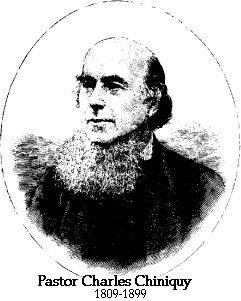
Foot Notes
CHAPTER 46
[*] Latin
CHAPTER 54
[*] Those who would like to
know all about the abominations of auricular confession should have my volume "The
Priest, the Woman and the Confessional." It is probably the only book ever written
on that subject which completely unveils the mask of Rome, by telling the whole truth.
CHAPTER 57
[*] Psalm xlii. 7, "Deep
calleth unto deep." - A.V.
[**] Those gentlemen, with the
exception of Mr. Allaire, are still living, 1885.
[***] Canon of the Church, by
Pope Gelasius.
CHAPTER 58
[*] Vol. iii., page 139.
[**] Eccl. Laws, by Hericourt,
c. xxii., No. 50
[***] Pope Gelasius.
[****] Eccl. Laws, by
Hericourt, c.xxii., No. 51
Introduction ---New Window
CHAPTERS 1-15 of page 1 ---New Window
CHAPTERS 16-31 of page 2 ---New Window
CHAPTERS 32-45 of page 3 ---New Window
CHAPTERS 46-58 of page 4 (this page)
CHAPTERS 59-67 of page 5 ---New Window
.
.
Related study material:


(1808-1890)
---New Window
"How different was the Gospel of the New Testament from the Gospel of Rome!"
An official title of the Pope is the Vicar of Christ.
"Vicar" comes from the Latin, "vicarious", meaning "a substitute";
therefore, the Pope identifies himself as a substitute Christ.
Antichrist means "against Christ" or "in place of, or substitute for,
Christ".
"Little children, it is the last time: and as ye have
heard that Antichrist shall come, even now are there many antichrists; whereby we
know that it is the Last Time"
(1 John 2:18).
An
Earnest Appeal to Roman Catholics ---New Window
Or, Roman Catholicism Examined in Light
of the Scriptures
by Tom Stewart
"We would have healed Babylon, but she is not healed:
forsake her"
(Jeremiah 51:9).



"And upon her forehead was a name written,
MYSTERY, BABYLON THE GREAT, THE MOTHER OF HARLOTS
AND ABOMINATIONS OF THE EARTH" (Revelation
17:5).
by Tom Stewart
(Part 1) The Purpose and History of Babylon the Great ---New Window
Any attempt to describe the final destruction of Babylon the Great-- "THE MOTHER
OF HARLOTS AND ABOMINATIONS OF THE EARTH"-- demands an identification of that
system, i.e., its purpose, history, as well as present and prophetic future... Understanding
the true nature of Babylon the Great is as simple as knowing whether a child is good
or bad. "Even a child is known by his doings, whether
his work be pure, and whether it be right"
(Proverbs 20:11). It only remains for God's people to "judge righteous judgment" (John 7:24)
concerning Babylon the Great. To act consistently with that understanding, will require
coming out of her that "ye
be not partakers of her sins, and that ye receive not of her plagues" (Revelation 18:4).
(Part 2) The Reformation and the Church of Rome ---New Window
By Divine Authority, the Apostle John was directed to align Nimrod's Babylon with
the finally destroyed Babylon of Daniel's 70th Week (Daniel
9:27), which indicates a clear line of succession for
Babylon the Great.
Other servants of this Divine Authority Of The WORD Of God which follow this example
are--
 Charles Chiniquy (1809-1899): "Rome is... that Modern Babylon"
-Fifty Years in the Church of Rome, (1886).
Charles Chiniquy (1809-1899): "Rome is... that Modern Babylon"
-Fifty Years in the Church of Rome, (1886).
John Wycliffe (1324-1384): "the supreme authority of Scripture...
Christ's law sufficeth by itself to rule Christ's Church." -On the Truth
and Meaning of Scripture, (c.1380).
Martin Luther wrote, "I know that the Papacy is none other than
the kingdom of Babylon, and the violence of Nimrod the mighty hunter" -The
Babylonish Captivity of the Church, (October 6th 1520).
Alexander Hislop: "Rome as the Apocalyptic Babylon... Let every
Christian henceforth and for ever treat it as an outcast from the pale of Christianity.
Instead of speaking of it as a Christian Church, let it be recognised and regarded
as the Mystery of Iniquity, yea, as the very Synagogue of Satan." -The Two
Babylons: Or, The Papal Worship Proved to be the Worship of Nimrod and His Wife,
(1853)
James A. Wylie (1808-1890): "From the fourth century... the Bible
began to be hidden from the people... the clergy usurped authority over the members
of the Church... While the, 'living oracles' [Scripture] were neglected, the zeal
of the clergy began to spend itself upon rites and ceremonies borrowed from the pagans.
These were multiplied to such a degree, that [even] Augustine complained that they
were 'less tolerable than the yoke of the Jews under the law.'" -History
of Protestantism, vol. 1, pgs. 16,18, (1878).
It has always been, is, and will always be right for those who name "the Name
of Christ [to] depart from iniquity" (2Timothy
2:19) by separating themselves from Babylon the Great.
"Wherefore come out from among them, and be ye separate, saith the LORD, and
touch not the unclean thing; and I will receive you" (2Corinthians
6:17).
(Part
3) The Ecumenical Movement and the Church of Rome ---New Window
It has been an historic dogma of the Catholic Church that "outside
the [Catholic] Church there
is no salvation". "They
could not be saved who, knowing that the Catholic Church was founded as necessary
by God through Christ, would refuse either to enter it or to remain in it" (from "The Catechism of the Catholic Church" [1992], paragraph
846). This was intended by the Papacy to place the world in universal need
of coming to Rome to receive the benefits of their ecumenical salvation...
"An important affirmation made in the early phase
of collaboration between the Roman Catholic Church and the World Council of Churches
was that the two share in 'one and the same ecumenical movement'... The oneness
of the ecumenical movement refers fundamentally to its orientation towards a 'common
calling'" (from the WCC's "Towards a Common
Understanding and Vision of the World Council of Churches", paragraph 2.10)...
The Harlot Church of Rome is an implacable enemy of Jehovah Jesus, for she is the
Great Whore... and the World Council of Churches' "common
calling" collaboration with the Church of Rome
is spiritual adultery. "Can two walk together,
except they be agreed?" (Amos
3:3). Rome's doctrine damns her faithful, and her history
betrays her origin-- Babylon. "Flee out of the
midst of Babylon, and deliver every man his soul: be not cut off in her iniquity;
for this is the time of the LORD'S vengeance; he will render unto her a recompence" (Jeremiah 51:6)...
The Roman Catholic Church (RCC) is not a member
of the World Council of Churches (WCC); and, it has never applied for membership.
Rome saith, "I sit a queen, and am no widow, and
shall see no sorrow" (Revelation
18:7). "The RCC's
self-understanding has been one reason why it has not joined"
(from an FAQ at the WCC's website [1999], which asks if the Roman Catholic Church
is a member of the World Council of Churches). Rome understands that the Road
of Ecumenism does not lead to Geneva-- the WCC's headquarters-- but it leads
back to Rome...
One of the "principal concerns" of the Second Vatican Council (1962-1965) was the "restoration
of unity among all Christians" (from the Second
Vatican Council, "Decree on Ecumenism- Unitatis Redintegratio", paragraph
1)... Commenting on the term "ecumenical movement", the "Decree on Ecumenism" stated that "when
the obstacles to perfect ecclesiastical communion have been gradually overcome, all
Christians will at last, in a common celebration of the Eucharist, be gathered into
the one and only Church in that unity which Christ bestowed on His Church from the
beginning. We believe that this unity subsists in the Catholic Church as something
she can never lose, and we hope that it will continue to increase until the end of
time" (from the Second Vatican Council, "Decree
on Ecumenism- Unitatis Redintegratio", paragraph 4). And indeed, the "leopard [has not changed]
his spots"
(Jeremiah 13:23)!
(Part
4) Come Out of Her, My People ---New Window
Or, Love Alone Will Cause Us to Obey the Command to Separate From Babylon the Great
"Come out of her, My people, that ye be not partakers
of her sins, and that ye receive not of her plagues"
(Revelation 18:4).
Discussions of End Time Events, i.e., the Pre-Tribulational Rapture, and Chronologies,
i.e., an expectation of being Raptured before the Year 2000 ("Y2K"), are
intensely interesting, but our conduct in the meantime is of the utmost importance...
Thus, when the Word of God gives the command to separate from Babylon the
Great, it remains only for the instructed Believer to make the personal application
required for their situation-- and depart from Babylon. "And
I heard another Voice from Heaven, saying, Come out of her, My people, that ye be
not partakers of her sins, and that ye receive not of her plagues" (Revelation 18:4). Love will always obey, for
"if ye love me, keep My Commandments" (John 14:15)
is the cry and command of our LORD and Saviour.
If we were to "speak with the tongues of men and
of angels" (1Corinthians
13:1) without the obedience of Love, then we
would be as empty and worthless "as sounding brass,
or a tinkling cymbal" (13:1). If we possessed the "gift of
prophecy", understood "all
mysteries, and all knowledge", and had "all faith" to "remove mountains", but
did not have loving obedience to the command to come out of Babylon the Great,
then we would be as "nothing" in the sight of God (13:2). If we bestowed all our "goods
to feed the poor" and gave our bodies "to be burned", it "profiteth" us "nothing" (13:3). Whatever we say, if we will not come out of Babylon the Great,
we do not love God. "Therefore to him that
knoweth to do good, and doeth it not, to him it is sin" (James 4:17).
(Part 5) Billy Graham: Christianity's Modern
Balaam ---New
Window
"Shouldest thou help the ungodly, and love
them that hate the LORD? therefore is wrath upon thee from before the LORD"
(2Chronicles 19:2).
A thoughtful evaluation of the ministry of Billy Graham
will reveal that Billy Graham has been mightily used of Satan to break down the
walls of separation between the Godly and the ungodly. "And
ye shall be holy unto Me: for I the LORD am holy, and have severed you from other
people, that ye should be Mine" (Leviticus 20:26).
It will also reveal that Billy Graham's most effective work for Babylon the Great
has been that of masquerading as a Bible believing evangelist-- doing "the work of the LORD deceitfully"
(Jeremiah 48:10)-- seducing unwary Pilgrims into laying aside the "Sword
of the Spirit" (Ephesians 6:17) in the name of
Christian Love and Unity. If the Pope had approached the Bible-Believing-Evangelical-Community
with the need for Ecumenical Unity in previous generations, he would have been viewed
with suspicion-- on account of the corruptions of the Medieval Catholic Church, the
terrors of the Inquisition, the wicked absurdity of Papal infallibility, etc. "Ye shall know them by their fruits" (Matthew
7:16).
(Part 6) The Final Judgment of the Great
Whore ---New Window
"He hath judged the Great Whore, which did
corrupt the Earth with her fornication, and hath avenged the blood of His servants
at her hand"
(Revelation 19:1-2).
We have only focused on the most pervasive and conspicuous
manifestation of the Great Whore in this present Church Age-- the institution of
Roman Catholicism. "And here is the mind which
hath wisdom. The seven heads are seven mountains, on which the woman sitteth"
(Revelation 17:9). Rather than viewing Catholicism as
merely one of many manifestations of the LORD Jesus Christ's Church, the Church of
Rome's history demonstrates it to be entirely transformed from the Primitive Church
of the Apostles into the abominable Babylon the Great...
As we approach the Tribulation Week, the pace is quickening
as "evil men and seducers shall wax worse and worse,
deceiving, and being deceived" (2Timothy 3:13).
We need to remember that the Church of Rome has been "Satan's
seat" (Revelation 2:13) for more than a millennium...
"when the obstacles to perfect ecclesiastical communion have been gradually
overcome, all Christians will at last, in a common celebration of the Eucharist,
be gathered into the one and only Church" (from
the Second Vatican Council, "Decree on Ecumenism- Unitatis Redintegratio",
paragraph 4)... Rome's
"patience" in achieving the universal domination that describes her name,
i.e., catholic, ought to be observed by even the Godly... Pope John Paul II tenaciously
stated his commitment to the global union awaiting the Church at the New Millennium,
"I myself intend to promote every suitable initiative
aimed at making the witness of the entire Catholic community understood in its full
purity and consistency, especially considering the engagement which awaits the
Church at the threshold of the new Millennium
[WStS emphasis added]...
Does the Roman Catholic Church-- Babylon the Great--
endorse or promote the United Religions Initiative (URI)? If "in
her [Babylon the Great] was
found the blood of prophets, and of Saints, and of all that were slain upon
the Earth" (Revelation 18:24), then the UR must
eventually become attached to the Pope and the Church of Rome for the UR to be identified
as Babylon the Great... This
writer is persuaded that Babylon the Great, which is essentially Roman Catholicism,
must soon incorporate with the United Religions, if the Pope still desires the
headship of the world's religions, i.e., to be the False Prophet... Accordingly,
the Papal celebration of the "Jubilee of the Year 2000" includes:
In the Book of Revelation, we find a description
of Babylon the Great (17:1-18), her final destruction (18:1-24), and the rejoicing
in Heaven at the judgment of the Great Whore (19:1-4)... Antichrist turns against
Babylon the Great 8-9 days prior to the End of the Tribulation Week... "Come out of her, My people, that ye be not partakers of her
sins, and that ye receive not of her plagues" (Revelation
18:4). This most important
message of God to those who would be preserved from Divine Destruction is to COME
OUT OF BABYLON NOW.
End of Series.
For more material
related to this topic
please see

---New Window

Section Index for Voices
of Philadelphia

.
Homepage  Holy Bible
.Jehovah Jesus
Timeline .Prophecy Philadelphia Fellowship Promises Stories Poetry Links
Holy Bible
.Jehovah Jesus
Timeline .Prophecy Philadelphia Fellowship Promises Stories Poetry Links

Purpose ||.What's New
|| Tribulation Topics || Download Page || Today's Entry
Topical Links:
Salvation || Catholicism || Sound Doctrine || Prayer
Privacy Policy
.