|
||||||||||||||||||||||||||||||
 |
||||||||||||||||||||||||||||||
|
||||||||||||||||||||||||||||||
|
||||||||||||||||||||||||||||||
 |
||||||||||||||||||||||||||||||
|
||||||||||||||||||||||||||||||
|
||||||||||||||||||||||||||||||
|
||||||||||||||||||||||||||||||
|
||||||||||||||||||||||||||||||
|
||||||||||||||||||||||||||||||
|
||||||||||||||||||||||||||||||
|
||||||||||||||||||||||||||||||
|
||||||||||||||||||||||||||||||
|
||||||||||||||||||||||||||||||

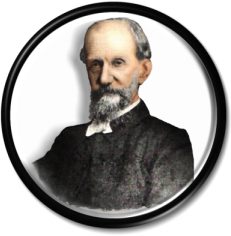
DIVINE HEALING

|
Andrew Murray |
|

PREFACE
The publication of this work may be regarded as a testimony of my faith in divine healing. After being stopped for more than two years in the exercise of my ministry, I was healed by the mercy of God in answer to the prayer of those who see in Him "the Lord that healeth thee" (Exodus 15:26).
This healing, granted to faith, has been the source of rich spiritual blessing to me. I have clearly seen that the Church possesses in Jesus, our Divine Healer, an inestimable treasure, which she does not yet know how to appreciate. I have been convinced anew of that which the Word of God teaches us in this matter, and of what the Lord expects of us; and I am sure that if Christians learned to realize practically the presence of the Lord that healeth, their spiritual life would thereby be developed and sanctified. I can therefore no longer keep silence, and I publish here a series of meditations, with the view of showing, according to the Word of God, that "the prayer of faith" (James 5:15) is the means appointed by God for the cure of the sick, that this truth is in perfect accord with Holy Scripture, and that the study of this truth is essential for everyone who would see the Lord manifest His power and His glory in the midst of His children. -- ANDREW MURRAY
WStS NOTE: We do well to "be followers together of [Mr. Murray], and mark them which walk so as ye have [him] for an ensample" (Philippians 3:17). We have been "rooted and built up in [Christ Jesus], and stablished in the faith, as [we] have been taught" (Colossians 2:7) by the Scriptural insights shared in this volume (a book which has been a great favorite of ours for over 25 years).
Even so, we respectfully must mention an additional thought which we believe to be included among those that come from "the mind of Christ" (1 Corinthians 2:16) regarding "Divine Healing." Mr. Murray has linked together the occasion of sickness in response to the condition of sin, i.e., "sin and sickness are as closely united as the body and the soul". We believe that this is entirely true of those who refuse to "walk worthy of the LORD unto all pleasing" (Colossians 1:10), whether they be those who vainly profess Christ, or those who make no boast in Him whatsoever. However, we believe that "every one that nameth the Name of Christ [and does truly] depart from iniquity" (2 Timothy 2:19), may also suffer with infirmities for reasons other than sin. (Unlike the tenacious, and still prevalent, "original sin" doctrine, we believe that a true Christian does not abide in sin, nor is any man born in sin. There is a difference between moral depravity and physical depravity. Moral depravity is sin, or sinning. It results from willfully choosing that which is wrong. "To him that knoweth to do good, and doeth it not, to him it is sin" (James 4:17). Physical depravity is our inheritance from Adam's fall, a tendency for the flesh to satisfy itself. Physical depravity is not sin, but gives us the negative consequences that Mr. Murray associates with sickness."'Who can bring a clean thing out of an unclean? not one' (Job 14:4). Job remarks about the plight of man, that the run down physical condition of man (physical depravity) is passed on to the next generation of man by physical birth. Physical depravity is not sin. Physical depravity is the resulting run down physical condition due to the actual commission of the first sin. Spiritual death comes to all who sin. Adam was warned: 'in the day that thou eatest thereof thou shalt surely die' (Genesis 2:17). Scripture makes plain about sin... commit it and die. 'The soul that sinneth, it shall die' (Ezekiel 18:20). 'The wages of sin is death' (Romans 6:23). Moral depravity is sin. Moral depravity is sinning. The flesh is the opportunity. The flesh is the occasion for sin to take place. The flesh itself is not sinful, but when we attempt to satisfy a proper desire of the flesh (i.e., procreation), when specifically told not to (i.e., 'Thou shalt not commit adultery' (Exodus 20:14), that is sin... 'for sin is the transgression of the law' (1John 3:4)... Physical depravity is the physical consequence of sin. Adam's sin had physical consequences. Physical death must now be the rule for all man. The flesh, once an occasion for good... 'And out of the ground made the LORD God to grow every tree that is pleasant to the sight [the flesh], and good for food' (Genesis 2:9)... now becomes the occasion for much evil. Man's environment, as well as body, have been beat as a result of sin. This is physical depravity, which is not sin. However, when man obeys the normal, proper desire of the flesh, when commanded by the LORD to contain it, then man commits sin. This is moral depravity- the act of sinning. Physical depravity precedes moral depravity, but no man has the right to say that he committed adultery because his body forced him! So it would be proper for Job to assert in Job 14:4 that a physically depraved human will only beget another physically depraved human." --from "An Urgent Call to Christian Perfection" ---New Window, An Exposition of the Doctrine of Christian Perfection by Tom Stewart, section 3 ---New Window.
Mr. Murray, because of his doctrine concerning "original sin" or "sin nature," attributes all sickness to sin, either personally committed or resulting from "the preponderance of sin which weighs upon the entire human race." We agree that all sickness results from sin-- but only indirectly-- when referring to honest-hearted Christians. Almost all of the sickness endured in this world is because of sin. But the presence of sin need not be a factor at all, were an honest Christian to bear an infirmity. Mr. Murray agrees in Spirit, stating: God "teaches us not to accuse every sick person of sin." When dealing with an honest Christian (or, one who has "an honest and good heart, having heard the Word, keep it, and bring forth fruit with patience" [Luke 8:15]), physical infirmity can have a sanctifying effect-- diverting the Christian from sinning-- even as it happened for the Apostle Paul. "7 And lest I should be exalted above measure [Paul hadn't sinned-- 'lest I should be'] through the abundance of the revelations, there was given to me a thorn in the flesh, the messenger of Satan to buffet me, lest I should be exalted above measure. 8 For this thing I besought the LORD thrice, that it might depart from me. 9 And He said unto me, My grace is sufficient for thee: for My strength is made perfect in weakness. Most gladly therefore will I rather glory in my infirmities, that the power of Christ may rest upon me. 10 Therefore I take pleasure in infirmities, in reproaches, in necessities, in persecutions, in distresses for Christ's sake: for when I am weak, then am I strong" (2 Corinthians 12:7-10). Of course, this example does not deny the Scriptural fact that "the LORD [is] for the body," (1 Corinthians 6:13). It was "for the body" that the "thorn in the flesh" was allowed, God thus providing a sanctifying warning for Paul to refrain from the sin of pride. While infirmities give us the opportunity to be refined, we are to "be careful (or, anxious) for nothing; but in every thing by prayer and supplication with thanksgiving let your requests be made known unto God" (Philippians 4:6). "Jesus Himself who is always the first, the best, the greatest Physician," as Mr. Murray so excellently affirmed, is "the LORD that healeth thee" (Exodus 15:26). [Please see our "Topical Links On Sound Doctrine" ---New Window, for much more on this subject.]
Together with Paul, we "will not glory, but in [our] infirmities" (2 Corinthians 12:5). And that said, we hope you will be enriched and edified by Mr. Murray's offering to the Church-- "Divine Healing." It's a wonderful book! --Tom and Katie Stewart
.

To avoid broken links, due to file length, please wait for the page to
load completely
before selecting ANY link below.
The links above can be used immediately.
Thanks.
Table of Contents
PREFACE
Chapter I. PARDON AND HEALING
Chapter II. BECAUSE OF YOUR UNBELIEF
Chapter III. JESUS AND
THE DOCTORS
Chapter IV. HEALTH AND
SALVATION BY THE NAME OF JESUS
Chapter V. NOT BY OUR OWN
POWER
Chapter VI. ACCORDING TO
THE MEASURE OF FAITH
Chapter VII. THE WAY OF
FAITH
Chapter VIII. YOUR BODY
IS THE TEMPLE OF THE HOLY GHOST
Chapter IX. THE BODY FOR
THE LORD
Chapter X. THE LORD FOR
THE BODY
Chapter XI. DO NOT CONSIDER
YOUR BODY
Chapter XII. DISCIPLINE
AND SANCTIFICATION
Chapter XIII. SICKNESS
AND DEATH
Chapter XIV. THE HOLY
SPIRIT THE SPIRIT OF HEALING
Chapter XV. PERSEVERING
PRAYER
Chapter XVI. LET HIM THAT
IS HEALED GLORIFY GOD
Chapter XVII. THE NEED
FOR A MANIFESTATION OF GOD'S POWER
Chapter XVIII. SIN AND
SICKNESS
Chapter XIX. JESUS BORE
OUR SICKNESS
Chapter XX. IS SICKNESS
A CHASTISEMENT?
Chapter XXI. GOD'S PRESCRIPTION
FOR THE SICK
Chapter XXII. THE LORD
THAT HEALETH THEE
Chapter XXIII. JESUS
HEALS THE SICK
Chapter XXIV. FERVENT
AND EFFECTUAL PRAYER
Chapter XXV. INTERCESSORY
PRAYER
Chapter XXVI. THE WILL
OF GOD
Chapter XXVII. OBEDIENCE
AND HEALTH
Chapter XXVIII. JOB'S
SICKNESS AND HEALING
Chapter XXIX. THE PRAYER
OF FAITH
Chapter XXX. ANOINTING
IN THE NAME OF THE LORD
Chapter XXXI. FULL SALVATION
OUR HIGH PRIVILEGE
Chapter XXXII. YE ARE
THE BRANCHES
.
Back to Top
CHAPTER I.
PARDON AND HEALING
"But that ye may know that the Son of man hath power on
earth to forgive sins (then saith He to the sick of the palsy), Arise, take up thy
bed and go unto thine house"
(Matthew 9:6).
In man two natures are combined. He is at the same time spirit and matter, heaven
and earth, soul and body. For this reason, on one side he is the son of God, and
on the other he is doomed to destruction because of the Fall; sin in his soul and
sickness in his body bear witness to the right which death has over him. It is the
twofold nature which has been redeemed by divine grace. When the Psalmist calls upon
all that is within him to bless the Lord for His benefits, he cries, "Bless
the Lord, O my soul, Who... forgiveth all thine iniquities, Who healeth all thy diseases"
(Psalm 103:2-3). When Isaiah foretells the deliverance of his
people, he adds, "The inhabitant shall not say, I am sick;
the people that dwell therein shall be forgiven their iniquity" (Isaiah 33:24).
This prediction was accomplished beyond all anticipation when Jesus the Redeemer
came down to this earth. How numerous were the healings wrought by Him who was come
to establish upon earth the kingdom of heaven! Whether by His own acts or whether
afterwards by the commands which He left for His disciples, does He not show us clearly
that the preaching of the Gospel and the healing of the sick went together in
the salvation which He came to bring? Both are given as evident proof of His
mission as the Messiah: "The blind receive their sight
and the lame walk.., and the poor have the Gospel preached to them" (Matthew 11: 5). Jesus, who took upon Him the soul and body of
man, delivers both in equal measure from the consequences of sin.
This truth is nowhere more evident or better demonstrated than in the history of
the paralytic. The Lord Jesus begins by saying to him, "Thy
sins be forgiven thee," [Matthew 9:5]
after which He adds, "Arise, take up thy bed and go."
The pardon of sin and the healing of sickness complete one the other, for in the
eyes of God, who sees our entire nature, sin and sickness are as closely united as
the body and the soul. In accordance with the Scriptures, our Lord Jesus has regarded
sin and sickness in another light than we have. With us sin belongs to the spiritual
domain; we recognize that it is under God's just displeasure, justly condemned by
Him, while sickness, on the contrary, seems only a part of the present condition
of our nature, and to have nothing to do with God's condemnation and His righteousness.
Some go so far as to say that sickness is a proof of the love and grace of God.
But neither the Scripture nor yet Jesus Christ Himself ever spoke of sickness in
this light, nor do they ever present sickness as a blessing, as a proof of God's
love which should be borne with patience. The Lord spoke to the disciples of divers
sufferings which they should have to bear, but when He speaks of sickness, it is
always as of an evil caused by sin and Satan, and from which we should be delivered.
Very solemnly He declared that every disciple of His would have to bear his cross
(Matthew 16:24), but He never taught one sick person to resign
himself to be sick. Everywhere Jesus healed the sick, everywhere He dealt with healing
as one of the graces belonging to the kingdom of heaven. Sin in the soul and sickness
in the body both bear witness to the power of Satan, and "the
Son of God was manifested that He might destroy the works of the Devil"
(I John 3:8).
Jesus came to deliver men from sin and sickness that He might make known the love
of the Father. In His actions, in His teaching of the disciples, in the work of the
apostles, pardon and healing are always to be found together. Either the one or the
other may doubtless appear more in relief, according to the development or the faith
of those to whom they spoke. Sometimes it was healing which prepared the way for
the acceptance of forgiveness, sometimes it was forgiveness which preceded the healing,
which, coming afterwards, became a seal to it. In the early part of His ministry,
Jesus cured many of the sick, finding them ready to believe in the possibility of
their healing. In this way He sought to influence hearts to receive Himself as He
who is able to pardon sin. When He saw that the paralytic could receive pardon at
once, He began by that which was of the greatest importance; after which came the
healing which put a seal on the pardon which had been accorded to him.
We see, by the accounts given in the Gospels, that it was more difficult for the
Jews at that time to believe in the pardon of their sins than in divine healing.
Now it is just the contrary. The Christian Church has heard so much of the preaching
of the forgiveness of sins that the thirsty soul easily receives this message of
grace; but it is not the same with divine healing; that is rarely spoken of; the
believers who have experienced it are not many. It is true that healing is not given
in this day as in those times, to the multitudes whom Christ healed without any previous
conversion. In order to receive it, it is necessary to begin by confession of sin
and the purpose to live a holy life. This is without doubt the reason why people
find more difficulty to believe in healing than in forgiveness; and this is also
why those who receive healing receive at the same time new spiritual blessing, feel
more closely united to the Lord Jesus, and learn to love and serve Him better. Unbelief
may attempt to separate these two gifts, but they are always united in Christ. He
is always the same Savior both of the soul and of the body, equally ready to grant
pardon and healing. The redeemed may always cry: "Bless
the Lord, O my soul.., Who forgiveth all thine iniquities, Who healeth all thy diseases"
(Psalm 103:2-3).
.
Back to Top
CHAPTER II.
BECAUSE OF YOUR UNBELIEF
"Then came the disciples to Jesus apart, and said, Why
could not we cast him out? And Jesus said unto them, Because of your unbelief: for
verily I say unto you, If ye have faith as a grain of mustard seed, ye shall say
unto this mountain, Remove hence to yonder place; and it shall remove; and nothing
shall be impossible to you"
(Matthew 17:19-20).
When the Lord Jesus sent His disciples into different parts of Palestine, He endued
them with a double power, that of casting out unclean spirits and that of healing
all sickness and all infirmity (Matthew 10:1). He did the same
for the seventy who came back to Him with joy, saying, "Lord,
even the spirits are subject unto us through Thy Name" (Luke
10:17). On the day of the Transfiguration, while the Lord was still upon the
mountain, a father brought his son who was possessed with a demon, to His disciples,
beseeching them to cast out the evil spirit, but they could not. When, after Jesus
had cured the child, the disciples asked Him why they had been unable to do it themselves
as in other cases, He answered them, "Because of your
unbelief." It was, then, their unbelief, and not the will of God which
had been the cause of their defeat.
In our days divine healing is very little believed in, because it has almost entirely
disappeared from the Christian Church. One may ask the reason, and here are the two
answers which have been given. The greater number think that miracles, the gift of
healing included, should be limited to the time of the primitive Church, that their
object was to establish the first foundation of Christianity, but that from that
time circumstances have altered. Other believers say unhesitatingly that if the Church
has lost these gifts, it is by her own fault; it is because she has become worldly
that the Spirit acts but feebly in her; it is because she has not remained in direct
and habitual relation with the full power of the unseen world; but that if she were
to see anew springing up within her men and women who live the life of faith and
of the Holy Spirit, entirely consecrated to their God, she would see again the manifestation
of the same gifts as in former times. Which of these two opinions coincides the most
with the Word of God? Is it by the will of God that the "gifts
of healing" [I
Corinthians 12:9] have been suppressed, or is
it rather man who is responsible for it? Is it the will of God that miracles should
not take place? Will He in consequence of this no longer give the faith which produces
them? Or again, is it the Church which has been guilty of lacking faith?
What Does the Scripture Say?
The Bible does not authorize us, either by the words of the Lord or His apostles, to believe that the gifts of healing were granted only to the early times of the Church; on the contrary, the promises which Jesus made to the apostles when He gave them instructions concerning their mission, shortly before His ascension, appear to us applicable to all times (Mark 16:15-18).
Mark 16
15 And he said unto them, Go ye into all the world, and preach the gospel to every creature.
16 He that believeth and is baptized shall be saved; but he that believeth not shall be damned.
17 And these signs shall follow them that believe; In My Name shall they cast out devils; they shall speak with new tongues;
18 They shall take up serpents; and if they drink any deadly thing, it shall not hurt them; they shall lay hands on the sick, and they shall recover.
Paul places the gift of healing among the operations of the Holy Spirit.
[1 Corinthians 12
9 To another faith by the same Spirit; to another the gifts of healing by the same Spirit;]
James gives a precise command on this matter without any restriction of time.
[James 5
13 Is any among you afflicted? let him pray. Is any merry? let him sing psalms.
14 Is any sick among you? let him call for the elders of the church; and let them pray over him, anointing him with oil in the Name of the Lord:
15 And the prayer of faith shall save the sick, and the Lord shall raise him up; and if he have committed sins, they shall be forgiven him.
16 Confess your faults one to another, and pray one for another, that ye may be healed. The effectual fervent prayer of a righteous man availeth much.]
The entire Scriptures declare that these graces will be granted according to the
measure of the Spirit and of faith.
It is also alleged that at the outset of each new dispensation God works miracles,
that it is His ordinary course of action; but it is nothing of the kind. Think of
the people of God in the former dispensation, in the time of Abraham, all through
the life of Moses, in the exodus from Egypt, under Joshua, in the time of the Judges
and of Samuel, under the reign of David and other godly kings up to Daniel's time;
during more than a thousand years miracles took place.
But, it is said, miracles were much more necessary in the early days of Christianity
than later. But what about the power of heathenism even in this day, wherever the
Gospel seeks to combat it? It is impossible to admit that miracles should have been
more needful for the heathen in Ephesus (Acts 19:11, 12) than
for the heathen of Africa in the present day.
Acts 19
11 And God wrought special miracles by the hands of Paul:
12 So that from his body were brought unto the sick handkerchiefs or aprons, and the diseases departed from them, and the evil spirits went out of them.
And if we think of the ignorance and unbelief which reign even in the midst of
the Christian nations, are we not driven to conclude that there is a need for manifest
acts of the power of God to sustain the testimony of believers and to prove that
God is with them? Besides, among believers themselves, how much of doubt, how much
of weakness there is! How their faith needs to be awakened and stimulated by some
evident proof of the presence of the Lord in their midst. One part of our being consists
of flesh and blood; it is therefore in flesh and blood that God wills to manifest
His presence.
In order to prove that it is the Church's unbelief which has lost the gift of healing,
let us see what the Bible says about it. Does it not often put us on our guard against
unbelief, against all which can estrange and turn us from our God? Does not the history
of the Church show us the necessity of these warnings? Does it not furnish us with
numerous examples of backward steps, of world pleasing, in which faith grew weak
in the exact measure in which the spirit of the world took the upper hand? For such
faith is only possible to him who lives in the world invisible.
[2 Corinthians 5
7 (For we walk by faith, not by sight:)]
Until the third century the healings by faith in Christ were numerous, but in
the centuries following they became more infrequent. Do we not know from the Bible
that it is always unbelief which hinders the mighty working of God?
Oh, that we could learn to believe in the promises of God! God has not gone
back from His promises; Jesus is still He who heals both soul and body; salvation
offers us even now healing and holiness, and the Holy Spirit is always ready to give
us some manifestations of His power. Even when we ask why this divine power is not
more often seen, He answers us: "Because of your unbelief." The more
we give ourselves to experience personally sanctification by faith, the more we shall
also experience healing by faith. These two doctrines walk abreast. The more
the Spirit of God lives and acts in the soul of believers, the more will the miracles
multiply by which He works in the body. Thereby the world can recognize what redemption
means.
.
Back to Top
CHAPTER III.
JESUS AND THE DOCTORS
"And a certain woman, which had an issue of blood twelve
years, and had suffered many things of many physicians, and had spent all that she
had, and was nothing bettered, but rather grew worse, when she had heard of Jesus,
came in the press behind, and touched His garment. For she said, If I may touch but
His clothes, I shall be whole. And straightway the fountain of her blood was dried
up; and she felt in her body that she was healed of that plague. And Jesus, immediately
knowing in Himself that virtue had gone out of Him, turned Him about in the press,
and said, Who touched My clothes? And His disciples said unto Him, Thou seest the
multitude thronging Thee, and sayest Thou, Who touched Me? And He looked round about
to see her that had done this thing. But the woman fearing and trembling, knowing
what was done in her, came and fell down before Him, and told Him all the truth.
And He said unto her, Daughter, thy faith hath made thee whole; go in peace, and
be whole of thy plague"
(Mark 5:25-34).
We may be thankful to God for having given us doctors. Their vocation is one of
the most noble, for a large number of them seek truly to do, with love and compassion,
all they are able to alleviate the evils and sufferings which burden humanity as
a result of sin. There are even some who are zealous servants of Jesus Christ, and
who seek also the good of their patients souls. Nevertheless it is Jesus Himself
who is always the first, the best, the greatest Physician.
Jesus heals diseases in which earthly physicians can do nothing, for the Father gave
Him this power when He charged Him with the work of our redemption. Jesus, in taking
upon Him our human body, delivered it from the dominion of sin and Satan; He has
made our bodies temples of the Holy Ghost and members of His own body (I
Corinthians 6:15, 19), and even in our day how many have been given up by
the doctors as incurable, how many cases of tuberculosis, of gangrene, of paralysis,
of dropsy, of blindness and of deafness, have been healed by Him! Is it not then
astonishing that so small a number of the sick apply to Him?
The method of Jesus is quite another than that of earthly physicians. They seek to
serve God in making use of remedies which are found in the natural world, and God
makes use of these remedies according to natural law, according to the natural properties
of each, while the healing which proceeds from Jesus is of a totally different order;
it is by divine power, the power of the Holy Ghost, that Jesus heals. Thus the difference
between these two modes of healing is very marked. That we may understand it better,
let us take an example; here is a physician who is an unbeliever, but extremely clever
in his profession; many sick people owe their healing to him. God gives this result
by means of the prescribed remedies, and the physicians knowledge of them. Here is
another physician who is a believer, and who prays God's blessing on the remedies
which he employs. In this case also a large number are healed, but neither in the
one case nor the other does the healing bring with it any spiritual blessing. They
will be preoccupied, even the believing among them, with the remedies which they
use, much more than with what the Lord may be doing with them, and in such a case
their healing will be more hurtful than beneficial. On the contrary, when it is Jesus
only to whom the sick person applies for healing, he learns to reckon no longer upon
remedies, but to put himself into direct relation with His love and His almightiness.
In order to obtain such healing, he must commence by confessing and renouncing his
sins, and exercising a living faith. Then healing will come directly from the Lord,
who takes possession of the sick body, and it thus becomes a blessing for the soul
as well as for the body.
But is it not God who has given remedies to man? it is asked. Does not their power
come from Him? Without doubt; but on the other hand, is it not God who has given
us His Son with all power to heal? Shall we follow the way of natural law with all
those who do not yet know Christ, and also with those of His children whose faith
is still too weak to abandon themselves to His almightiness; or rather do we choose
the way of faith, receiving healing from the Lord and from the Holy Spirit, seeing
therein the result and the proof of our redemption?
The healing which is wrought by our Lord Jesus brings with it and leaves behind it
more real blessing than the healing which is obtained through physicians. Healing
has been a misfortune to more persons than one. On a bed of sickness serious thoughts
had taken possession, but from the time of his healing how often has a sick man been
found anew far from the Lord! It is not thus when it is Jesus who heals. Healing
is granted after confession of sin; therefore it brings the sufferer nearer to Jesus,
and establishes a new link between him and the Lord, it causes him to experience
His love and power, it begins within him a new life of faith and holiness. When the
woman who had touched the hem of Christ's garment felt that she was healed, she learned
something of what divine love means. She went away with the words: "Daughter,
thy faith hath saved thee: go in peace" (Mark 5:34).
O you who are suffering from some sickness, know that Jesus the sovereign Healer
is yet in our midst. He is close to us, and He is giving anew to His Church manifest
proofs of His presence. Are you ready to break with the world, to abandon yourself
to Him with faith and confidence? Then fear not, remember that divine healing is
a part of the life of faith. If nobody around you can help you in prayer, if no elder
is at hand to pray the prayer of faith, fear not to go yourself to the Lord in the
silence of solitude, like the woman who touched the hem of His garment. Commit to
Him the care of your body. Get quiet before Him and like the poor woman say, I will
be healed. Perhaps it may take some time to break the chains of your unbelief, but
assuredly none that wait on Him shall be ashamed. "Yea,
let none that wait on Thee be ashamed" (Psalm 25:3).
.
Back to Top
CHAPTER IV.
HEALTH AND SALVATION BY THE NAME OF JESUS
"And His Name through faith in His Name hath made this
man strong, whom ye see and know: yea, the faith which is by Him hath given him this
perfect soundness in the presence of you all... Be it known unto you all, and to
all the people of Israel, that by the Name of Jesus Christ of Nazareth, Whom ye crucified,
Whom God raised from the dead, even by Him doth this man stand here before you whole...
Neither is there salvation in any other: for there is none other name under heaven
given among men, whereby we must be saved"
(Acts 3:16; 4:10,12).
When after Pentecost, the paralytic was healed through Peter and John at the gate
of the temple, it was in "the Name of Jesus Christ of
Nazareth" that they said to him, "Rise up
and walk," [Acts 3:6] and as soon
as the people in their amazement ran together to them, Peter declared that it was
the name of Jesus which had so completely healed the man.
As the result of this miracle and of Peters discourse, many people who had heard
the Word believed (Acts 4: 4).
Acts 4
4 Howbeit many of them which heard the Word believed; and the number of the men was about five thousand.
On the morrow Peter repeated these words before the Sanhedrin, "By
the Name of Jesus Christ of Nazareth... doth this man stand here before you whole;"
and then he added, "There is none other name under heaven...
whereby we must be saved." This statement of Peter's declares to us that
the name of Jesus both heals and saves. We have here a teaching of the highest
import for divine healing.
We see that healing and health form part of Christ's salvation. Does not Peter clearly
state this in his discourse to the Sanhedrin where, having spoken of healing, he
immediately goes on to speak of salvation by Christ? (Acts 4:10,12).
In heaven even our bodies will have their part in salvation; salvation will not be
complete for us until our bodies shall enjoy the full redemption of Christ. Why then
should we not believe in this work of redemption here below? Even already here on
earth, the health of our bodies is a fruit of the salvation which Jesus has acquired
for us.
We see also that health as well as salvation is to be obtained by faith. The tendency
of man by nature is to bring about his salvation by his works, and it is only with
difficulty that he comes to receive it by faith; but when it is a question of the
healing of the body, he has still more difficulty in seizing it. As to salvation,
he ends it by accepting it because by no other means can he open the door of heaven;
while for the body, he makes use of well-known remedies. Why then should he seek
for divine healing? Happy is he who comes to understand that it is the will of God;
that God wills to manifest the power of Jesus, and also to reveal to us His Fatherly
love; to exercise and to confirm our faith, and to make us prove the power of redemption
in the body as well as in the soul. The body is part of our being; even the body
has been saved by Christ; therefore it is in our body that our Father wills to manifest
the power of redemption, and to let men see that Jesus lives. Oh, let us believe
in the name of Jesus! Was it not in the name of Jesus that perfect health was given
to the impotent man? And were not these words: Thy faith hath saved thee, pronounced
when the body was healed? Let us seek then to obtain divine healing.
Wherever the Spirit acts with power, there He works divine healings. Would it not
seem that if ever miracles Were superfluous, it was at Pentecost, for then the word
of the apostles worked mightily, and the pouring out of the Holy Spirit was abundant?
Well, it is precisely because the Spirit acted powerfully that His working must needs
be Visible in the body. If divine healing is seen but rarely in our day, we can attribute
it to no other cause than that the Spirit does not act with power. The unbelief of
worldlings and the want of zeal among believers stop His working. The healings which
God is giving here and there are the precursory signs of all the spiritual graces
which are promised to us, and it is only the Holy Spirit who reveals the almightiness
of the name of Jesus to operate such healings. Let us pray earnestly for the Holy
Spirit, let us place ourselves unreservedly under His direction, and let us seek
to be firm in our faith in the name of Jesus, whether for preaching salvation or
for the work of healing.
God grants healing to glorify the name of Jesus. Let us seek to be healed by Jesus
that His name may be glorified. It is sad to see how little the power of His name
is recognized, how little it is the end of preaching and of prayer. Treasures of
divine grace, of which Christians deprive themselves by their lack of faith and zeal,
are hidden in the name of Jesus. It is the will of God to glorify His Son in the
Church; and He will do it wherever He finds faith. Whether among believers, or whether
among the heathen, He is ready with virtue from on high to awaken consciences, and
to bring hearts to obedience. God is ready to manifest the all-power of His Son,
and to do it in a striking way in body as well as in soul. Let us believe it for
ourselves, let us believe it for others, for the circle of believers around us, and
also for the Church in the whole world. Let us give ourselves to believe with firm
faith in the power of the name of Jesus, let us ask great things in His name, counting
on His promise, and we shall see God still do wonders by the name of His holy Son.
.
Back to Top
CHAPTER V.
NOT BY OUR OWN POWER
"And when Peter saw it he answered unto the people, Ye
men of Israel, why marvel ye at this? or why look ye so earnestly on us, as though
by our own power or holiness we had made this man to walk?"
(Acts 3:12).
As soon as the impotent man had been healed at the gate of the temple through
Peter and John, the people ran together unto them. Peter, seeing this miracle was
attributed to their power and holiness, loses no time in setting them right by telling
them that all the glory of this miracle belongs to Jesus, and that it is He in whom
we must believe.
Peter and John were undoubtedly full of faith and of holiness; perhaps even they
may have been the most holy and zealous servants of God in their time, otherwise
God might not have chosen them as instruments in this case of healing. But they knew
that their holiness of life was not of themselves, that it was of God through the
Holy Spirit. They think so little of themselves that they ignore their own holiness
and know only one thing that all power belongs to their Master. They hasten, then,
to declare that in this thing they count for nothing, that it is the work of the
Lord alone. This is the object of divine healing: to be a proof of the power of
Jesus, a witness in the eyes of men of what He is, proclaiming His divine intervention,
and attracting hearts to Him. Not
"by our own power or holiness." Thus is becomes those to speak whom
the Lord is pleased to use in helping others by their faith.
It is necessary to insist on this because of the tendency of believers to think the
contrary. Those who have recovered their health in answer to "the
prayer of faith" [James 5:15],
"the supplication of a righteous man availeth much in
its working" (James 5:16, RV), are in danger of
being too much occupied with the human instrument which God is pleased to employ,
and to think that the power lies in mans piety.
Doubtless the prayer of faith is the result of real godliness, but those who possess
it will be the first to acknowledge that it does not come from themselves, nor from
any effort of their own. They fear to rob the Lord of the least particle of the glory
which belongs to Him, and they know that if they do so, they will compel Him to withdraw
His grace from them. It is their great desire to see the souls which God has blessed
through them enter into a direct and increasingly intimate communion with the Lord
Jesus Christ Himself, since that is the result which their healing should produce.
Thus they insist that it is not caused by their own power or holiness.
Such testimony on their part is necessary to reply to the erroneous accusations of
unbelievers. The Church of Christ needs to hear clearly announced that it is on account
of her worldliness and unbelief that she has lost these spiritual gifts of healing
(I Corinthians 12: 9) and that the Lord restores to those who,
with faith and obedience, have consecrated their lives to Him.
1 Corinthians 12
9 To another faith by the same Spirit; to another the gifts of healing by the same Spirit;
This grace cannot reappear without being preceded by a renewal of faith and of
holiness. But then, says the world, and with it a large number of Christians, You
are laying claim to the possession of a higher order of faith and holiness, you consider
yourselves holier than others. To such accusations this word of Peter is the only
reply before God and man, confirmed by a life of deep and real humility: Not "by our own power or holiness." "Not
unto us, O Lord, not unto us, but unto Thy Name give glory, for Thy mercy and for
Thy truth's sake" (Psalm 115:1). Such a testimony
is also necessary in view of our own heart and of the wiles of Satan. As long as,
through the Church's unfaithfulness, the gifts of healing are but rarely given, those
children of God who have received these gifts are in danger of priding themselves
upon them, and of imagining that they have in themselves something exceptionally
meritorious. The enemy does not forget to persecute them by such insinuations, and
woe unto them if they listen to him. They are not ignorant of his Y devices; therefore
they need to pray continually to the Lord to keep them in humility, the true means
of obtaining continually more grace. If they persevere in humility, they will recognize
that the more God makes use of them, the more also will they be penetrated with the
conviction that it is God alone who works by them, and that all the glory belongs
to Him. "Not I, but the grace of God which was with me"
(I Corinthians 15:10). Such is their watchword.
Finally, this testimony is useful for the feeble ones who long for salvation, and
who desire to receive Christ as their Healer. They hear of full consecration and
entire obedience, but they form a false idea of it. They think they must in themselves
attain to a high degree of knowledge and of perfection, and they fall a prey to discouragement.
No, no; it is not by our own power or holiness that we obtain these graces, but
by a faith quite simple, a childlike faith, which knows that it has no power nor
holiness of its own, and which commits itself completely to Him who is faithful,
and whose almightiness can fulfill His promise. Oh, let us not seek to do or
to be anything of ourselves! It is only as we feel our own powerlessness, and expect
all from God and His Word that we realize the glorious way in which the Lord heals
sickness by faith in his name.
.
Back to Top
CHAPTER VI.
ACCORDING TO THE MEASURE OF FAITH
"And Jesus said unto the centurion, Go thy way; and as
thou hast believed, so be it done unto thee. And his servant was healed in the selfsame
hour"
(Matthew 8:13).
This passage of Scripture brings before us one of the principal laws of the kingdom
of heaven. In order to understand God's ways with His people, and our relations with
the Lord, it is needful to understand this law thoroughly and not to deviate from
it. Not only does God give or withhold His gifts according to the faith or unbelief
of each, but they are granted in greater or lesser measure, only in proportion to
the faith which receives them. God respects the right to decide which He has conferred
on man. Therefore He can only bless us in the measure in which each yields himself
up to His divine working, and opens all his heart to Him. Faith in God is nothing
else than the full opening of the heart to receive everything from God; therefore
man can only receive divine grace according to his faith; and this applies as much
to divine healing as to any other grace of God.
This truth is confirmed by the spiritual blessings which may result from sickness.
Two questions are often asked:
The answer to these two questions is that God gives to His children according
to their faith. We have already had occasion to remark that in the same degree in
which the Church has become worldly, her faith in divine healing has diminished until
at last it has disappeared. Believers do not seem to be aware that they may ask God
for the healing of their sickness, and that thereby they may be sanctified and fitted
for His service. They have come to seek only submission to His will and to regard
sickness as a means to be separate from the world. In such conditions the Lord gives
them what they ask. He would have been ready to give them yet more, to grant them
healing in answer to the prayer of faith, but they lacked the faith to receive it.
God always meets His children where they are, howsoever weak they may be. The sick
ones, therefore, who have desired to receive Him with their whole heart, will have
received from Him the fruit of the sickness in their desire that their will should
be conformed to the will of God. They might have been able to receive healing, in
addition, as a proof that God accepted their submission; if this has not been so,
it is because faith has failed them to ask for it.
"As thou hast believed, so be it done unto thee."
These words give the reply to yet another question:
Here again, as they believed, so was it done unto them.
A good number of sick people, having witnessed the healing of others, gained confidence
in Jesus just far enough to be healed, and Jesus granted them their request, without
adding other blessings for their souls. Before His ascension the Lord had not as
free an entrance as He now has into the heart of man, because "the
Holy Ghost was not yet given" (John 7:39). The
healing of the sick was then hardly more than a blessing for the body. It was only
later, in the dispensation of the Spirit, that the conviction and confession of sin
have become for the believer the first grace to be received, the essential condition
for obtaining healing, as St. Paul tells us in his Epistle to the Corinthians, and
James in his to the twelve tribes scattered abroad (I Corinthians
11:31,32; James 5:16).
1 Corinthians 11
31 For if we would judge ourselves, we should not be judged.
32 But when we are judged, we are chastened of the Lord, that we should not be condemned with the world.
James 5
16 Confess your faults one to another, and pray one for another, that ye may be healed. The effectual fervent prayer of a righteous man availeth much.
Thus the degree of spiritual grace which it is possible for us to receive depends
upon the measure of our faith, whether it be for its external manifestation, or especially
whether for its influence upon our inner life.
We recommend for every suffering one who is looking for healing, and who seeks to
know Jesus as his divine Healer, not to let himself be hindered by his unbelief,
not to doubt the promises of God, and thus to be strong in faith giving glory to
God as is His due. "As thou hast believed so be it done
unto thee." If with all your heart you trust in the living God you will
be abundantly blessed; do not doubt it.
The part of faith is always to lay hold on just that which appears impossible or
strange to human eyes. Let us be willing to be considered fools for Christ's sake
(I Corinthians 4:10).
1 Corinthians 4
10 We are fools for Christ's sake, but ye are wise in Christ; we are weak, but ye are strong; ye are honourable, but we are despised.
Let us not fear to pass for weak-minded in the eyes of the world and of such Christians as are ignorant of these things, because, on the authority of the Word of God, we believe that which others cannot yet admit. Do not, then, let yourself be discouraged in your expectation even though God should delay to answer you, or if your sickness be aggravated. Once having placed your foot firmly on the immovable rock of God's own Word, and having prayed the Lord to manifest His almightiness in your body because you are one of the members of His Body, and the temple of the Holy Ghost, persevere in believing in Him with the firm assurance that He has undertaken for you, that He has made Himself responsible for your body, and that His healing virtue will come to glorify Him in you.
.
Back to Top
CHAPTER VII.
THE WAY OF FAITH
"And straightway the father of the child cried out and
said with tears, Lord, I believe; help Thou mine unbelief"
(Mark 9:24).
These words have been a help and strength to thousands of souls in their pursuit of salvation and the gifts of God. Notice that it is in relation to an afflicted child that they were pronounced, in the fight of faith when seeking healing from the Lord Jesus. In them we see that in one and the same soul there can arise a struggle between faith and unbelief, and that it is not without a struggle that we come to believe in Jesus and in His all-power to heal the sick. In this we find the needful encouragement for realizing the Saviors power.
[WStS Note: Concerning Mr. Murray's phrase: "a struggle between faith and unbelief", we wish to comment. A honest Christian may have "a struggle between faith and unbelief", but not between faith and the "sin" of unbelief. This "struggle" to establish a position of faith would simply be an honest lack of faith, (i.e., 'your faith groweth exceedingly' (2 Thessalonians 1:3).). When an established position of faith turns back in unbelief, that is sin. "And Jesus said unto him, No man, having put his hand to the plow, and looking back, is fit for the Kingdom of God" (Luke 9:62). Faith and sin cannot reside in the same vessel at the same time.
"Sin, like faith, is an act of the will, but in opposition to and to the exclusion of faith. 'Whatsoever is not of faith is sin' (Romans 14:23). It is an impossibility to be both holy and sinful at the same time, just as it is impossible to be dwelling in faith and sin in the same moment, e.g., Charles G. Finney labelled this concept, the Unity of Moral Action. [Please read 'Unity of Moral Action' ---New Window by Charles G. Finney] 'No servant can serve two masters: for either he will hate the One, and love the other; or else he will hold to the One, and despise the other. Ye cannot serve God and mammon' (Luke 16:13)." --from "Must We Then Sin" ---New Window, by Tom Stewart]
I speak here especially to sufferers who do not doubt the power or the will of
the Lord Jesus to heal in this day without the use of earthly remedies, but who lack
the boldness to accept healing for themselves. They believe in the divine power of
Christ, they believe in a general manner His good will to heal; they have acquired,
either by the Scriptures, or by facts of healings by the Lord alone which have taken
place in our days, the intellectual persuasion that the Lord can help even them,
but they shrink back from accepting healing, and from saying with faith, The Lord
has heard me, I know that He is healing me.
Take notice first that without faith no one can be healed. When the father of the
afflicted child said to Jesus, If thou canst do anything, have compassion on us,
and help us, Jesus replied: "If thou canst believe."
[Mark 9:23] Jesus had the power to heal
and He was ready to do it, but He casts responsibility on the man. "If
thou canst believe, all things are possible to him that believeth." [Mark 9:23] In order to obtain your healing from
Jesus, it is not enough to pray. Prayer without faith is powerless. It is "the
prayer of faith" which saves the sick (James 5:15).
If you have already asked for healing from the Lord, or if others have asked it for
you, you must, before you are conscious of any change, be able to say with faith,
On the authority of God's Word I have the assurance that He hears me and that I shall
be healed. To have faith means in your case to surrender your body absolutely into
the Lord's hands, and to leave yourself entirely to Him. Faith receives healing as
a spiritual grace which proceeds from the Lord even while there is no conscious change
in the body. Faith can glorify God and say, "Bless the
Lord, O my soul... Who healeth all [my] diseases" (Psalm 103:1-3). The
Lord requires this faith that He may heal.
Psalm 103
1 Bless the LORD, O my soul: and all that is within me, bless His Holy Name.
2 Bless the LORD, O my soul, and forget not all His benefits:
3 Who forgiveth all thine iniquities; Who healeth all thy diseases;
But how is such faith to be obtained? Tell your God the unbelief which you find in your heart,. and count on Him for deliverance from it. [WStS: Not the "sin" of unbelief, but simply an honest lack of faith.] Faith is not money by which your healing can be purchased from the Lord. It is He who desires to awaken and develop in you the necessary faith. "Help Thou mine unbelief," cried the father of the child. It was his ardent desire that his faith should not come short. Confess to the Lord all the difficulty you have to believe Him on the ground of His Word; tell Him you want to be rid of this unbelief, that you bring it to Him with a will to hearken only to His Word. Do not lose time in deploring your unbelief, but look to Jesus. The light of His countenance will enable you to find the power to believe in Him (Psalm 44:3).
Psalm 43
3 O send out Thy Light and Thy Truth: let them lead me; let them bring me unto Thy holy hill, and to Thy tabernacles.
He calls on you to trust in Him; listen to Him, and by His grace faith will triumph
in you. Say to Him, Lord, I am still aware of the unbelief which is in me. I find
it difficult to believe that I am sure of my healing because I possess Him who works
it. And, nevertheless, I want to conquer this unbelief. Thou, Lord, wilt give me
the victory. I desire to believe, I will believe, by Thy grace I dare to say I can
believe. Yes, Lord, I believe, for Thou comest to the help of my unbelief. It is
when we are in intimate communion with the Lord, and when our heart responds to His,
that unbelief is overcome and conquered. [WStS: Not the "sin"
of unbelief, but simply an honest lack of faith.]
It is needful also to testify to the faith one has. Be resolved to believe that which
the Lord says to you, to believe, above all, that which He is. Lean wholly upon His
promises. "The prayer of faith shall save the sick"
[James 5:15]. "I
am the Lord that healeth thee" (Exodus 15:26).
Look to Jesus, who "bare our sicknesses" (Matthew 8:17), and who healed all who came to Him; count on the
Holy Spirit to manifest in your heart the presence of Jesus who is also now in heaven,
and to work also in your body the power of His grace. Praise the Lord without waiting
to feel better, or to have more faith. Praise Him, and say with David, "O
Lord, my God, I cried unto Thee, and Thou hast healed me" (Psalm
30:2). Divine healing is a spiritual grace which can only be received spiritually
and by faith, before feeling its effect on the body. Accept it, then, and give glory
to God. When the Lord Jesus had commanded the unclean spirit to come out of the child,
he rent him sore, so that "he was as one dead," inasmuch
as "many said, 'He is dead'" [Mark 9:26]. If, therefore, your sickness does not yield at
once, if Satan and your own unbelief attempt to get the upper hand, do not heed them,
cling closely to Jesus your Healer, and He will surely heal you.
.
Back to Top
CHAPTER VIII.
YOUR BODY IS THE TEMPLE OF THE HOLY GHOST
"Know ye not that your bodies are the members of Christ?
shall I then take the members of Christ, and make them the members of an harlot?
God forbid... What? know ye not that your body is the temple of the Holy Ghost which
is in you, which ye have of God, and ye are not your own? For ye are bought with
a price: therefore glorify God in your body, and in your spirit, which are God's"
(I Corinthians 6:15, 19-20).
The Bible teaches us that the Body of Christ is the company of the faithful. These
words are taken generally in their spiritual sense, while the Bible asks us positively
whether we know not that our bodies are the members of Christ. In the same way, when
the Bible speaks of the indwelling of the Holy Spirit or of Christ, we limit His
presence to the spiritual part of our being. Nevertheless the Bible says expressly,
"Know ye not that your body is the temple of the Holy
Ghost?" When the Church understands that the body also has part in the
redemption which is by Christ, by which it ought to be brought back to its original
destiny, to be the dwelling place of the Holy Spirit, to serve as His instrument,
to be sanctified by His presence, she will also recognize all the place which divine
healing has in the Bible and in the counsels of God.
The account of the creation tells us that man is composed of three parts. God first
formed the body from the dust of the earth, after which He breathed into it "the breath of life" [Genesis
2:7]. He caused His own life, His Spirit, to enter into it. By this union
of Spirit with matter, the man became a "living soul"
[2:7]. The soul, which is essentially the man,
finds its place between the body and the spirit; it is the link which binds them
together. By the body the soul finds itself in relation to the external world; by
the spirit, with the world invisible and with God. By means of the soul, the spirit
can subject the body to the action of the heavenly powers and thus spiritualize it;
by means of the soul, the body also can act upon the spirit and attract it earthwards.
The soul, subject to the solicitations of both spirit and body, is in a position
to choose between the voice of God, speaking by the Spirit, or the voice of the world,
speaking through the senses.
This union of spirit and body forms a combination which is unique in the creation;
it makes man to be the jewel of God's work. Other creatures had existed already;
some, like angels, were all spirit, without any material body, and others, like the
animals, were only flesh, possessing a body animated with a living soul, but devoid
of spirit. Man was destined to show that the material body, governed by the spirit,
was capable of being transformed by the power of the Spirit of God, and of being
thus led to participate of heavenly glory.
We know what sin and Satan have done with this possibility of gradual transformation.
By means of the body, the spirit was tempted, seduced, and became a slave of sense.
We know also what God has done to destroy the work of Satan and to accomplish the
purpose of creation. "The Son of God was manifested that
he might destroy the works of the Devil" (I John 3:8).
God prepared a body for His Son (Hebrews 10:5).
Hebrews 10
5 Wherefore when He cometh into the world, He saith, Sacrifice and offering Thou wouldest not, but a body hast Thou prepared Me:
"The Word was made flesh" (John 1:14). "In Him dwelleth all the fullness of the Godhead bodily" (Colossians 2:9). "Who His Own Self bare our sins in His Own Body on the tree" (I Peter 2:24). And now Jesus, raised up from the dead with a body as free from sin as His spirit and His soul, communicates to our body the virtue of His glorified body. The Lord's Supper is "the communion of the body of Christ"; and our bodies are "the members of Christ" (I Corinthians 10:16; 6:15; 12:27).
1 Corinthians
10:16 The cup of blessing which we bless, is it not the communion of the blood of Christ? The bread which we break, is it not the communion of the body of Christ?
6:15 Know ye not that your bodies are the members of Christ? shall I then take the members of Christ, and make them the members of an harlot? God forbid.
12:27 Now ye are the body of Christ, and members in particular.
Faith puts us in possession of all that the death of Christ and His resurrection
have procured for us, and it is not only in our spirit and our soul that the life
of the risen Jesus manifests its presence here below; it is in the body also that
it would act according to the measure of our faith.
"Know ye not that your body is the temple of the Holy
Spirit?" Many believers represent to themselves that the Holy Spirit
comes to dwell in our body as we dwell in a house. Nothing of the kind. I can dwell
in a house without its becoming part of my being. I may leave it without suffering;
no vital union exists between my house and me. It is not thus with the presence of
our soul and spirit in our body. The life of a plant lives in and pervades every
part of it; and our soul is not limited to dwell in such or such part of the body,
the heart or the head, for instance, but penetrates throughout, even to the end of
the lowest members. The life of the soul pervades the whole body; the life throughout
proves the presence of the soul. It is in like manner that the Holy Ghost comes to
dwell in our body. He penetrates its entirety. He animates and possesses us infinitely
more than we can imagine.
In the same way in which the Holy Spirit brings to our soul and spirit the life of
Jesus, His holiness, His joy, His strength, He comes also to impart to the sick body
all the vigorous vitality of Christ as soon as the hand of faith is stretched out
to receive it. When the body is fully subject to Christ, crucified with Him, renouncing
all self-will and independence, desiring nothing but to be the Lord's temple, it
is then that the Holy Spirit manifests the power of the risen Savior in the body.
Then only can we glorify God in our body, leaving Him full freedom to manifest therein
His power, to show that He knows how to set His temple free from the domination of
sickness, sin, and Satan.
.
Back to Top
CHAPTER IX.
THE BODY FOR THE LORD
"Meats for the belly, and the belly for meats: but God
shall destroy both it and them. Now the body is not for fornication, but for the
Lord; and the Lord for the body"
(I Corinthians 6:13).
One of the most learned of theologians has said that corporeity is the end of the ways of God. As we have already seen, this is indeed what God has accomplished in creating man. It is this which makes the inhabitants of heaven wonder and admire when they contemplate the glory of the Son. Clothed with a human body, Jesus has taken His place forever upon the throne of God, to partake of His glory. It is this which God has willed. It shall be recognized in that day when regenerated humanity, forming the body of Christ, shall be truly and visibly the temple of the living God (I Corinthians 6:19), and when all creation in the new heavens and new earth shall share the glory of the children of God. The material body shall then be wholly sanctified, glorified by the Spirit; and this body, thus spiritualized, shall be the highest glory of the Lord Jesus Christ and of His redeemed.
1 Corinthians 6
19 What? know ye not that your body is the temple of the Holy Ghost which is in you, which ye have of God, and ye are not your own?
It is in anticipation of this new condition of things that the Lord attaches a
great importance to the indwelling and sanctification of our bodies, down here, by
His Spirit. So little is this truth understood by believers that less still do they
seek for the power of the Holy Spirit in their bodies. Many of them also, believing
that this body belongs to them, use it as it pleases them. Not understanding how
much the sanctification of the soul and spirit depends upon the body, they do not
grasp all the meaning of the words, "The body is... for
the Lord," in such a way as to receive them in obedience.
"The body is... for the Lord." What does this
mean? The apostle has just said, "Meats for the belly,
and the belly for meats; but God shall destroy both it and them." Eating
and drinking afford the Christian an opportunity of carrying out this truth, "The body is... for the Lord." He must indeed learn
to eat and drink to the glory of God. By eating, sin and the Fall came about. It
was also through eating that the devil sought to tempt our Lord. Thus Jesus Himself
sanctified His body in eating only according to the will of His Father (Matthew
4:4).
Matthew 4
4 But He answered and said, It is written, Man shall not live by bread alone, but by every Word that proceedeth out of the mouth of God.
Many believers fail to watch over their bodies fail to observe a holy sobriety
so as to avoid rendering their bodies unfit for the service of God. Eating and drinking
should never impede communion with God; their purpose is, rather, to facilitate communion
by maintaining the body in its normal condition.
The apostle speaks also of fornication, this sin which defiles the body, and which
is in direct opposition to the words, "The body is...
for the Lord." It is not simply incontinence outside the married state,
but in that state also, which is meant here; all voluptuousness, all want of sobriety
of whatsoever kind is condemned in these words: "Your
body is the temple of the Holy Ghost" (I Corinthians 6:19).
In the same way, all of what goes to maintain the body to clothe it, strengthen it,
rest it in sleep, or afford it enjoyment should be placed under the control of the
Holy Spirit. As under the Old Covenant, the temple was constructed solely for God,
and for His service, even so our body has been created for the Lord and for Him alone.
One of the chief benefits then of divine healing will be to teach us that our body
ought to be set free from the yoke of our own will to become the Lord's property.
God does not grant healing to our prayers until He has attained the end for which
He has permitted the sickness. He wills that this discipline should bring us into
a more intimate communion with Him; He would make us understand that we have
regarded our body as our own property, while it belonged to the Lord; and that the
Holy Spirit seeks to sanctify all its actions. He leads us to understand that if
we yield our body unreservedly to the influence of the Holy Spirit, we shall experience
His power in us, and He will heal us by bringing into our body the very life of Jesus;
He leads us, in short, to say with full conviction, "The
body is... for the Lord."
There are believers who seek after holiness, but only for the soul and spirit. In
their ignorance they forget that the body and all its systems of nerves that the
hand, the ear, the eyes, the mouth are called to testify directly to the presence
and the grace of God in them. They have not sufficiently taken in these words:
"Your bodies are the members of Christ" (I Corinthians 6:15).
"If by the Spirit ye make to die the deeds of the body, ye shall live" (Romans 8:13, RV, margin).
"The very God of peace sanctify you wholly; and I pray God your whole spirit and soul and body be preserved blameless unto the coming of our Lord Jesus Christ" (I Thessalonians 5:23).
Oh, what a renewing takes place in us when, by His own touch, the Lord heals our bodies, when He takes possession of them, and when by His Spirit He becomes life and health to them! It is with an indescribable consciousness of holiness, of fear and of joy that the believer can then offer his body a living sacrifice to receive healing, and to have for his motto these words: "The body is... for the Lord."
.
Back to Top
CHAPTER X.
THE LORD FOR THE BODY
"Meats for the belly, and the belly for meats: but God
shall destroy both it and them. Now the body is not for fornication, but for the
Lord; and the Lord for the body"
(I Corinthians 6:13).
There is reciprocity in God's relations with man. That which God has been for
me, I ought in my turn to be for Him. And that which I am for Him, He desires again
to be for me. If, in His love, He gives Himself fully to me, it is in order that
I may lovingly give myself fully to Him. In the measure in which I more or less really
surrender to Him all my being, in that measure also He gives Himself more really
to me. God thus leads the believer to understand that this abandonment of Himself
involves the body, and the more our life bears witness that "the
body is... for the Lord," the more also we experience that the Lord is
for the body. In saying, "The Lord [is] for
the body," we express the desire to regard our body as wholly consecrated,
offered in sacrifice to the Lord, and sanctified by Him. In saying, "The
Lord [is] for the body," we express the
precious certainty that our offering has been accepted, and that, by His Spirit,
the Lord will impart to our body His own strength and holiness, and that henceforth
He will strengthen and keep us.
This is a matter of faith. Our body is material, weak, feeble, sinful, mortal. Therefore
it is difficult to grasp all at once the full extent of the words, "The
Lord [is] for the body." It is the Word
of God which explains to us the way to assimilate. The body was created by the Lord
and for the Lord. Jesus took upon Him an earthly body. In His body He bore our sins
on the cross, and thereby set our body free from the power of sin. In Christ the
body has been raised again, and seated on the throne of God. The body is the habitation
of the Holy Spirit; it is called to eternal partnership in the glory of heaven. Therefore,
with certainty, and in a wide and universal sense, we can say, "Yes, the Lord
Jesus, our Savior, is 'for the body.'"
This truth has many applications.
Dear sick one, the Lord has shown thee by sickness what power sin has over the body. By thy healing He would also show thee the power of redemption of the body. He calls thee to show that which thou hast not understood hitherto, that "the body is... for the Lord." Therefore give Him thy body. Give it Him with thy sickness and with the sin, which is the original source of sickness. Believe always that the Lord has taken charge of this body, and He will manifest with power that He really is the Lord, who is "for the body." The Lord, who has Himself taken upon Him a body here on earth and regenerated it, from the highest heaven, where He now is, clothed with His glorified body, sends us His divine strength, willing thus to manifest His power in our body.
.
Back to Top
CHAPTER XI.
DO NOT CONSIDER YOUR BODY
"I speak after the manner of men because of the infirmity
of your flesh: for as ye have yielded your members servants to uncleanness and to
iniquity unto iniquity; even so now yield your members servants to righteousness
unto holiness. For when ye were the servants of sin, ye were free from righteousness.
What fruit had ye then in those things whereof ye are now ashamed? for the end of
those things is death"
(Romans 6:19-21).
When God promised to give Abraham a son, the patriarch would never have been able
to believe in this promise if he had considered his own body, already aged and worn
out. However, he would see nothing but God and His promise, the power and faithfulness
of God who guaranteed him the fulfillment of His promise.
This enables us to lay hold of all the difference there is between the healing which
is expected from earthly remedies and the healing which is looked for from God only.
When we have recourse to remedies for healing, all the attention of the sick one
is upon the body, considering the body, while divine healing calls us to turn away
our attention from the body, and to abandon ourselves, soul and body, to the Lord's
care, occupying ourselves with Him alone.
This truth equally enables us to see the difference between the sickness retained
for blessing and the healing received from the Lord. Some are afraid to take the
promise in James 5 in its literal sense, because they say sickness is more profitable
to the soul than health.
James 5
16 Confess your faults one to another, and pray one for another, that ye may be healed. The effectual fervent prayer of a righteous man availeth much.
It is true that in the case of healing obtained by earthly remedies, many people
would be more blessed in remaining ill than in recovering health, but it is quite
otherwise when healing comes directly from the hand of God. In order to receive divine
healing, sin must be so truly confessed and renounced, one must be so completely
surrendered to the Lord, self must be so really yielded up to be wholly in His hands,
and the will of Jesus to take charge of the body must be so firmly counted on that
the healing becomes the commencement of a new life of intimate communion with the
Lord.
Thus we learn to give up to Him entirely the care of the health, and the smallest
indication of the return of the evil is regarded as a warning not to consider
our body, but to be occupied with the Lord only.
What a contrast this is from the greater number of sick people who look for healing
from remedies. If some few of them have been sanctified by the sickness, having learned
to lose sight of themselves, how many more are there who are drawn by the sickness
itself to be constantly occupied with themselves and with the condition of their
body. What infinite care they exercise in observing the least symptom, favorable
or unfavorable! What a constant preoccupation to them is their eating and drinking,
the anxiety to avoid this or that! How much they are taken up with what they consider
due to them from others, whether they are sufficiently thought of, whether well enough
nursed, whether visited often enough! How much time is thus devoted to considering
the body and what it exacts, rather than the Lord and the relations which He seeks
to establish with their souls! Oh, how many are they who, through sickness, are
occupied almost exclusively with themselves!
All this is totally different when healing is looked for in faith from the loving
God. Then the first thing to learn is to cease to be anxious about the state of your
body, you have trusted it to the Lord and He has taken the responsibility. If you
do not see a rapid improvement immediately, but on the contrary the symptoms appear
to be more serious, remember that you have entered on a path of faith, and therefore
you ought not to consider the body, but cling only to the living God. The commandment
of Christ, "Be not anxious for your... body"
(Matthew 6:25, ASV), appears here in a new light. When God
called Abraham not to consider his own body, it was that He might call him to the
greatest exercise of faith which could be, that he might learn to see only God and
His promise. Sustained by his faith, he gave glory to God, convinced that God would
do what He had promised. Divine healing is a marvelous tie to bind us to the Lord.
At first one may fear to believe that the Lord will stretch forth His mighty hand
and touch the body; but in studying the Word of God the soul takes courage and confidence.
At last one decides, saying, "I yield up my body into the hands of God; and
I leave the care of it to Him." Then the body and its sensations are lost sight
of, and only the Lord and His promise are in view.
Dear reader, wilt thou also enter upon this way of faith, very superior to that
which it is the habit to call natural? Walk in the steps of Abraham. Learn from him
not to consider thine own body, and not to doubt through unbelief. To consider the
body gives birth to doubts, while clinging to the promise of God and being occupied
with Him alone gives entrance into the way of faith, the way of divine healing, which
glorifies God.
.
Back to Top
CHAPTER XII.
DISCIPLINE AND SANCTIFICATION
"If ye endure chastening, God dealeth with you as with
sons; for what son is he whom the Father chasteneth not?... God chasteneth us for
our profit, that we may be partakers of His holiness"
(Hebrews 12:7, 10).
"If a man... purge himself... he shall be a vessel unto
honor, sanctified and meet for the Master's use, prepared unto every good work"
(II Timothy 2:21).
To sanctify anything is to set apart, to consecrate, to God and to His service.
The temple at Jerusalem was holy, that is to say, it was consecrated, dedicated to
God that it might serve Him as a dwelling place. The vessels of the temple were holy,
because they were devoted to the service of the temple; the priests were holy, chosen
to serve God and ready to work for Him. In the same way the Christian ought also
to be sanctified, at the Lord's disposal, ready to do every good work.
When the people of Israel went out of Egypt, the Lord reclaimed them for His service
as a holy people. Let my people go that they may serve me (Exodus
7:16), He said to Pharaoh. Set free from their hard bondage, the children
of Israel were debtors to enter at once upon the service of God, and to become His
happy servants. Their deliverance was the road which led to their sanctification.
Again in this day, God is forming for Himself a holy people, and it is that we may
torn part of them that Jesus sets us free. He "gave Himself
for us that He might redeem us from all iniquity, and purify unto Himself a people
for His own possession, zealous of good works" (Titus
2:14, ASV). It is the Lord who breaks the chains by which Satan would hold
us in bondage. He would have us free, wholly free to serve Him. He wills to save
us, to deliver both the soul and the body, that each of the members of the body may
be consecrated to Him and placed unreservedly at His disposal.
A large number of Christians do not yet understand all this, they do not know how
to take in that the purpose of their deliverance is that they may be sanctified,
prepared to serve their God. They make use of their life and their members to procure
their own satisfaction; consequently they do not feel at liberty to ask for healing
with faith. It is therefore to chasten them that they may be brought to desire sanctification
that the Lord permits Satan to inflict sickness upon them and by it keep them chained
and prisoners (Luke 13:11,16).
Luke 13
11 And, behold, there was a woman which had a spirit of infirmity eighteen years, and was bowed together, and could in no wise lift up herself.
16 And ought not this woman, being a daughter of Abraham, whom Satan hath bound, lo, these eighteen years, be loosed from this bond on the Sabbath day?
God chastens us "for our profit, that we may be partakers
of His holiness," (Hebrews 12:10), and that we
may be sanctified, "meet for the Master's use"
(II Timothy 2:21).
The discipline which inflicts the sickness brings great blessings with it. It is
a call to the sick one to reflect; it leads him to see that God is occupied with
him, and seeks to show him what there is which still separates him from Himself.
God speaks to him, He calls him to examine his ways, to acknowledge that he has
lacked holiness, and that the purpose of the chastisement is to make him partaker
of His holiness. He awakens within him the desire to be enlightened by the Holy
Spirit down into the inmost recesses of his heart, that he may be enabled to get
a clear idea of what his life has been up to the present time, a life of self-will,
very unlike the holy life which God requires of him. He leads him to confess his
sins, to entrust them to the Lord Jesus, to believe that the Savior can deliver him
from them. He urges him to yield to Him, to consecrate his life to Him, to die to
himself that he may be able to live unto God.
Sanctification is not something which you can accomplish yourself; it cannot even
be produced by God in you as something which you can possess and contemplate in yourself.
No, it is the Holy Spirit, the Spirit of holiness alone who can communicate His holiness
to you and renew it continually. Therefore it is by faith you can become partakers
of his holiness. Having understood that Jesus has been made unto you of God sanctification
(I Corinthians 1:30),
1 Corinthians 1
30 But of Him are ye in Christ Jesus, Who of God is made unto us wisdom, and righteousness, and sanctification, and redemption:
and that it is the Holy Spirits work to impart to you His holiness which was manifested
in His life on earth, surrender yourself to Him by faith that He may enable you to
live that life from hour to hour. Believe that the Lord will by His Spirit lead you
into, and keep you in this life of holiness and of consecration to God's service.
Live thus in the obedience of faith, always attentive to His voice, and the guidance
of His Spirit.
From the time that this Fatherly discipline has led the sick one to a life of holiness,
God has attained His purpose, and He will heal him who asks it in faith. Our earthly
parents "for a few days chastened us... All chastening
seemeth for the present to be not joyous, but grievous: yet afterward it yieldeth
peaceable fruit unto them that have been exercised thereby, even the fruit of righteousness"
(Hebrews 12:10,11, RV). Yes, it is when the believer realizes
this "peaceable fruit... of righteousness," that
he is in a condition to be delivered from the chastisement.
Oh, it is because believers still understand so little that sanctification means
an entire consecration to God that they cannot really believe that healing will quickly
follow the sanctification of the sick one. Good health is too often for them only
a matter of personal comfort and enjoyment which they may dispose of at their will,
but God cannot thus minister to their selfishness. If they understood better that
God requires of His children that they should be "sanctified
and meet for the Master's use," they would not be surprised to see Him
giving healing and renewed strength to those who have learned to place all their
members at His disposal, willing to be sanctified and employed in His service by
the Holy Spirit. The Spirit of healing is also the Spirit of sanctification.
.
Back to Top
CHAPTER XIII.
SICKNESS AND DEATH
"Surely He shall deliver thee from the snare of the fowler,
and from the noisome pestilence... Thou shalt not be afraid for the terror by night;
nor for the arrow that flieth by day; nor for the pestilence that walketh in darkness;
nor for the destruction that wasteth at noonday... With long life will I satisfy
him, and show him My salvation"
(Psalm 91:3, 5-6, 16)
"They shall still bring forth fruit in old age; they shall
be fat and flourishing"
(Psalm 92:14).
This objection is often made to the words of the apostle James, "The prayer of faith shall save the sick" [James 5:15]:
"If we have the promise of being always healed in answer to prayer, how can it be possible to die?"
And some add:
"How can a sick person know whether God, who fixes the time of our life, has not decided that we shall die by such a sickness? In such a case, would not prayer be useless, and would it not be a sin to ask for healing?
Before replying, we would remark that this objection touches not such as believe
in Jesus as the Healer of the sick, but the Word of God itself, and the promise so
clearly declared in the epistle of James and elsewhere. We are not at liberty to
change or to limit the promises of God whenever they present some difficulty to us;
neither can we insist that they shall be clearly explained to us before we can bring
ourselves to believe what they state. It is for us to begin by receiving them without
resistance; then only can the Spirit of God find us in the state of mind in which
we can be taught and enlightened.
Furthermore, we would remark that in considering a divine truth which has been for
a long time neglected in the Church, it can hardly be understood at the outset. It
is only little by little that its importance and bearing are discerned. In measure
as it revives, after it has been accepted by faith, the Holy Spirit will accompany
it with new light. Let us remember that it is by the unbelief of the Church that
divine healing has left her. It is not on the answers of such or such a one that
faith in Bible truths should be made to depend. "There
ariseth light in the darkness" (Psalm 112:4) for
the "upright" who are ready to submit themselves to the Word of God.
Psalm 90
10 The days of our years are threescore years and ten; and if by reason of strength they be fourscore years, yet is their strength labour and sorrow; for it is soon cut off, and we fly away.The believer who receives Jesus as the Healer of the sick will rest satisfied then with the declaration of the Word of God. He will feel at liberty to expect a life of seventy years, but not longer. Besides, the man of faith places himself under the direction of the Spirit, which will enable him to discern the will of God if something should prevent his attaining the age of seventy. Every rule has its exceptions, in the things of heaven as in the things of earth. Of this, therefore, we are sure according to the Word of God, whether by the words of Jesus or by those of James, that our heavenly Father wills, as a rule, to see His children in good health that they may labor in His service.
For the same reason He wills to set them free from sickness as soon as they have made confession of sin and prayed with faith for their healing. For the believer who has walked with his Savior, strong with the strength which proceeds from divine healing, and whose body is consequently under the influence of the Holy Spirit, it is not necessary that when his time comes to die, he should die of sickness. To fall asleep in Jesus Christ, such is the death of the believer when the end of his life is come. For him death is only sleep after fatigue, the entering into rest. The promise, "That it may be well with thee, and thou mayest live long on the earth" (Ephesians 6: 3), is addressed to us who live under the New Covenant. The more the believer has learned to see in the Savior Him who "took our infirmities" (Matthew 8:17) the more he has the liberty to claim the literal fulfillment of the promises: "With long life will I satisfy him" (Psalm 91:16); "They shall bring forth fruit in old age, they shall be fat and flourishing" (Psalm 92:14).
.
Back to Top
CHAPTER XIV.
THE HOLY SPIRIT THE SPIRIT OF HEALING
"Now there are diversities of gifts, but the same Spirit...
To another faith by the same Spirit; to another the gifts of healing by the same
Spirit... But all these worketh that one and the selfsame Spirit, dividing to every
man severally as He will"
(I Corinthians 12:4, 9, 11).
What is it that distinguishes the children of God? What is their glory? It is that God dwells in the midst of them and reveals Himself to them in power (Exodus 33:16; 34:9-10).
Exodus 33
16 For wherein shall it be known here that I and Thy people have found grace in Thy sight? is it not in that Thou goest with us? so shall we be separated, I and Thy people, from all the people that are upon the face of the earth.
Exodus 34
9 And he said, If now I have found grace in Thy sight, O Lord, let my Lord, I pray Thee, go among us; for it is a stiffnecked people; and pardon our iniquity and our sin, and take us for Thine inheritance.
10 And He said, Behold, I make a covenant: before all thy people I will do marvels, such as have not been done in all the earth, nor in any nation: and all the people among which thou art shall see the work of the LORD: for it is a terrible thing that I will do with thee.
Under the New Covenant this dwelling of God in the believer is still more manifest
than in former times. God sends the Holy Spirit to His Church, which is the Body
of Christ, to act in her with power, and her life and her prosperity depend on Him.
The Spirit must find in her unreserved, full liberty, that she may be recognized
as the Church of Christ, the Lord's Body. In every age the Church may look for manifestations
of the Spirit, for they form our indissoluble unity; "one
body and one Spirit" (Ephesians 4:4).
The Spirit operates variously in such or such a member of the Church. It is possible
to be filled with the Spirit for one special work and not for another. There are
also times in the history of the Church when certain gifts of the Spirit are given
with power, while at the same time ignorance or unbelief may hinder other gifts.
Wherever the life more abundant of the Spirit is to be found, we may expect Him to
manifest all His gifts.
The gift of healing is one of the most beautiful manifestations of the Spirit. It
is recorded of Jesus, "how God anointed Jesus of Nazareth...
Who went about doing good, and healing all that were oppressed of the Devil"
(Acts 10:38). The Holy Spirit in Him was a healing Spirit,
and He was the same in the disciples after Pentecost. Thus the words of our text
express what was the continuous experience of the early Church (compare
attentively Acts 3:7; 4:30; 5:12,15-16; 6:8; 8:7; 9:41; 14:9-10; 16:18-19; 19:12;
28: 8-9).
Acts
3:7 And he took him by the right hand, and lifted him up: and immediately his feet and ankle bones received strength.
4:30 By stretching forth Thine hand to heal; and that signs and wonders may be done by the Name of Thy Holy Child Jesus.
5:12 And by the hands of the apostles were many signs and wonders wrought among the people; (and they were all with one accord in Solomon's porch.
5:15 Insomuch that they brought forth the sick into the streets, and laid them on beds and couches, that at the least the shadow of Peter passing by might overshadow some of them.
5:16 There came also a multitude out of the cities round about unto Jerusalem, bringing sick folks, and them which were vexed with unclean spirits: and they were healed every one.
6:8 And Stephen, full of faith and power, did great wonders and miracles among the people.
8:7 For unclean spirits, crying with loud voice, came out of many that were possessed with them: and many taken with palsies, and that were lame, were healed.
9:41 And he gave her his hand, and lifted her up, and when he had called the saints and widows, presented her alive.
14:9 The same heard Paul speak: who stedfastly beholding him, and perceiving that he had faith to be healed,
14:10 Said with a loud voice, Stand upright on thy feet. And he leaped and walked.
16:18 And this did she many days. But Paul, being grieved, turned and said to the spirit, I command thee in the Name of Jesus Christ to come out of her. And he came out the same hour.
16:19 And when her masters saw that the hope of their gains was gone, they caught Paul and Silas, and drew them into the marketplace unto the rulers,
19:12 So that from his body were brought unto the sick handkerchiefs or aprons, and the diseases departed from them, and the evil spirits went out of them.
28:8 And it came to pass, that the father of Publius lay sick of a fever and of a bloody flux: to whom Paul entered in, and prayed, and laid his hands on him, and healed him.
28:9 So when this was done, others also, which had diseases in the island, came, and were healed:
The abundant pouring out of the Spirit produced abundant healings. What a lesson
for the Church in our days!
Divine healing is the work of the Holy Spirit. Christ's redemption extends it's powerful
working to the body, and the Holy Spirit is responsible both to transmit it to and
maintain it in us. Our body shares in the benefit of the redemption, and even now
it can receive the pledge of it by divine healing. It is Jesus who heals, Jesus who
anoints and baptizes with the Holy Spirit. Jesus, who baptized His disciples with
the same Spirit, is He who sends us the Holy Spirit here on earth either to keep
sickness away from us, or to restore us to health when sickness has taken hold upon
us.
Divine healing accompanies the sanctification by the Spirit. It is to make
us holy that the Holy Spirit makes us partakers of Christ's redemption. Hence His
name "Holy." Therefore the healing which He works is an intrinsic part
of His divine mission, and He bestows it either to lead the sick one to be converted
and to believe (Acts 4: 29-30; 5:12,14; 6:7-8; 8:6,8; 9:42)
or to confirm his faith if he is already converted.
Acts
4:29 And now, Lord, behold their threatenings: and grant unto Thy servants, that with all boldness they may speak Thy Word,
4:30 By stretching forth Thine hand to heal; and that signs and wonders may be done by the Name of Thy Holy Child Jesus.
5:12 And by the hands of the apostles were many signs and wonders wrought among the people; (and they were all with one accord in Solomon's porch.
5:14 And believers were the more added to the Lord, multitudes both of men and women.)
6:7 And the Word of God increased; and the number of the disciples multiplied in Jerusalem greatly; and a great company of the priests were obedient to the faith.
6:8 And Stephen, full of faith and power, did great wonders and miracles among the people.
8:6 And the people with one accord gave heed unto those things which Philip spake, hearing and seeing the miracles which he did.
8:8 And there was great joy in that city.
9:42 And it was known throughout all Joppa; and many believed in the Lord.
He constrains him thus to renounce sin, and to consecrate himself entirely to God and to His service (I Corinthians 10:31; James 5:15, 16; Hebrews 12:10).
1 Corinthians 10
31 Whether therefore ye eat, or drink, or whatsoever ye do, do all to the glory of God.
James 5
15 And the prayer of faith shall save the sick, and the Lord shall raise him up; and if he have committed sins, they shall be forgiven him.
16 Confess your faults one to another, and pray one for another, that ye may be healed. The effectual fervent prayer of a righteous man availeth much.
Hebrews 12
10 For they verily for a few days chastened us after their own pleasure; but He for our profit, that we might be partakers of His holiness.
Divine healing tends to glorify Jesus. It is God's will that His Son should be
glorified, and the Holy Spirit does this when He comes to show us what the redemption
of Christ does for us. The redemption of the mortal body appears almost more marvelous
than that of the immortal soul. In these two ways God wills to dwell in us through
Christ, and thus to triumph over the flesh. As soon as our body becomes the temple
of God through the Spirit, Jesus is glorified.
Divine healing takes place wherever the Spirit of God works in power. Proofs of this
are to be found in the lives of the Reformers, and in those of certain Moravians
in their best times. But there are yet other promises touching the pouring out of
the Holy Spirit which have not been fulfilled up to this time. Let us live in a holy
expectation, praying the Lord to accomplish them in us.
.
Back to Top
CHAPTER XV.
PERSEVERING PRAYER
"And He spake a parable unto them to this end, that men
ought always to pray, and not to faint; Saying, There was in a city a judge, which
feared not God, neither regarded man: and there was a widow in that city; and she
came unto him, saying, Avenge me of mine adversary. And he would not for a while:
but afterward he said within himself, Though I fear not God, nor regard man; yet
because this widow troubleth me, I will avenge her, lest by her continual coming
she weary me. And the Lord said, Hear what the unjust judge saith. And shall not
God avenge His own elect, which cry day and night unto Him, though He bear long with
them? I tell you that He will avenge them speedily. Nevertheless when the Son of
man cometh, shall He find faith on the earth?"
(Luke 18:1-8).
The necessity of praying with perseverance is the secret of all spiritual life.
What a blessing to be able to ask the Lord for such and such a grace until He gives
it, knowing with certainty that it is His will to answer prayer, but what a mystery
for us in the call to persevere in prayer, to knock in faith at His door, to remind
Him of His promises, and to do so without wearying until He arises and grants us
our petition! Is not the assurance that our prayer can obtain from the Lord that
which He would not otherwise give the evident proof that man has been created in
the image of God, that he is His friend, that he is His fellow worker, and that the
believers who together form the Body of Christ participate in this manner in His
intercessory work? It is to Christ's intercession that the Father responds, and to
which He grants His divine favors.
More than once the Bible explains to us the need for persevering prayer. There are
many grounds, the chief of which is the justice of God. God has declared that sin
must bear its consequences; sin therefore has rights over a world which welcomes
and remains enslaved by it. When the child of God seeks to quit this order of things,
it is necessary that the justice of God should consent to this; time therefore is
needed that the privileges which Christ has procured for the believers should weigh
before God's tribunal. Besides this, the opposition of Satan, who always seeks to
prevent the answer to prayer, is a reason for it (Daniel 10:12-13).
Daniel 10
12 Then said he unto me, Fear not, Daniel: for from the first day that thou didst set thine heart to understand, and to chasten thyself before thy God, thy words were heard, and I am come for thy words.
13 But the prince of the kingdom of Persia withstood me one and twenty days: but, lo, Michael, one of the chief princes, came to help me; and I remained there with the kings of Persia.
The only means by which this unseen enemy can be conquered is faith. Standing firmly on the promises of God, faith refuses to yield, and continues to pray and wait for the answer, even when it is delayed, knowing that the victory is sure (Ephesians 6:12-13).
Ephesians 6
12 For we wrestle not against flesh and blood, but against principalities, against powers, against the rulers of the darkness of this world, against spiritual wickedness in high places.
13 Wherefore take unto you the whole armour of God, that ye may be able to withstand in the evil day, and having done all, to stand.
Finally, perseverance in prayer is needful for ourselves. Delay in the answer
is intended to prove and strengthen our faith; it ought to develop in us the steadfast
will which will no longer let go the promises of God, but which renounces its own
side of things to trust in God alone. It is then that God, seeing our faith, finds
us ready to receive His favor and grants it to us. He will avenge speedily, even
though He tarry. Yes, notwithstanding all the needful delays, He will not make us
wait a moment too long. If we cry unto Hun day and night, He will avenge us speedily.
This perseverance in prayer will become easy to us as soon as we fully understand
what faith is. Jesus teaches us in these words, "All things
whatsoever ye shall ask in prayer, believing, ye shall receive" (Matthew 21:22). When the Word of God authorizes us to ask anything,
we ought at once to believe that we receive it.
[Mark 11
24 Therefore I say unto you, What things soever ye desire, when ye pray, believe that ye receive them, and ye shall have them.]
God gives it to us; this we know by faith, and we can say between God and us that
we have received it, although it might be only later that we are permitted to realize
the effects here on earth. It is before having seen or experienced anything whatsoever
that faith rejoices in having received, perseveres in praying, and waits until the
answer is manifest. But even after having believed that we are heard, it is good
to persevere until it has become an accomplished fact.
This is of great importance in obtaining divine healing. Sometimes, it is true, the
healing is immediate and complete; but it may happen that we have to wait, even when
a sick person has been able to ask for it in faith. Sometimes also the first symptoms
of healing are immediately manifest; but afterwards the progress is slow, and interrupted
by times when it is arrested or when the evil returns. In such cases it is important
for both the sick person and those who pray with him to believe in the efficacy of
persevering prayer, even though they may not understand the mystery of it. That which
God appears at first to refuse, He grants later to the prayer of the Canaanitish
woman, to the prayer of the widow, to that of the friend who knocks at midnight (Matthew 15:22-28; Luke 18:3-8; 11:5-8).
Matthew 15
22 And, behold, a woman of Canaan came out of the same coasts, and cried unto Him, saying, Have mercy on me, O Lord, Thou Son of David; my daughter is grievously vexed with a devil.
23 But He answered her not a word. And His disciples came and besought Him, saying, Send her away; for she crieth after us.
24 But He answered and said, I am not sent but unto the lost sheep of the house of Israel.
25 Then came she and worshipped Him, saying, Lord, help me.
26 But He answered and said, It is not meet to take the children's bread, and cast it to dogs.
27 And she said, Truth, Lord: yet the dogs eat of the crumbs which fall from their masters' table.
28 Then Jesus answered and said unto her, O woman, great is thy faith: be it unto thee even as thou wilt. And her daughter was made whole from that very hour.
Luke 18
3 And there was a widow in that city; and she came unto him, saying, Avenge me of mine adversary.
4 And he would not for a while: but afterward he said within himself, Though I fear not God, nor regard man;
5 Yet because this widow troubleth me, I will avenge her, lest by her continual coming she weary me.
6 And the Lord said, Hear what the unjust judge saith.
7 And shall not God avenge His own elect, which cry day and night unto Him, though He bear long with them?
8 I tell you that He will avenge them speedily. Nevertheless when the Son of Man cometh, shall He find faith on the earth?
Luke 11
5 And He said unto them, Which of you shall have a friend, and shall go unto him at midnight, and say unto him, Friend, lend me three loaves;
6 For a friend of mine in his journey is come to me, and I have nothing to set before him?
7 And he from within shall answer and say, Trouble me not: the door is now shut, and my children are with me in bed; I cannot rise and give thee.
8 I say unto you, Though he will not rise and give him, because he is his friend, yet because of his importunity he will rise and give him as many as he needeth.
Without regarding either change or answer, the faith which is grounded on the Word of God, and which continues to pray with importunity, ends by gaining the victory. "Shall not God avenge His own elect which cry day and night unto Him, though He bear long with them? I tell you He will avenge them speedily" (Luke 18:7-8). God knows how to delay all the time which is necessary, and nevertheless to act speedily without waiting more than is needful. The same two things should belong to our faith. Let us lay hold with a holy promptitude of the grace which is promised us, as if we had already received it; let us await with untiring patience the answer which is slow to come. Such faith belongs to living in Him. It is in order to produce in us this faith that sickness is sent to us, and that the healing is granted to us, for such faith above all glorifies God.
.
Back to Top
CHAPTER XVI.
LET HIM THAT IS HEALED GLORIFY GOD
"And immediately he received his sight, and followed Him,
glorifying God: and all the people, when they saw it, gave praise unto God"
(Luke 18:43).
"And he leaping up stood, and walked, and entered with
them into the temple, walking, and leaping, and praising God"
(Acts 3:8).
It is a prevalent idea that piety is easier in sickness than in health; that silence and suffering incline the soul to seek the Lord and enter into communion with Him better than the distractions of active life; that, in fact, sickness throws us more upon God. For these reasons sick people hesitate to ask for healing from the Lord; for they say to themselves, How can we know whether sickness may not be better for us than health? To think thus is to ignore that the healing and its fruits are divine. Let us. try to understand that though a healing through ordinary means may at times run the risk of making God relax His hand, divine healing, on the contrary, binds us more closely to Him. Thus it comes to pass that in our day, as in the time of the early ministry of Jesus Christ, the believer who has been healed by Him can glorify Him far better than the one who remains sick. Sickness can only glorify God in the measure in which it gives occasion to manifest His power (John 9:3; 11:4).
John 9
3 Jesus answered, Neither hath this man sinned, nor his parents: but that the works of God should be made manifest in him.
John 11
4 When Jesus heard that, He said, This sickness is not unto death, but for the glory of God, that the Son of God might be glorified thereby.
The sufferer who is led by his sufferings to give glory to God, does it, so to
speak, by constraint. If he had health and liberty to choose, it is quite possible
that his heart would turn back to the world. In such a case the Lord must keep him
on one side; his piety depends on his sickly condition. This is why the world supposes
that religion is hardly efficacious anywhere but in sick chambers or death beds,
and for such as have no need to enter into the noise and stir of ordinary life. In
order that the world may be convinced of the power of religion against temptation,
it must see the believer who is in good health walking in calmness and holiness even
in the midst of work and of active life. Doubtless very many sick people have glorified
God by their patience in suffering, but He can be still more glorified by a health
which He has sanctified.
Why then, we are asked, should those who have been healed in answer to the prayer
of faith glorify the Lord more than such as have been healed through earthly remedies?
Here is the reason. Healing by means of remedies shows us the power of God in nature;
but it does not bring us into living and direct contact with Him; while divine healing
is an act proceeding from God, without anything but the Holy Spirit.
In this latter, contact with God is the thing which is essential, and it is for this
reason that examination of the conscience and the confession of sins should be the
preparation for it (I Corinthians 11:30-32; .James 5:15-16).
1 Corinthians 11
30 For this cause many are weak and sickly among you, and many sleep.
31 For if we would judge ourselves, we should not be judged.
32 But when we are judged, we are chastened of the Lord, that we should not be condemned with the world.
James 5
15 And the prayer of faith shall save the sick, and the Lord shall raise him up; and if he have committed sins, they shall be forgiven him.
16 Confess your faults one to another, and pray one for another, that ye may be healed. The effectual fervent prayer of a righteous man availeth much.
One who is so healed is called to consecrate himself quite anew and entirely to the Lord (I Corinthians 6:13,19).
1 Corinthians 6
13 Meats for the belly, and the belly for meats: but God shall destroy both it and them. Now the body is not for fornication, but for the Lord; and the Lord for the body.
19 What? know ye not that your body is the temple of the Holy Ghost which is in you, which ye have of God, and ye are not your own?
All this depends upon the act of faith which lays hold of the Lord's promise, which yields to Him, and which does not doubt that the Lord at once takes possession of what is consecrated to Him. This is why the continuance of health received depends on the holiness of the life, and the obedience in seeking always the good pleasure of the divine Healer (Exodus 15:26).
Exodus 15
26 And said, If thou wilt diligently hearken to the voice of the LORD thy God, and wilt do that which is right in His sight, and wilt give ear to His Commandments, and keep all His Statutes, I will put none of these diseases upon thee, which I have brought upon the Egyptians: for I am the LORD that healeth thee.
Health obtained under such conditions ensures spiritual blessings. The mere restoration
to health by ordinary means does not. When the Lord heals the body it is that He
may take possession of it and make it a temple that He may dwell in. The joy which
then fills the soul is indescribable. It is not only the joy of being healed; it
is joy mingled with humility, and a holy enthusiasm which recognizes the touch of
the Lord and receives a new life from Him. In the exuberance of his joy the healed
one exalts the Lord, he glorifies Him by word and deed, and all his life is consecrated
to his God.
It is evident that these fruits of healing are not the same for all, and that sometimes
there are steps made backwards. The life of the healed one has a solidarity with
the life of believers around him. Their doubts and their inconsistencies may in time
tend to make his steps totter, although this generally results in a new beginning.
Each day he discovers and recognizes afresh that his life is the Lord's life; he
enters into a more intimate and more joyous communion with Him; he learns to live
in habitual dependence upon Jesus, and receives from Him that strength which results
from a more complete consecration.
Oh, what may not the Church become when she lives in this faith, when every sick
person shall recognize in sickness a call to be holy, and to expect from the Lord
a manifestation of His presence, when healings shall be multiplied, producing in
each a witness of the power of God, all ready to cry with the Psalmist, "Bless
the Lord, O my soul... Who healeth all thy diseases" (Psalm
103:2-3).
.
Back to Top
CHAPTER XVII.
THE NEED FOR A MANIFESTATION OF GOD'S POWER
"And now, Lord, behold their threatenings: and grant unto
Thy servants, that with all boldness they may speak Thy Word, by stretching forth
Thine hand to heal; and that signs and wonders may be done by the Name of Thy Holy
Child Jesus. And when they had prayed, the place was shaken where they were assembled
together; and they were all filled with the Holy Ghost, and they spake the Word of
God with boldness"
(Acts 4:29-31).
Is it permissible to pray in this way now, to ask the Lord, "Grant
unto thy servants to speak thy Word with all boldness while thou stretchest forth
thy hand to heal" (RV)? Let us look into this question.
Does not the Word of God meet with as many difficulties in our days as then, and
are not the needs now equally pressing? Let us picture to ourselves the apostles
in the midst of Jerusalem and her unbelief; on the one hand the rulers of the people
and their threatenings; on the other, the blinded multitude refusing to believe in
the Crucified. Now the world is no longer so openly hostile to the Church because
it has lost its fear of her, but its flattering words are more to be dreaded than
its hatred. Dissimulation is sometimes worse than violence. And is not a Christianity
of mere form, in the sleep of indifference, just as inaccessible as an openly resisting
Judaism? God's servants need even in the present day, in order that the Word may
be preached with all boldness, that the power of God should be evidently manifested
among them.
Is not the help of God as necessary now as then? The apostles knew well that it was
not the eloquence of their preaching which caused the truth to triumph, but they
knew the necessity for the Holy Spirit to manifest His presence by miracles. It was
needful that the living God should stretch forth His hand, that there might be healings,
miracles, and signs in the name of His holy Son Jesus. It was only thus that His
servants rejoiced, and, strengthened by His presence, could speak His Word with boldness
and teach the world to fear His name.
Do not the divine promises concern us also? The apostles counted on these words of
the Lord before He ascended, "Go ye into all the world
and preach the gospel to every creature... and these signs shall follow them that
believe... they shall lay hands on the sick and they shall recover" (Mark 16:15,17-18). This charge indicates the divine vocation of
the Church; the promise which follows it shows us what is her armor, and proves to
us that the Lord acts in concert with her. It was because the apostles counted on
this promise that they prayed the Lord to grant them this proof of His presence.
They had been filled with the Holy Ghost on the Day of Pentecost, but they still
needed the supernatural signs which His power works. The same promise is as much
for us, for the command to preach the Gospel cannot be severed from the promise of
divine healing with which it is accompanied. It is nowhere to be found in the Bible
that this promise was not for future times. In all ages God's people greatly need
to know that the Lord is with them, and to possess the irrefutable proof of it. Therefore
this promise is for us; let us pray for its fulfillment.
Ought we to reckon on the same grace? We read in the Acts when the apostles had prayed,
"they were all filled with the Holy Ghost, and they spake
the Word of God with boldness... And by the hands of the apostles were many signs
and wonders wrought among the people... and believers were the more added to the
Lord, multitudes both of men and women" (Acts 4:31; 5:12,14). Oh, what
joy and what new strength would God's people receive today if anew the Lord should
thus stretch forth His hand! How many wearied and discouraged laborers grieve that
they do not see more results, more blessings on their labors! What life would come
into their faith if signs of this kind should arise to prove to them that God is
with them! Many who are indifferent would be led to reflect, more than one doubter
would regain confidence, and all unbelievers would be reduced to silence. And the
poor heathen! How he would awake if he saw by facts that which words had not enabled
him to lay hold of, if he were forced to acknowledge that the Christians God is the
living God who doeth wonders, the God of love who blesses!
Awake, awake, put on thy strength, Church of Christ! Although thou hast lost by
thy unfaithfulness the joy of seeing allied to the preaching of the Word the hand
of the Lord stretched out to heal, the Lord is ready to grant thee this grace anew.
Acknowledge that it is thine own unbelief which has so long deprived thee of it,
and pray for pardon. Clothe thyself with the strength of prayer.
"Awake, awake, put on strength, O
arm of the Lord. Awake as in the ancient days"
(Isaiah 51:9).
.
Back to Top
CHAPTER XVIII.
SIN AND SICKNESS
"The prayer of faith shall save the sick, and the Lord
shall raise him up; and if he have committed sins, they shall be forgiven him. Confess
your faults one to another, and pray one for another that ye may be healed"
(James 5:15, 16).
Here, as in other Scriptures, the pardon of sins and the healing of sickness are
closely united. James declares that pardon of sins will be granted with the healing;
and for this reason he desires to see confession of sin accompany the prayer which
claims healing. We know that confession of sin is indispensable to obtain from God
the pardon of sin: it is not less so to obtain healing. Unconfessed sin presents
an obstacle to the prayer of faith; in any case, the sickness may soon reappear,
and for this reason.
The first care of a physician, when he is called to treat a patient, is to diagnose
the cause of the disease. If he succeeds he stands a better chance to combat it.
Our God also goes back to the primary cause of all sickness that is, sin. It is our
part to confess and God's to grant the pardon which removes this first cause, so
that healing can take place. In seeking for healing by means of earthly remedies,
the first thing to do is to find a clever physician, and then to follow his prescriptions
exactly; but in having recourse to the prayer of faith, it is needful to fix our
eyes, above all, upon the Lord, and to ascertain how we stand with Him. James
therefore points out to us a condition which is essential to the recovery of our
health; namely, that we confess and forsake sin.
Sickness is a consequence of sin. It is because of sin that God permits it; it is
in order to show us our faults, to chasten us, and purify us from them. Sickness
is therefore a visible sign of God's judgment upon sin. It is not that the one who
is sick is necessarily a greater sinner than another who is in health. On the contrary,
it is often the most holy among the children of God whom He chastens, as we see from
the example of Job. Neither is it always to check some fault which we can easily
determine: it is especially to draw the attention of the sick one to that which remains
in him of the egotism of the old man and of all which hinders him from a life entirely
consecrated to his God. The first step which the sick one has to take in the path
of divine healing will be therefore to let the Holy Spirit of God probe his heart
and convince him of sin. After which will come, also, humiliation, decision to break
with sin, and confession. To confess our sins is to lay them down before God as in
Achans case (Joshua 7:23), to subject them to His judgment,
with the fixed purpose to fall into them no more. A sincere confession will be followed
by a new assurance of pardon.
Joshua 7
23 And they took them out of the midst of the tent, and brought them unto Joshua, and unto all the children of Israel, and laid them out before the LORD.
"If he has committed sins they shall be forgiven him."
When we have confessed our sins, we must receive also the promised pardon, believing
that God gives it in very deed. Faith in God's pardon is often vague in the child
of God. Either he is uncertain, or he returns to old impressions, to the time when
he first received pardon; but the pardon which he now receives with confidence, in
answer to the prayer of faith, will bring him new life and strength. The soul then
rests under the efficacy of the blood of Christ, receives from the Holy Spirit the
certainty of the pardon of sin, and that therefore nothing remains to hinder the
Savior from filling him with His love and with His grace. God's pardon brings with
it a divine life which acts powerfully upon him who receives it.
When the soul has consented to make a sincere confession and has obtained pardon,
it is ready to lay hold of the promise of God; it is no longer difficult to believe
that the Lord will raise up His sick one. It is when we keep far from God that it
is difficult to believe; confession and pardon bring us quite near to Him. As soon
as the cause of the sickness has been removed, the sickness itself can be arrested.
Now it is easy for the sick one to believe that if the Lord necessarily subjected
the body to the chastisement of the sins committed, He also wills that, the sin being
pardoned, this same body should receive the grace which manifests His love. His presence
is revealed, a ray of life, of His divine life, comes to quicken the body, and the
sick one proves that as soon as he is no longer separated from the Lord, the prayer
of faith does save the sick.
.
Back to Top
CHAPTER XIX.
JESUS BORE OUR SICKNESS
"Surely He hath borne our sicknesses and carried our sorrows...
My Righteous Servant shall justify many; for He shall bear their iniquities... He
shall divide the spoil with the strong, because... He bare the sin of many"
(Isaiah 53:4 RSV, margin, 11, 12).
Do you know this beautiful chapter, the fifty-third of Isaiah, which has been
called the fifth Gospel? In the light of the Spirit of God, Isaiah describes beforehand
the sufferings of the Lamb of God, as well as the divine graces which would result
from them.
The expression "to bear" could not but appear
in this prophecy. It is, in fact, the word which must accompany the mention of sin,
whether as committed directly by the sinner, or whether as transmitted to a Substitute.
The transgressor, the priest, and the expiatory victim must all bear the sin. In
the same way, it is because the Lamb of God has borne our sins that God smote Him
for the iniquity of us all. Sin was not found in Him, but it was put upon Him; He
took it voluntarily upon Him. And it is because He bore it and that, in bearing it,
He put an end to it that He has the power to save us. My Righteous
Servant shall justify many; for He shall bear their iniquities... He shall divide
the spoil with the strong, because... He bare the sin of many" (Isaiah 53:11,12). It is, therefore, because our sins have been borne
by Jesus Christ that we are delivered from them as soon as we believe this truth;
consequently we need no longer bear them ourselves.
In this same chapter, the expression "to bear" occurs twice, but in relation
to two different things. It is said not only that the Lord's righteous Servant has
borne our sins (verse 12), but also that He has borne our sicknesses
(verse 4, RV, margin). Thus His bearing our sicknesses forms
an integral part of the Redeemers work as well as bearing our sins. Although Himself
without sin He has borne our sins, and He has done as much for our sicknesses. The
human nature of Jesus could not be touched by sickness because it remained holy.
We never find in the account of His life any mention of sickness. Participating in
all the weaknesses of our human nature, hunger, thirst, fatigue and sleep, because
all these things are not the consequence of sin, He still had no trace of sickness.
As He was without sin, sickness had no hold on Him, and He could die only a violent
death and that by His voluntary consent. Thus it is not in Him but on Him that we
see sickness as well as sin; He took them upon Him and bore them of His own free
will. In bearing them and taking them upon Him, He has by this very fact triumphed
over them, and has acquired the right of delivering His children from them.
Sin had attacked and ruined equally the soul and the body. Jesus came to save both.
Having taken upon Him sickness as well as sin, He is in a position to set us free
from the one as well as the other, and that He may accomplish this double deliverance
He expects from us only one thing: our faith.
As soon as a sick believer understands the meaning of the words, "Jesus has
borne my sins," he does not fear to say also: "I need no longer bear my
sins, they are upon me no longer." In the same way as soon as he has fully taken
in and believed for himself that Jesus has borne our sicknesses, he does not fear
to say: "I need no longer bear my sickness; Jesus in bearing sin bore also sickness
which is its consequence; for both He has made propitiation, and He delivers me from
both."
I have myself witnessed the blessed influence which this truth exercised one day
upon a sick woman. For seven years she had been almost continually bedfast. A sufferer
from tuberculosis, epilepsy, and other sicknesses, she had been assured that no hope
of cure remained for her. She was carried into the room where the late Mr. W. E.
Boardman was holding a Sunday evening service for the sick, and was laid in a half-fainting
condition on the sofa. She was too little conscious to remember anything of what
took place until she heard the words, "Himself took our
infirmities and bare our sicknesses" (Matthew 8:17),
and then she seemed to hear the words, "If He has borne your sicknesses, why
then bear them yourself? Get up."
"But," she thought, "if I attempt to get up, and fall upon the ground,
what will they think of me?"
But the inward voice began again: "If He has borne my sins, why should I have
to bear them?" To the astonishment of all who were present, she arose, and,
although still feeble, sat down in a chair by the table. From that moment her healing
made rapid progress. At the end of a few weeks she had no longer the appearance of
an invalid, and later on her strength was such that she could spend many hours a
day in visiting the poor. With what joy and love she could then speak of Him who
was "the strength of her life" (Psalm 27:1).
Psalm 27
1 The LORD is my light and my salvation; whom shall I fear? the LORD is the strength of my life; of whom shall I be afraid?
She had believed that Jesus had borne her sicknesses as well as her sins, and her faith was not put to confusion. It is thus that Jesus reveals Himself as a perfect Savior to all those who will trust themselves unreservedly to Him.
.
Back to Top
CHAPTER XX.
IS SICKNESS A CHASTISEMENT?
"For this cause many among you are weak and sickly, and
not a few sleep. For if we discerned ourselves, we should not be judged. But when
we are judged, we are chastened of the Lord, that we may not be condemned with the
world"
(I Corinthians 11:30-32, RV).
In writing to the Corinthians the Apostle Paul must needs reprove them for the
manner in which they observed the Lord's Supper, drawing upon themselves the chastisements
of God. Here, therefore, we see sickness as a judgment of God, a chastisement for
sin. Paul sees it to be a real chastisement since he afterwards says: "chastened
of the Lord", and he adds that it is in order to hinder them from falling
yet deeper into sin, to prevent them from being condemned with the world, that they
are thus afflicted. He warns them that if they would be neither judged nor "chastened of the Lord", that if by such examination
they discovered the cause of the sickness and condemned their sins, the Lord would
no longer need to exercise severity. Is it not evident that here sickness is a judgment
of God, a chastisement of sin, and that we may avoid it in examining and condemning
ourselves?
Yes, sickness is, more often than we believe it, a judgment, a chastisement for sin.
"God doth not afflict willingly nor grieve the children
of men" (Lamentations 3:33). It is not without
a cause that He deprives us of health. Perhaps it may be to render us attentive to
some sin which we can recognize: "Sin no more, lest a
worse thing come unto thee" (John 5:14); perhaps
because God's child has become entangled in pride and worldliness; or it may be that
self-confidence or caprice have been mixed with his service for God. It is again
quite possible that the chastisement may not be directed against any particular sin,
but that it may be the result of the preponderance of sin which weighs upon the entire
human race. When, in the case of the man born blind, the disciples asked the Lord,
"Who did sin, this man or his parents, that he was born
blind?" and He answered, "Neither hath this
man sinned nor his parents" (John 9:3), He does
not by any means say that there is no relation between sin and sickness, but He
teaches us not to accuse every sick person of sin. [See WStS Note above]
In any case, sickness is always a discipline which ought to awaken our attention
to sin, and turn us from it. Therefore a sick person should begin by condemning,
or discerning himself (I Corinthians 11:31), by placing himself
before his heavenly Father with a sincere desire to see anything which could have
grieved Him, or could have rendered the chastisement necessary.
1 Corinthians 11
31 For if we would judge ourselves, we should not be judged.
So doing he may count assuredly on the Holy Spirits light, who will clearly show
him his failure. Let him be ready at once to renounce what he may discern, and to
place himself at the Lord's disposal to serve Him with perfect obedience, but let
him not imagine that he can conquer sin by his own efforts. No, that is impossible
to him. But let him, with all his power of will, be on God's side in renouncing what
is sin in His sight, and let him believe that he is accepted of Him. So doing he
will be yielding himself, consecrating himself anew to God, willing to do only His
holy will in all things.
Scripture assures us that if we thus examine ourselves the Lord will not judge us.
Our Father only chastens His child as far as needful. God seeks to deliver us from
sin and self; as soon as we understand Him and break with these, sickness may cease;
it has done its work. We must come to see what the sickness means, and recognize
in it the discipline of God. One may recognize vaguely that he commits sins while
scarcely attempting to define what they are; or if he does, he may not believe it
is possible to give them up; and if he decides to renounce them, he may fail to count
on God that He will put an end to the chastisement. And yet, how glorious is the
assurance which Paul's words here give us!
Dear sick one, dost thou understand that thy heavenly Father has [or,
might have] something to reprove in thee? He would have thy sickness
help thee to discover it, and the Holy Spirit will guide thee in the search. Then
renounce at once what He may point out to thee. Thou wouldst not have the smallest
shade remain between thy Father and thee. It is His will to pardon thy sin and to
heal thy sickness. In Jesus we have both pardon and healing; they are two sides of
His redemptive work. He calls thee to live a life of dependence upon Him in a greater
degree than hitherto. Abandon thyself then to Him in a complete obedience, and walk
henceforth as a little child in following His steps. It is with joy that thy heavenly
Father will deliver thee from chastisement, that He will reveal Himself to thee as
thy Healer, that He will bring thee nearer to Him by this new tie of His love, that
He will make thee obedient and faithful in serving Him. If, as a wise and faithful
Father, He has been obliged to chasten thee, it is also as a Father that He wills
thy healing, and that He desires to bless and keep thee henceforth.
.
Back to Top
CHAPTER XXI.
GOD'S PRESCRIPTION FOR THE SICK
"Is any sick among you? Let him call for the elders of
the church, and let them pray over him, anointing him with oil in the Name of the
Lord; and the prayer of faith shall save the sick, and the Lord shall raise him up,
and if he have committed sins, they shall be forgiven him"
(James 5:14-15).
This text, above all others, is that which most clearly declares to the sick what
they have to do in order to be healed. Sickness and its consequences abound in the
world. What joy, then, for the believer to learn from the Word of God the way of
healing for the sick! The Bible teaches us that it is the will of God to see His
children in good health. The Apostle James has no hesitation in saying that "the prayer of faith shall save the sick, and the Lord shall
raise him up." May the Lord teach us to hearken and to receive with simplicity
what His Word tells us!
Notice, first, that James here makes a distinction between affliction (or suffering)
and sickness. He says (verse 13): "Is
any among you afflicted? let him pray." He does not specify what shall
be requested in such a case; still less does he say that deliverance from suffering
shall be asked. No; suffering which may arise from various exterior causes is the
portion of every Christian. Let us therefore understand that the object of James
is to lead the tried believer to ask for deliverance only with a spirit of submission
to the will of God, and, above all, to ask the patience which he considers to be
the privilege of the believer (James 1: 2-4,12; 5:7-8).
James 1
2 My brethren, count it all joy when ye fall into divers temptations;
3 Knowing this, that the trying of your faith worketh patience.
4 But let patience have her perfect work, that ye may be perfect and entire, wanting nothing.
12 Blessed is the man that endureth temptation: for when he is tried, he shall receive the crown of life, which the Lord hath promised to them that love Him.
James 5
7 Be patient therefore, brethren, unto the coming of the Lord. Behold, the husbandman waiteth for the precious fruit of the earth, and hath long patience for it, until he receive the early and latter rain.
8 Be ye also patient; stablish your hearts: for the coming of the Lord draweth nigh.
But in dealing with the words, "Is any sick among you?" James replies in quite another manner. Now he says with assurance that the sick one may ask for healing with confidence that he shall obtain it, and the Lord will hear him. There is therefore a great difference between suffering and sickness. The Lord Jesus spoke of suffering as being necessary, as being willed and blessed of God; while He says of sickness that it ought to be cured. All other suffering comes to us from without, and will only cease when Jesus shall triumph over the sin and evil which are in the world; while sickness is an evil in the body itself, in this body saved by Christ that it may become the temple of the Holy Spirit, and which, consequently, ought to be healed as soon as the sick believer receives by faith the working of the Holy Spirit, the very life of Jesus in him.
[WStS Note: We see little difference between sickness and suffering. While all suffering is not sickness, all sickness is suffering. God's Promises of Deliverance ---New Window are manifold, and wide enough in scope to deliver from any circumstance within His Will (e.g., 'And whatsoever ye shall ask in My Name, that will I do, that the Father may be glorified in the Son' (John 14:13); 'For the LORD God is a Sun and Shield: the LORD will give Grace and Glory: no good thing will He withhold from them that walk uprightly' (Psalm 84:11); 'The young lions do lack, and suffer hunger: but they that seek the LORD shall not want any good thing' (Psalm 34:10). Sickness and suffering, in and of themselves, are neither morally good or evil. Though sickness and suffering may be caused by sin (and most often are); on the other hand, sickness and suffering are SOLELY instruments in the Hand of God to promote holiness in the Godly. It is possible to be Godly and sick, because Scripture says, "IF he have committed sins"-- demonstrating that not all sick people need to repent of sin. "And the prayer of faith shall save the sick, and the LORD shall raise him up; and IF he have committed sins, they shall be forgiven him" (James 5:15).]
What is the direction here given to the sick? Let him call for the elders of the church, and let the elders pray for him. In the time of James there were physicians, but it is not to them the sick believer must turn. The elders then were the pastors and leaders of the churches, called to the ministry not because they had passed through schools of theology, but because they were filled with the Holy Spirit, and well known for their piety and for their faith. Why should their presence be needed by the sick one? Could not his friends have prayed? Yes; but it is not so easy for everybody to exercise the faith which obtains healing, and, doubtless, that is one reason why James desired that men should be called whose faith was firm and sure. Besides this, they were representatives to the sick one of the Church, the collective body of Christ, for it is the communion of believers which invites the Spirit to act with power. In short, they should, after the pattern of the great Shepherd of the sheep, care for the flock as He does, identify themselves with the sick one, understand his trouble, receive from God the necessary discernment to instruct him and encourage him to persevere in faith. It is, then, to the elders of the Church that the healing of the sick is committed, and it is they, the servants of the God who pardons iniquities and heals diseases (Psalm 103), who are called to transmit to others the Lord's graces for soul and body.
Psalm 103
3 Who forgiveth all thine iniquities; Who healeth all thy diseases;
Finally, there is a promise still more direct that of healing; the apostle speaks of it as the certain consequence of the prayer of faith. "The prayer of faith shall save the sick, and the Lord shall raise him up." This promise ought to stimulate in every believer the desire and expectation of healing. Receiving these words with simplicity and as they are written, ought we not to see in them an unlimited promise, offering healing to whomsoever shall pray in faith? The Lord teach us to study His Word with the faith of a truly believing heart!
.
Back to Top
CHAPTER XXII.
THE LORD THAT HEALETH THEE
"I will put none of these diseases upon thee which I have
brought upon the Egyptians, for I am the Lord that healeth thee"
(Exodus 15:26).
How often have we read these Words, without daring to take them for ourselves,
and without expectation that the Lord would fulfill them to us! We have seen in them
that the people of God ought to be exempt from the diseases inflicted upon the Egyptians,
and we have believed that this promise applied only to the Old Testament, and that
we who live under the economy of the New Testament cannot expect to be kept from
or healed of sickness by the direct intervention of the Lord! As, however, we were
obliged to recognize the superiority of the New Covenant, we have come, in our ignorance,
to allege that sickness often brings great blessings, and that consequently God had
done well to withdraw what He had formerly promised, and to be no longer for us what
He was for Israel, "The Lord that healeth thee."
But in our day we see the Church awakening and acknowledging her mistake. She sees
that it is under the New Covenant that the Lord Jesus passed on His power of healing
to His disciples. She is beginning to see that in charging His Church to preach "the Gospel to every creature" [Mark
16:15], He has promised to be with her "always,
even unto the end of the world" (Matthew 28:20),
and as the proof of His presence, His disciples should have the power to lay hands
on the sick, and they should be healed (Mark 16:15-18).
Mark 16
15 And He said unto them, Go ye into all the world, and preach the Gospel to every creature.
16 He that believeth and is baptized shall be saved; but he that believeth not shall be damned.
17 And these signs shall follow them that believe; In My Name shall they cast out devils; they shall speak with new tongues;
18 They shall take up serpents; and if they drink any deadly thing, it shall not hurt them; they shall lay hands on the sick, and they shall recover.
She sees, moreover, that in the days following Pentecost, the miraculous pouring out of the Holy Spirit was accompanied by miraculous healings, which were evident proof of the blessings brought about by the power from on high (Acts 3:16; 5:12; 9:40).
Acts
3:16 And His Name through faith in His Name hath made this man strong, whom ye see and know: yea, the faith which is by Him hath given him this perfect soundness in the presence of you all.
5:12 And by the hands of the apostles were many signs and wonders wrought among the people; (and they were all with one accord in Solomon's porch.
9:40 But Peter put them all forth, and kneeled down, and prayed; and turning him to the body said, Tabitha, arise. And she opened her eyes: and when she saw Peter, she sat up.
There is nothing in the Bible to make her believe that the promise made to Israel has been since retracted, and she hears from the mouth of the Apostle James this new promise: "The prayer of faith shall save [(or heal)] the sick" (James 5:15). She knows that at all times it has been unbelief which has limited (or set bounds to) the Holy One of Israel (Psalm 78:41),
Psalm 78
41 Yea, they turned back and tempted God, and limited the Holy One of Israel.
and she asks herself if it is not unbelief which hinders in these days this manifestation
of the power of God. Who can doubt it? It is not God or His Word which are to blame
here; it is our unbelief which prevents the miraculous power of the Lord, and which
holds Him back from healing as in past times. Let our faith awake, let it recognize
and adore in Christ the all-power of Him who says, "I
am the Lord that healeth thee." It is by the works of God that we can
best understand what His Word tells us; the healings which again are responding to
the prayer of faith confirm, by gloriously illustrating, the truth of His promise.
Let us learn to see in the risen Jesus the divine Healer, and let us receive Him
as such. In order that I may recognize in Jesus my justification, my strength, and
my wisdom, I must grasp by faith that He is really all this to me; and equally when
the Bible tells me that Jesus is the sovereign Healer, I must myself appropriate
this truth, and say, "Yes, Lord, it is Thou who art my Healer." And why
may I hold Him as such? It is because He gives Himself to me, that I am "one
plant with Him" (Romans 6:5, French ver.),
Romans 6
5 For if we have been planted together in the likeness of His death, we shall be also in the likeness of His resurrection:
and that, inseparably united to Him, I thus possess His healing power; it is because His love is pleased to load His beloved with His favors, to communicate Himself with all His heart to all who desire to receive Him. Let us believe that He is ready to extend the treasure of blessing, contained in the name, "The Lord that healeth thee," to all who know and who can trust in this divine name. This is the treatment for the sick indicated by the law of His kingdom. When I bring my sickness to the Lord, I do not depend on what I see, on what I feel or what I think, but on what He says. Even when everything appears contrary to the expected healing, even if it should not take place at the time or in the way that I had thought I should receive it, even when the symptoms seem only to be aggravated, my faith, strengthened by the very waiting, should cling immovably to this Word which has gone out of the mouth of God, "I am the Lord that healeth thee."
[Isaiah 40
31 But they that wait upon the LORD shall renew their strength; they shall mount up with wings as eagles; they shall run, and not be weary; and they shall walk, and not faint.]
God is ever seeking to make us true believers. Healing and health are of little value if they do not glorify God, and serve to unite us more closely with Him; thus in the matter of healing our faith must always be put to the proof. He who counts on the name of his God, who can hear Jesus saying to him, "Said I not unto thee that if thou wouldest believe thou shouldest see the glory of God?" (John 11:40), will have the joy of receiving from God Himself the healing of the body, and of seeing it take place in a manner worthy of God, and conformably to His promises. When we read these Words, "I am the Lord that healeth thee," let us not fear to answer eagerly, "Yes, Lord, Thou art 'the Lord that healeth' me."
.
Back to Top
CHAPTER XXIII.
JESUS HEALS THE SICK
"He healed all that were sick, that it might be fulfilled
which was spoken by Esaias the prophet, saying: Himself took our infirmities and
bore our sicknesses"
(Matthew 8:16-17).
In a preceding chapter we have studied the words of the prophet Isaiah. If the
reader has still any doubt as to the interpretation of it which has been given, we
remind him of that which the Holy Spirit caused the evangelist St. Matthew to write
about it. It is expressly said regarding all the sick ones whom Jesus healed, "That it might be fulfilled which was spoken by Esaias the prophet."
It was because Jesus had taken on Him our sicknesses that He could, that He ought
to heal them. If He had not done so, one part of His work of redemption would have
remained powerless and fruitless.
This text of the Word of God is not generally understood in this way. It is the generally
accepted view that the miraculous healings done by the Lord Jesus are to be looked
upon only as the proof of His mercy, or as being the symbol of spiritual graces.
They are not seen to be a necessary consequence of redemption, although that is what
the Bible declares. The body and the soul have been created to serve together as
a habitation of God; the sickly condition of the body is [in
general], as well as that of the soul, a consequence of sin, and that is what
Jesus came to bear, to expiate and to conquer.
When the Lord Jesus was on earth, it was not in the character of the Son of God that
He cured the sick, but as the Mediator who had taken upon Him and borne sickness,
and this enables us to understand why Jesus gave so much time to His healing work,
and why also the evangelists speak of it in a manner so detailed. Read for example
what Matthew says about it:
Matthew
4:23 And Jesus went about all Galilee, teaching in their synagogues, and preaching the Gospel of the Kingdom, and healing all manner of sickness and all manner of disease among the people.
4:24 And His fame went throughout all Syria: and they brought unto Him all sick people that were taken with divers diseases and torments, and those which were possessed with devils, and those which were lunatic, and those that had the palsy; and He healed them.
Matthew
9:35 And Jesus went about all the cities and villages, teaching in their synagogues, and preaching the Gospel of the Kingdom, and healing every sickness and every disease among the people.
Matthew
10:1 And when He had called unto Him His twelve disciples, He gave them power against unclean spirits, to cast them out, and to heal all manner of sickness and all manner of disease.
When the disciples of John the Baptist came to ask Jesus if He were the Messiah,
that He might prove it to them, He replied, "The blind
receive their sight, and the lame walk, the lepers are cleansed, and the deaf hear,
the dead are raised up, and the poor have the Gospel preached to them" (11:5). After the cure
of the withered hand, and the opposition of the Pharisees who sought to destroy Him,
we read that "great multitudes followed Him, and He healed
them all" (12:15). When later, the multitude
had followed Him into a desert place, it is said, "And
Jesus went forth and saw a great multitude, and was moved with compassion toward
them, and He healed their sick" (14:14). Farther
on: "They sent out into all that country round about,
and brought unto Him all that were diseased; and besought Him that they might
only touch the hem of His garment; and as many as touched were made perfectly whole"
(14: 35-36). It is said also of the sick which were among the
multitudes that they "cast them down at Jesus feet and
He healed them," and Matthew adds: "insomuch
that the multitude wondered when they saw the dumb to speak, the maimed to be whole,
the lame to walk, and the blind to see; and they glorified the God of Israel"
(15:30-31). And finally, when He came into the coasts of Judea
beyond Jordan, "Great multitudes followed Him, and He
healed them there" (19:2).
Let us add to these many texts those which give us in detail the account of healings
wrought by Jesus, and let us ask ourselves if these healings afford us only the proof
of His power during His life here on earth, or if they are not much rather the undoubted
and continual result of His work of mercy and of love, the manifestation of His power
of redemption which delivers the soul and body from the dominion of sin? Yes; that
was in very deed the purpose of God. If, then, Jesus bore our sicknesses as an integral
part of the redemption, if He has healed the sick "that
it might be fulfilled which was spoken by Esaias," and if His Savior-heart
is always full of mercy and of love, we can believe with certainty that to this very
day it is the will of Jesus to heal the sick in answer to the prayer of faith.
.
Back to Top
CHAPTER XXIV.
FERVENT AND EFFECTUAL PRAYER
"Confess your faults one to another, and pray one for
another, that ye may be healed. The effectual fervent prayer of a righteous man availeth
much. Elias was a man subject to like passions as we are, and he prayed earnestly
that it might not rain: and it rained not on the earth by the space of three years
and six months. And he prayed again, and the heaven gave rain, and the earth brought
forth her fruit"
(James 5:16-18).
James knew that a faith which obtains healing is not the fruit of human nature;
therefore he adds that the prayer must be "fervent."
Only such can be efficacious. In this he stands upon the example of Elijah, a man
of the same nature ("subject to like passions")
as we are, drawing therefore the inference that our prayer can be and ought to be
of the same nature as his. How then did Elijah pray? This will throw some light upon
what the prayer of faith should be.
Elijah had received from God the promise that rain was about to fall upon the earth
(I Kings 18:1), and he had declared this to Ahab. Strong in
the promise of his God, he mounts Carmel to pray (I Kings 18:42; James
5:18).
1 Kings 18
1 And it came to pass after many days, that the Word of the LORD came to Elijah in the third year, saying, Go, show thyself unto Ahab; and I will send rain upon the earth.
42 So Ahab went up to eat and to drink. And Elijah went up to the top of Carmel; and he cast himself down upon the earth, and put his face between his knees,
James 5
18 And he prayed again, and the heaven gave rain, and the earth brought forth her fruit.
He knows, he believes that God's will is to send rain, and nevertheless he
must pray, or the rain will not come. His prayer is no empty form; it is a real
power, the efficacy of which is about to make itself felt in heaven. God wills that
it shall rain, but the rain will only come at Elijah's request, a request repeated
with faith and perseverance until the appearance of the first cloud in the sky. In
order that the will of God shall be accomplished, this will must on one side be expressed
by a promise, and on the other it must be received and laid hold of by the believer
who prays. He therefore must persevere in prayer that he may show his God that
his faith expects an answer, and will not grow weary until it is obtained.
This is how prayer must be made for the sick. The promise of God, "The
Lord will raise him up," [James 5:15]
must be rested on, and His will to heal recognized. Jesus Himself teaches us to pray
with faith which counts on the answer of God; He says to us: "All
things whatsoever ye pray for, and ask for, believe that ye have received them and
ye shall have them" (Mark 11:24, RV). After
the prayer of faith which receives beforehand that which God has promised, comes
the prayer of perseverance, which does not lose sight of that which has been
asked until God has fulfilled His promise (I Kings 18:43).
1 Kings 18
43 And said to his servant, Go up now, look toward the sea. And he went up, and looked, and said, There is nothing. And he said, Go again seven times.
There may be some obstacle which hinders the fulfillment of the promise; whether on the side of God and His righteousness (Deuteronomy 9:18),
Deuteronomy 9
18 And I fell down before the LORD, as at the first, forty days and forty nights: I did neither eat bread, nor drink water, because of all your sins which ye sinned, in doing wickedly in the sight of the LORD, to provoke Him to anger.
or on the side of Satan, and his constant opposition to the plans of God, something which may still impede the answer to the prayer (Daniel 10:12,13).
Daniel 10
12 Then said he unto me, Fear not, Daniel: for from the first day that thou didst set thine heart to understand, and to chasten thyself before thy God, thy words were heard, and I am come for thy words.
13 But the prince of the kingdom of Persia withstood me one and twenty days: but, lo, Michael, one of the chief princes, came to help me; and I remained there with the kings of Persia.
It may be also that our faith needs to be purified (Matthew 15:22-28).
Matthew 15
22 And, behold, a woman of Canaan came out of the same coasts, and cried unto Him, saying, Have mercy on me, O Lord, Thou Son of David; my daughter is grievously vexed with a devil.
23 But He answered her not a word. And His disciples came and besought Him, saying, Send her away; for she crieth after us.
24 But He answered and said, I am not sent but unto the lost sheep of the house of Israel.
25 Then came she and worshipped Him, saying, Lord, help me.
26 But He answered and said, It is not meet to take the children's bread, and cast it to dogs.
27 And she said, Truth, Lord: yet the dogs eat of the crumbs which fall from their masters' table.
28 Then Jesus answered and said unto her, O woman, great is thy faith: be it unto thee even as thou wilt. And her daughter was made whole from that very hour.
Whatever it may be, our faith is called to persevere until the answer comes. He who prays six times fervently and stops there, when he ought to have prayed seven times (II Kings 13:18-19), deprives himself of the answer to his prayer.
2 Kings 13
18 And he said, Take the arrows. And he took them. And he said unto the king of Israel, Smite upon the ground. And he smote thrice, and stayed.
19 And the man of God was wroth with him, and said, Thou shouldest have smitten five or six times; then hadst thou smitten Syria till thou hadst consumed it: whereas now thou shalt smite Syria but thrice.
Perseverance in prayer, a perseverance which strengthens the faith of the believer
against all which may seem opposed to the answer, is a real miracle; it is one of
the impenetrable mysteries of the life of faith. Does it not say to us that the Saviors
redeemed one is in very deed His friend, a member of His body, and that the government
of the world and the gifts of divine grace depend in some sense upon his prayers?
Prayer, therefore, is no vain form. It is the work of the Holy Spirit, who intercedes
here on earth in us and by us, and as such, it is as efficacious, as indispensable
as the work of the Son interceding for us before the throne of God. It might seem
strange that after having prayed with the certainty of being heard, and having seen
therein the will of God, we should still need to continue in prayer. Nevertheless
it is so. In Gethsemane, Jesus prayed three times in succession. On Carmel Elijah
prayed seven times; and we, if we believe the promise of God without doubting, shall
pray until we receive the answer. Both the importunate friend at midnight and the
widow who besieged the unjust judge are examples of perseverance in seeking the end
in view.
Let us learn from Elijah's prayer to humble ourselves, to recognize why the power
of God cannot be more manifested in the Church, whether in the healing of the sick,
or in conversion, or sanctification. "Ye have not because
ye ask not" (James 4:2). Let it also teach us patience.
In the cases where healing is delayed, let us remember that obstacles may exist over
which only perseverance in prayer can triumph. Faith which ceases to pray, or which
is allowed to relax in its fervor, cannot appropriate that which God has nevertheless
given. Let not our faith in the promises of Scripture be shaken by those things which
are as yet beyond our reach. God's promise remains the same: "The
prayer of faith shall save the sick" [James 5:15]. May the prayer of Elijah strengthen
our faith. Let us remember that we have to imitate them "who
through faith and patience inherit the promises" (Hebrews
6:12). If we learn to persevere in prayer, its fruit will be always more abundant,
always more evident, and we shall obtain, as Jesus obtained when He was on earth,
healing of the sick, often immediate healing, which shall bring glory to God.
.
Back to Top
CHAPTER XXV.
INTERCESSORY PRAYER
"Confess therefore your sins one to another, and pray
one for another, that ye may be healed. The supplication of a righteous man availeth
much in its working"
(James 5:16, ASV).
James begins by speaking to us of the prayers of the elders of the church; but
here he addresses all believers in saying: "Pray one for
another that ye may be healed." Having already spoken of confession and
pardon, he still adds: "Confess... your sins one for another."
This shows us that the prayer of faith which asks for healing is not the prayer of
one isolated believer, but that it ought to unite the members of the body of Christ
in the communion of the Spirit. God certainly hears the prayer of each one of His
children as soon as it is presented to Him with living faith, but the sick one does
not always possess such faith as this. Therefore, that the Holy Spirit may come to
act with power, there must generally be the union of several members of the body
of Christ unitedly claiming His presence.
This dependence on our brethren should be exercised in two ways. First of all we
must confess our faults to any whom we may have wronged, and receive pardon from
them. But besides this, if one who is sick has been brought to see in such or such
a sin which he has committed the cause of his sickness, and to recognize in it a
chastening of God, he ought in such a case to acknowledge his sin before the elders
or brethren in Christ who pray for him, and who are thus enabled to do so with more
light and more faith. Such confession will be also a touchstone which tests the sincerity
of his repentance, for it is easier to confess our sins to God than to man. Before
he will do it, his humiliation must needs be real and his repentance sincere. The
result will be a closer communion between the sick one and those who intercede for
him, and their faith will be quickened anew.
"Pray one for another that ye may be healed."
Does not this clearly answer that which one so often hears said: What is the use
in going to M. Zeller in Switzerland, Dr. Cullis in America, or to Bethshan in London?
Does not the Lord hear prayer in whatsoever place it is offered? Yes; without any
doubt wherever a prayer in living faith rises up to God, it finds Him ready to grant
healing; but the Church has so neglected to believe in this truth that it is a rare
thing in the present day to find Christians capable of praying in this manner. Thus
we cannot be too grateful to the Lord that He has inspired certain believers with
the desire to consecrate their lives, in part, to witness to the truth of divine
healing. Their words and their faith awaken faith in the heart of many sick ones
who, without their help, would never arrive at it. It is precisely these very people
who always say to everybody, "The Lord is everywhere to be found." Let
Christians learn not to neglect the least part of the marvelous power of their God,
and He will be able to manifest to all that He is always "the
Lord that healeth thee" (Exodus 15:26). Let us
take heed to obey the Word of God, to confess one to another, and to pray one for
another that we may be healed.
James notes here still another essential condition to successful prayer: it must
be the prayer of the righteous. "The supplication of a
righteous man availeth much in its working." The Scripture tells us that
"he that doeth righteousness
is righteous, even as He [(Jesus)]
is righteous" (I John 3: 7). James
himself was surnamed "The Just," on account of his piety and the tenderness
of his conscience. Whether an "elder" or a simple believer, it is only
after one is wholly surrendered to God and living in obedience to His will that one
can pray effectually for the brethren. John says as much: "Whatsoever
we ask, we receive of Him, because we keep His Commandments, and do the things which
are pleasing in His sight" (I John 3:22). It is
therefore the prayer of one who lives in intimate communion with God which "availeth much." It is to such prayer that God will
grant the answer, which He would not be able to give to such other of His children.
We often hear these words quoted: "The prayer of a righteous
man availeth much," but very rarely is it taken in connection with its
context, or remembered that it is most especially divine healing which is in question
here. Oh, may the Lord raise up in His Church many of these righteous men, animated
with living faith, whom He can use to glorify Jesus as the divine Healer of the sick!
.
Back to Top
CHAPTER XXVI.
THE WILL OF GOD
"Thy will be done"
(Matthew 6:10).
"If the Lord will"
(James 4:15).
In days of sickness, when doctors and medicines fail, recourse is generally had
to the Words we have here quoted, and they may easily become a stumbling-block in
the way of divine healing. How may I know, it is asked, whether it is not God's will
that I should remain ill? And as long as this is an open question, how can I believe
for healing, how can I pray for it with faith? Here truth and error seem to touch.
It is indeed impossible to pray with faith when we are not sure that we are asking
according to the will of God. "I can," one may say, "pray fervently
in asking God to do the best for me, believing that He will cure me if it is possible."
As long as one prays thus, one is indeed praying with submission, but this is not
the prayer of faith. That is only possible when we are certain that we are
asking according to the will of God. The question then resolves itself into making
sure of what is the will of God. It is a great mistake to think that the child of
God cannot know what is His will about healing.
In order to know His divine will, we must be guided by the Word of God. It is His
Word which promises us healing. The promise of James 5 is so absolute that it is
impossible to deny it. This promise only confirms other passages, equally strong,
which tell us that Jesus Christ has obtained for us the healing of our diseases,
because He has borne our sicknesses. According to this promise, we have right to
healing, because it is a part of the salvation which we have in Christ, and therefore
we may expect it with certainty. Scripture tells us that sickness is, in God's hands,
the means of chastening His children for their sins, but that this discipline ceases
to be exercised as soon as His suffering child acknowledges and turns from the sin.
Is it not as much as to say clearly that God desires only to make use of sickness
to bring back His children when they are straying? [See WStS Note above]
Sick Christian, open thy Bible, study it and see in its pages that sickness is a
warning to renounce sin, but that whoever acknowledges and forsakes his sins finds
in Jesus pardon and healing. Such is God's promise in His Word. If the Lord had
in view some other dispensation for such of His children whom He was about to call
home to Him, He would make known to them His will, giving them by the Holy Spirit
a desire to depart; in other special cases, He would awaken some special conviction;
[1 Corinthians 15
52 In a moment, in the twinkling of an eye, at the last trump: for the trumpet shall sound, and the dead shall be raised incorruptible, and we shall be changed.]
but as a general rule, the Word of God promises us healing in answer to the prayer
of faith.
"Nevertheless," some might say, "is it not better in all things to
leave it to the will of God?" And they quote the instance of such and such Christians
who would have, so to speak, forced the hand of God by their praying without adding,
"Thy will be done," [Matthew
6:10] and who would not have experienced blessing in the answer to their prayers.
And these would say, "How do we know whether sickness would not be better for
us than health?" Notice here that this is no case of forcing the hand of God,
since it is His Word which tells us that it is His will to heal us. "The
prayer of faith shall save the sick" [James
5:15]. God wills that the health of the soul should have a blessed reflex
influence on the health of the body, that the presence of Jesus in the soul should
have its confirmation in the good condition of the body. And when you know that such
is His will you cannot, when speaking in such a way, say truthfully that you are
in all things leaving it to Him. It is not leaving it to Him when you make use of
all possible remedies to get healing, instead of laying hold of His promise. Your
submission is nothing else than spiritual sloth in view of that which God commands
you to do.
As to knowing whether sickness is not better than health, we do not hesitate to reply
that the return to health which is the fruit of giving up sin, of consecration to
God, and of an ultimate communion with God, is infinitely better than sickness. "This is the will of God, even your sanctification"
(I Thessalonians 4:3), and it is by healing that God confirms
the reality of this. When Jesus comes to take possession of our body, and cures it
miraculously, when it follows that the health received must be maintained from day
to day by an uninterrupted communion with Him, the experience which we thus gain
of the Saviors power and of His love is a result very superior to any which sickness
has to offer. Doubtless sickness may teach us submission, but healing received direct
from God makes us better acquainted with our Lord, and teaches us to confide in Him
better. Besides which it prepares the believer to accomplish better the service of
God.
Christian, who art sick, if thou wilt really seek to know what is the will of
God in this thing, do not let thyself be influenced by the opinions of others, nor
by thy own former prejudices, but listen to and study what the Word of God has to
say. Examine whether it does not tell thee that divine healing is a part of the redemption
of Jesus, and that God wills that every believer should have the right to claim it;
see whether it does not promise that the prayer of every child of God for this thing
shall be heard, and whether health restored by the power of the Holy Spirit does
not manifest the glory of God in the eyes of the Church and of the world. Inquire
of it; it will answer thee, that, according to the will of God, sickness is a discipline
[most often] occasioned by sin (or shortcoming),
and that healing, granted to the prayer of faith, bears witness to His grace which
pardons, which sanctifies, and which takes away sin.
.
Back to Top
CHAPTER XXVII.
OBEDIENCE AND HEALTH
"There made he for them a statute and an ordinance, and
there he proved them, and said, If thou wilt diligently hearken to the voice of the
Lord thy God, and wilt do that which is right in His sight, and wilt give ear to
His Commandments, and keep all His Statutes, I will put none of these diseases upon
thee which I have brought upon the Egyptians; for I am the Lord that healeth thee"
(Exodus 15:25-26).
It was at Marah that the Lord gave to His people this ordinance. Israel was just released from the yoke of Egypt when their faith was put to the proof in the desert by the waters of Marah. It was after He had sweetened the bitter waters that the Lord promised He would not put upon the children of Israel any of the diseases which He had brought upon the Egyptians so long as they would obey Him. They would be exposed to other trials, they might sometimes suffer the need of bread and of water, and encounter great dangers; all these things might come upon them in spite of their obedience, but sickness might not touch them. In a world still under the power of Satan, they might be a butt for attacks coming from without, but their bodies would not be oppressed with sickness, for God had delivered them from it. Had He not said, "If thou wilt diligently hearken to the voice of the Lord thy God... I will put none of these diseases upon thee which I have brought upon the Egyptians, for I am the Lord that healeth thee?" Again elsewhere, "Ye shall serve the Lord your God... and I will take sickness away from the midst of thee" (Exodus 23:25; read also Leviticus 26:14-16; Deuteronomy 7:12-16; 28:15-61).
Leviticus 26
14 But if ye will not hearken unto Me, and will not do all these Commandments;
15 And if ye shall despise My Statutes, or if your soul abhor My Judgments, so that ye will not do all My Commandments, but that ye break My Covenant:
16 I also will do this unto you; I will even appoint over you terror, consumption, and the burning ague, that shall consume the eyes, and cause sorrow of heart: and ye shall sow your seed in vain, for your enemies shall eat it.
Deuteronomy 7
12 Wherefore it shall come to pass, if ye hearken to these Judgments, and keep, and do them, that the LORD thy God shall keep unto thee the Covenant and the mercy which He sware unto thy fathers:
13 And He will love thee, and bless thee, and multiply thee: He will also bless the fruit of thy womb, and the fruit of thy land, thy corn, and thy wine, and thine oil, the increase of thy kine, and the flocks of thy sheep, in the land which He sware unto thy fathers to give thee.
14 Thou shalt be blessed above all people: there shall not be male or female barren among you, or among your cattle.
15 And the LORD will take away from thee all sickness, and will put none of the evil diseases of Egypt, which thou knowest, upon thee; but will lay them upon all them that hate thee.
16 And thou shalt consume all the people which the LORD thy God shall deliver thee; thine eye shall have no pity upon them: neither shalt thou serve their gods; for that will be a snare unto thee.
Deuteronomy 28
15 But it shall come to pass, if thou wilt not hearken unto the voice of the LORD thy God, to observe to do all His Commandments and His Statutes which I command thee this day; that all these curses shall come upon thee, and overtake thee:
16 Cursed shalt thou be in the city, and cursed shalt thou be in the field.
17 Cursed shall be thy basket and thy store.
18 Cursed shall be the fruit of thy body, and the fruit of thy land, the increase of thy kine, and the flocks of thy sheep.
19 Cursed shalt thou be when thou comest in, and cursed shalt thou be when thou goest out.
20 The LORD shall send upon thee cursing, vexation, and rebuke, in all that thou settest thine hand unto for to do, until thou be destroyed, and until thou perish quickly; because of the wickedness of thy doings, whereby thou hast forsaken Me.
21 The LORD shall make the pestilence cleave unto thee, until He have consumed thee from off the land, whither thou goest to possess it.
22 The LORD shall smite thee with a consumption, and with a fever, and with an inflammation, and with an extreme burning, and with the sword, and with blasting, and with mildew; and they shall pursue thee until thou perish.
23 And thy heaven that is over thy head shall be brass, and the earth that is under thee shall be iron.
24 The LORD shall make the rain of thy land powder and dust: from heaven shall it come down upon thee, until thou be destroyed.
25 The LORD shall cause thee to be smitten before thine enemies: thou shalt go out one way against them, and flee seven ways before them: and shalt be removed into all the kingdoms of the earth.
26 And thy carcase shall be meat unto all fowls of the air, and unto the beasts of the earth, and no man shall fray them away.
27 The LORD will smite thee with the botch of Egypt, and with the emerods, and with the scab, and with the itch, whereof thou canst not be healed.
28 The LORD shall smite thee with madness, and blindness, and astonishment of heart:
29 And thou shalt grope at noonday, as the blind gropeth in darkness, and thou shalt not prosper in thy ways: and thou shalt be only oppressed and spoiled evermore, and no man shall save thee.
30 Thou shalt betroth a wife, and another man shall lie with her: thou shalt build an house, and thou shalt not dwell therein: thou shalt plant a vineyard, and shalt not gather the grapes thereof.
31 Thine ox shall be slain before thine eyes, and thou shalt not eat thereof: thine ass shall be violently taken away from before thy face, and shall not be restored to thee: thy sheep shall be given unto thine enemies, and thou shalt have none to rescue them.
32 Thy sons and thy daughters shall be given unto another people, and thine eyes shall look, and fail with longing for them all the day long: and there shall be no might in thine hand.
33 The fruit of thy land, and all thy labours, shall a nation which thou knowest not eat up; and thou shalt be only oppressed and crushed alway:
34 So that thou shalt be mad for the sight of thine eyes which thou shalt see.
35 The LORD shall smite thee in the knees, and in the legs, with a sore botch that cannot be healed, from the sole of thy foot unto the top of thy head.
36 The LORD shall bring thee, and thy king which thou shalt set over thee, unto a nation which neither thou nor thy fathers have known; and there shalt thou serve other gods, wood and stone.
37 And thou shalt become an astonishment, a proverb, and a byword, among all nations whither the LORD shall lead thee.
38 Thou shalt carry much seed out into the field, and shalt gather but little in; for the locust shall consume it.
39 Thou shalt plant vineyards, and dress them, but shalt neither drink of the wine, nor gather the grapes; for the worms shall eat them.
40 Thou shalt have olive trees throughout all thy coasts, but thou shalt not anoint thyself with the oil; for thine olive shall cast his fruit.
41 Thou shalt beget sons and daughters, but thou shalt not enjoy them; for they shall go into captivity.
42 All thy trees and fruit of thy land shall the locust consume.
43 The stranger that is within thee shall get up above thee very high; and thou shalt come down very low.
44 He shall lend to thee, and thou shalt not lend to him: he shall be the head, and thou shalt be the tail.
45 Moreover all these curses shall come upon thee, and shall pursue thee, and overtake thee, till thou be destroyed; because thou hearkenedst not unto the voice of the LORD thy God, to keep His Commandments and His Statutes which He commanded thee:
46 And they shall be upon thee for a sign and for a wonder, and upon thy seed for ever.
47 Because thou servedst not the LORD thy God with joyfulness, and with gladness of heart, for the abundance of all things;
48 Therefore shalt thou serve thine enemies which the LORD shall send against thee, in hunger, and in thirst, and in nakedness, and in want of all things: and He shall put a yoke of iron upon thy neck, until He have destroyed thee.
49 The LORD shall bring a nation against thee from far, from the end of the earth, as swift as the eagle flieth; a nation whose tongue thou shalt not understand;
50 A nation of fierce countenance, which shall not regard the person of the old, nor show favour to the young:
51 And he shall eat the fruit of thy cattle, and the fruit of thy land, until thou be destroyed: which also shall not leave thee either corn, wine, or oil, or the increase of thy kine, or flocks of thy sheep, until he have destroyed thee.
52 And he shall besiege thee in all thy gates, until thy high and fenced walls come down, wherein thou trustedst, throughout all thy land: and he shall besiege thee in all thy gates throughout all thy land, which the LORD thy God hath given thee.
53 And thou shalt eat the fruit of thine own body, the flesh of thy sons and of thy daughters, which the LORD thy God hath given thee, in the siege, and in the straitness, wherewith thine enemies shall distress thee:
54 So that the man that is tender among you, and very delicate, his eye shall be evil toward his brother, and toward the wife of his bosom, and toward the remnant of his children which he shall leave:
55 So that he will not give to any of them of the flesh of his children whom he shall eat: because he hath nothing left him in the siege, and in the straitness, wherewith thine enemies shall distress thee in all thy gates.
56 The tender and delicate woman among you, which would not adventure to set the sole of her foot upon the ground for delicateness and tenderness, her eye shall be evil toward the husband of her bosom, and toward her son, and toward her daughter,
57 And toward her young one that cometh out from between her feet, and toward her children which she shall bear: for she shall eat them for want of all things secretly in the siege and straitness, wherewith thine enemy shall distress thee in thy gates.
58 If thou wilt not observe to do all the Words of this Law that are written in this Book, that thou mayest fear this glorious and Fearful Name, THE LORD THY GOD;
59 Then the LORD will make thy plagues wonderful, and the plagues of thy seed, even great plagues, and of long continuance, and sore sicknesses, and of long continuance.
60 Moreover He will bring upon thee all the diseases of Egypt, which thou wast afraid of; and they shall cleave unto thee.
61 Also every sickness, and every plague, which is not written in the Book of this Law, them will the LORD bring upon thee, until thou be destroyed.
This calls our attention to a truth of the greatest importance: the intimate relations which exist between obedience and health, between sanctification which is the health of the soul, and the divine healing which ensures the health of the body both are comprised in the salvation that comes from God. It is noteworthy that in several languages these three words, salvation, healing, and sanctification, are derived from the same root and present the same fundamental thought. (For instance, the German Heil, salvation; Heilung, healing; Heilichung, sanctification.)
Salvation is the redemption which the Savior has obtained for us,
health is the salvation of the body which also comes to us from the Divine Healer, and lastly,
sanctification reminds us that true salvation and true health consist in being holy as God is holy.
Thus it is in giving health to the body and sanctification to the soul that Jesus
is really the Savior of His people. Our text clearly declares the relation which
exists between holiness of life and the healing of the body. The expressions which
bear this out seem to be purposely multiplied: "If thou
wilt diligently hearken... if thou wilt do that which is right... if thou wilt give
ear... if thou wilt keep all His Statutes," I will not send any sickness
upon thee.
Here we have the key to all true obedience and holiness. We often think we know well
the will of God revealed in His Word; but why does not this knowledge bring forth
obedience? It is because in order to obey we must begin by hearkening. "If
thou wilt diligently hearken to the voice of the Lord thy God... and give ear..."
As long as the will of God reaches me through the voice of man, or through the reading
of a book, it may have but little power with me, while if I enter into direct communion
with God, and listen to His voice, His commandment is quickened with living power
to facilitate its accomplishment. Christ is the living Word and the Holy Spirit is
His voice. Listening to His voice means to renounce all our own will and wisdom,
to close the ear to every other voice so as to expect no other direction but that
of the Holy Spirit. One who is redeemed is like a servant or child, who needs to
be directed; he knows that he belongs entirely to God, and that all his being, spirit,
soul and body, ought to glorify God.
But he is equally conscious that this is above his strength, and that he needs to
receive, hour by hour, the direction which he needs. He knows also that the divine
commandment, as long as it is a dead letter to him, cannot impart to him strength
and wisdom, and that it is only as he attentively gives ear that he will obtain the
desired strength; therefore, he listens and learns thus to observe the laws of God.
This life of attention and action, of renouncement and of crucifixion, constitutes
a holy life. The Lord brings us to it in the first place by sickness, and makes us
understand that which we are lacking, and then also by the healing which calls the
soul to this life of continual attention to the voice of God.
Most Christians see nothing more in divine healing than a temporal blessing for the
body, while in the promise of our holy God, its end is to make us holy. The
call to holiness sounds daily stronger and more clearly in the Church. More and more
believers are coming to understand that God wants them to be like Christ; and the
Lord is beginning again to make use of His healing virtue, seeking thereby to show
us that still in our own days the Holy One of Israel is "the
Lord that healeth thee," and that it is His will to keep His people both
in health of body and in obedience.
Let him who looks for healing from the Lord receive it with joy. It is not a legal
obedience which is required of him, an obedience depending upon his own strength.
No; God asks of him, on the contrary, the abandonment of a little child, the attention
which hearkens and consents to be led. This is what God expects of him; and the healing
of the body will be the result of this childlike faith, for the Lord will reveal
Himself to him as the mighty Savior who heals the body and sanctifies the soul.
.
Back to Top
CHAPTER XXVIII.
JOB'S SICKNESS AND HEALING
"So went Satan forth from the presence of the Lord, and
smote Job with sore boils, from the sole of his foot unto his crown"
(Job 2:7).
The veil which hides from us the unseen world is lifted for a moment in the mysterious
history of Job; it reveals to us heaven and hell busily occupied with God's servants
upon earth. We see in it the temptations peculiar to sickness, and how Satan makes
use of them to dispute with God, and to seek the perdition of the soul of man, while
God, on the contrary, seeks to sanctify it by the very same trial. In the case of
Job, we see in God's light the source from which sickness proceeds, what is the result
which it should have, and how it is possible to be delivered from it.
Whence comes sickness; from God or from Satan? Opinions on this point vastly differ.
Some hold that it is sent of God, others see in it the work of the wicked one. Both
are in error as long as they hold their view to the exclusion of that held by the
other party, while both are in the right if they admit that there are two sides to
this question. Let us say then that sickness comes from Satan, but that it cannot
exist without the permission of God. On the one hand the power of Satan is that of
an oppressor who has not himself any right to pounce upon man and attack him, and
on the other hand the claims of Satan on man are legitimate in that the righteousness
of God decrees that he who yields himself to Satan places himself under his domination.
Satan is the prince of the kingdom of darkness and of sin; sickness is the consequence
of sin. Herein is constituted the right of Satan over the body of sinful man. He
is the prince of this world, so recognized by God, until such time as he shall be
legally conquered and dethroned. Consequently he has a certain power over all those
who remain down here under his jurisdiction. He then it is who torments men with
sickness, and seeks thereby to turn them from God, and to work their ruin.
But, we would hasten to say, the power of Satan is far from being almighty; he can
do nothing without God's authorization. God permits him to do all he does in tempting
men, even believers, but it is in order that the trial may bring forth in them the
fruit of holiness. It is also said that Satan has the power of death (Hebrews
2:14),
Hebrews 2
14 Forasmuch then as the children are partakers of flesh and blood, He also Himself likewise took part of the same; that through death He might destroy him that had the power of death, that is, the Devil;
that he is everywhere at work where death reigns, and nevertheless he has no power
to decide as to the death of God's servants without the express will of God. It is
even so with sickness. Because of sin, sickness is the work of Satan, but as the
supreme direction of this world belongs to God, it can also be regarded as the work
of God. All who are acquainted with the Book of Job know how very clearly this is
brought out there.
What ought to be the result of sickness? The result will be good or evil according
as God or Satan shall have the victory in us. Under Satan's influence, a sick person
sinks always deeper in sin. He does not recognize sin to be the cause of the chastisement,
and he occupies himself exclusively with himself and with his sufferings. He desires
nothing but to be healed, without dreaming of a desire for deliverance from sin.
On the contrary wherever God gains the victory, sickness leads the sufferer to renounce
himself, and to abandon himself to God. The history of Job illustrates this. His
friends accused him, unjustly, of having committed sins of exceptional gravity, and
by them to have drawn upon himself his terrible sufferings. It was, however, no such
thing, since God Himself had borne him witness that he was "perfect
and upright, one that feared God and eschewed evil" (Job
2:3). But in defending himself Job went too far. Instead of humbling himself
in abasement before the Lord, and recognizing his hidden sins, he sought in all self-righteousness
to justify himself. It was not until the Lord appeared to him that he came to say,
"I abhor myself, and repent in dust and ashes"
(Job 42:6). To him sickness became a signal blessing in bringing
him to know God in quite a new way, and to humble himself more than ever before Him.
This is the blessing which God desires that we also may receive whenever He permits
Satan to strike us with sickness, and this end is attained by all sufferers who abandon
themselves unreservedly to Him.
How are we to be delivered from sickness? A father never prolongs the chastisement
of his child beyond the time necessary. God, also, who has His purpose in permitting
sickness, will not prolong the chastisement longer than is needful to attain His
end. As soon as Job had understood Him, from the time that he condemned himself and
repented in dust and ashes, through hearkening to what God had revealed to him of
Himself, the chastisement was at an end. God Himself delivered him from Satan's hand
and healed him of his sickness.
Would that the sick in our day understood that God has a distinct purpose in permitting
the chastisement, and that as soon as it is attained, as soon as the Holy Spirit
shall have led them to confess and forsake their sins and to consecrate themselves
entirely to the service of the Lord, the chastisement will no longer be needed that
the Lord could and would deliver them! God makes use of Satan as a wise government
makes use of a jailer. He only leaves His children in his power for the given time;
after which His good will is to associate us in the redemption of Him who has conquered
Satan, who has withdrawn us from his domination in bearing in our stead our sins
and our sicknesses.
.
Back to Top
CHAPTER XXIX.
THE PRAYER OF FAITH
"The prayer of faith shall save the sick, and the Lord
shall raise him up"
(James 5:15).
The prayer of faith! Only once does this expression occur in the Bible, and it relates to the healing of the sick. The Church has adopted this expression, but she hardly ever has recourse to the prayer of faith except for the sake of obtaining other graces; while according to Scripture it is especially intended for the healing of the sick.
This is generally the question which is raised. It is easily decided, if we take into consideration the power of the Church's spiritual life in the early ages: the gifts of healing bestowed on the Apostles by the Lord, augmented by the subsequent pouring out of the Holy Spirit (Acts 4:30; 5:15-16),
Acts 4
30 By stretching forth Thine hand to heal; and that signs and wonders may be done by the Name of Thy Holy Child Jesus.
Acts 5
15 Insomuch that they brought forth the sick into the streets, and laid them on beds and couches, that at the least the shadow of Peter passing by might overshadow some of them.
16 There came also a multitude out of the cities round about unto Jerusalem, bringing sick folks, and them which were vexed with unclean spirits: and they were healed every one.what Paul says of "these gifts of healing by the same Spirit" (I Corinthians 12:9), what James here insists upon when, in order to strengthen the reader in the expectation of faith, he recalls Elijah's prayer and God's wonderful answer (James 5:17-18).
James 5
17 Elias was a man subject to like passions as we are, and he prayed earnestly that it might not rain: and it rained not on the earth by the space of three years and six months.
18 And he prayed again, and the heaven gave rain, and the earth brought forth her fruit.Does not all this clearly show that the believer is to look for healing in response to the prayer of faith alone, and without the addition of remedies?
To this we believe our reply should be: "No," for the experience of a large number of believers testifies that in answer to their prayers God has often blessed the use of remedies, and made them a means of healing.
Which of these two methods will be most directly to the glory of God and for blessing to the sick one? Is it not perfectly simple to reply that if the prescription and the promise in James apply to believers of our time, they will find blessing in receiving them just as they were given to believers then, conforming to them on all points, expecting healing only from the Lord Himself, without having any recourse to remedies besides? It is, in fact, in this sense that Scripture always speaks of effectual faith and of the prayer of faith.
Both the laws of nature and the witness of Scripture show us that God often makes use of intermediary agencies to manifest His glory, but whether by experience or by Scripture, we know also that under the power of the fall, and the empire of our senses, our tendency is to attach more importance to the remedies than to the direct action of God. It often happens that remedies so occupy us as to intercept the presence of our God and turn us away from Him. Thus the laws and the properties of nature, which were destined to bring us back to God, have the contrary effect. This is why the Lord in calling Abraham to be the father of His chosen people had not recourse to the laws of nature (Romans 4:17-21).
Romans 4
17 (As it is written, I have made thee a father of many nations,) before Him Whom he believed, even God, Who quickeneth the dead, and calleth those things which be not as though they were.
18 Who against hope believed in hope, that he might become the father of many nations, according to that which was spoken, So shall thy seed be.
19 And being not weak in faith, he considered not his own body now dead, when he was about an hundred years old, neither yet the deadness of Sarah's womb:
20 He staggered not at the promise of God through unbelief; but was strong in faith, giving glory to God;
21 And being fully persuaded that, what He had promised, He was able also to perform.
God would form for Himself a people of faith, living more in the unseen than in
the things visible; and in order to lead them into this life it was necessary to
take away their confidence in ordinary means. We see therefore that it was not by
the ordinary ways which He has traced in nature that God led Abraham, Moses, Joshua,
Gideon, the Judges, David and many other kings of Israel. His object was to teach
them by this to confide only in Him, to know Him as He is: "Thou
art the God that doest wonders" (Psalm 77:14).
God wills to act in a similar way with us. It is when we seek to walk according to
His prescription in James 5, abandoning the things which are seen (II
Corinthians 4:18)
2 Corinthians 4
18 While we look not at the things which are seen, but at the things which are not seen: for the things which are seen are temporal; but the things which are not seen are eternal.
to lay hold of the promise of God, and so receive directly from Him the desired healing, that we discover how much importance we have attached to earthly remedies. Doubtless there are Christians who can make use of remedies without damage to their spiritual life, but the larger number of them are apt to count much more on the remedies than on the power of God. Now the purpose of God is to lead His children into a more intimate communion with Christ, and this is just what does happen when by faith we commit ourselves to Him as our sovereign Healer, counting solely on His invisible presence. Renouncing remedies strengthens faith in an extraordinary manner. Healing becomes, then, far more than sickness, a source of numberless spiritual blessings. It makes real to us what faith can accomplish, it establishes a new tie between God and the believer, and commences in him a life of confidence and dependence. The body equally with the soul is placed under the power of the Holy Spirit, and the prayer of faith, which saves the sick, thus leads us to a life of faith, strengthened by the assurance that God manifests His presence in our earthly life.
.
Back to Top
CHAPTER XXX.
ANOINTING IN THE NAME OF THE LORD
"Is any sick among you? Let him call for the elders of
the church: and let them pray over him, anointing him with oil in the Name of the
Lord"
(James 5:14).
"Anointing him with oil in the name of the Lord."
These words have given rise to controversy. Some have sought to infer from them that,
very far from prescribing recourse to the prayer of faith alone, without the use
of remedies, St. James had, on the contrary, mentioned anointing with oil as a remedy
to be employed, and that to anoint in the name of the Lord had no other signification
than to rub the patient with oil. But as this prescription applies to all kinds of
sickness, this would be to attribute to oil a miraculous virtue against all sickness.
Let us see what the Scripture tells us about anointing with oil, and what sense it
attaches to these two words.
It was the custom of the people in the East to anoint themselves with oil when they
came out of the bath; it was most refreshing in a hot climate. We see also that all
those who were called to the special service of God were to be anointed with oil,
as a token of their consecration to God, and of the grace they should receive from
Him to fulfill their vocation. Thus the oil which was used to anoint the priests
and the tabernacle was looked upon as "most holy"
(Exodus 30:22-32), and wherever the Bible speaks of anointing
with oil, it is an emblem of holiness and consecration. Nowhere in the Bible do we
find any proof that oil was used as a remedy.
Exodus 30
22 Moreover the LORD spake unto Moses, saying,
23 Take thou also unto thee principal spices, of pure myrrh five hundred shekels, and of sweet cinnamon half so much, even two hundred and fifty shekels, and of sweet calamus two hundred and fifty shekels,
24 And of cassia five hundred shekels, after the shekel of the sanctuary, and of oil olive an hin:
25 And thou shalt make it an oil of holy ointment, an ointment compound after the art of the apothecary: it shall be an holy anointing oil.
26 And thou shalt anoint the tabernacle of the congregation therewith, and the ark of the testimony,
27 And the table and all his vessels, and the candlestick and his vessels, and the altar of incense,
28 And the altar of burnt offering with all his vessels, and the laver and his foot.
29 And thou shalt sanctify them, that they may be most holy: whatsoever toucheth them shall be holy.
30 And thou shalt anoint Aaron and his sons, and consecrate them, that they may minister unto me in the priest's office.
31 And thou shalt speak unto the children of Israel, saying, This shall be an holy anointing oil unto Me throughout your generations.
32 Upon man's flesh shall it not be poured, neither shall ye make any other like it, after the composition of it: it is holy, and it shall be holy unto you.
Once indeed the anointing with oil is mentioned in connection with sickness, but
its place there was evidently as a religious ceremony and not as a remedy. In Mark
6:13 we read that the twelve "cast out many devils and
anointed with oil many that were sick, and healed them." Here the healing
of the sick runs parallel with the casting out of devils: both the result of miraculous
power. Such was the kind of mission which Jesus commanded His disciples when He sent
them two and two: "He gave them power against unclean
spirits, to cast them out, and to heal all manner of sickness and all manner of disease"
(Matthew 10:1). Thus it was the same power which permitted
them either to cast out devils or to heal the sick.
But let us seek to discover what was symbolized by the anointing administered by
the twelve. In the Old Testament, oil was the symbol of the gift of the Holy Spirit:
"The Spirit of the Lord God is upon me; because the Lord
hath anointed me" (Isaiah 61:1). It is said of
the Lord Jesus in the New Testament: "God anointed Jesus
of Nazareth with the Holy Ghost and with power" (Acts
10:38), and it is said of believers: "Ye have an
unction [(anointing, ASV)]
from the Holy One" (I John 2:20).
Sometimes man feels the need of a visible sign, appealing to his senses, which may
come to his aid to sustain his faith, and enable him to grasp the spiritual meaning.
The anointing therefore should symbolize to the sick one the action of the Holy Spirit
who gives the healing.
Do we then need the anointing as well as the prayer of faith? It is the Word of God
which prescribes it, and it is in order to follow out its teachings that most of
those who pray for healing receive the anointing; not that they regard it as indispensable,
but to show that they are ready to submit to the Word of God in all things. In the
last promise made by the Lord Jesus, He ordains the laying on of hands, not the anointing,
to accompany the communication of healing virtue (Mark 16:18).
Mark 16
18 They shall take up serpents; and if they drink any deadly thing, it shall not hurt them; they shall lay hands on the sick, and they shall recover.
When Paul circumcised Timothy, and when he took upon himself a special vow, it was to prove that he had no objection to observing the institutions of the Old Covenant so long as the liberty of the Gospel did not thereby suffer loss. In the same way, James, the head of the Church of Jerusalem, faithful in preserving as far as possible the institutions of his fathers, continued the system of the Holy Spirit. And we also should regard it, not as a remedy, but as a pledge of the mighty virtue of the Holy Spirit, as a means of strengthening faith, a point of contact and of communion between the sick one and the members of the Church who are called to anoint him with oil.
"I am the Lord that healeth thee"
(Exodus 15:26).
.
Back to Top
CHAPTER XXXI.
FULL SALVATION OUR HIGH PRIVILEGE
"Son, thou art ever with me, and all that I have is thine"
(Luke 15:31).
Please turn with me to the 15th chapter of Luke, and read the thirty-first verse:
the father said,
"Son, thou art ever with me, and all that I have is thine."
Some time ago, when at Northfield, I was told by Mr. Moody that the best thing
that he had heard at Keswick two years ago was this verse given by some parting minister
as a closing or parting text and Mr. Moody said to himself, "Why did I not see
that before?"
We may talk a great deal, and write a great deal, about the father's love to the
prodigal, but when we think of the way he treated the elder brother, it brings to
our hearts a truer sense of the wonderful love of the father; therefore I want to
speak on this verse.
I suppose there are not a few Christians here who have got "full salvation";
but perhaps more than half those present have not got it, and, if I were to ask you,
"Have you got it?" you would probably say, "I don't understand what
you mean by it, what is it?" Well, the great object of our Convention is to
bring you to see that full salvation is waiting for you now, that God wants you to
experience it, and, if you feel you have not got it, we wish to show you how wrong
it is to be without it, and then to show you how to come out of the wrong life into
the right one here and now. Oh, may all who have not got the experience pray very
humbly, "Oh, my Father, bring me into the full enjoyment of Thy full salvation."
First, then, the elder son, being ever with his father, had, if he liked, the privilege
of two things: unceasing fellowship and unlimited partnership. But he was worse than
the prodigal, for, although always at home, yet he had never known, nor enjoyed,
nor understood the privileges that were his. All this fullness of fellowship had
been waiting for and offered to him, but not received. While the prodigal was away
from home in the far country, his elder brother was far from the enjoyment of home,
while he was at home.
Unceasing Fellowship.
"Ever with me." An earthly father loves
his child, and delights to make his child happy. "God
is love" [1 John 4:8], and He delights
to pour out His own nature to His people. So many people talk about God hiding His
face; but there are only two things that ever caused God to do so, sin or unbelief.
Nothing else can. It is the very nature of the sun to shine, and it cant help shining
on and on. "God is love," and, speaking with
all reverence, He cant help loving. We see His goodness toward the ungodly, and His
compassion on the erring, but His fatherly love is manifested toward all His children.
"Ever with me"; but, you say, "Is it
possible to be always happy and dwelling with God?" Yes, certainly, and there
are many Scripture promises as to this. Look at the Epistle to the Hebrews, where
we read of boldness to enter within the veil;
Hebrews 6
19 Which hope we have as an anchor of the soul, both sure and stedfast, and which entereth into that within the veil;
how often, too, does David speak of hiding "in the secret of His tabernacle," and dwelling "under the shadow of the Almighty."
Psalm
27:5 For in the time of trouble He shall hide me in His pavilion: in the secret of His tabernacle shall He hide me; He shall set me up upon a rock.
91:1 He that dwelleth in the secret place of the Most High shall abide under the shadow of the Almighty.
My message is that the Lord your God desires to have you living continually in
the light of His countenance. Your business, your temper, your circumstances, of
which you complain as hindering, are they stronger than God? If you come and ask
God to shine in and upon you, you will see and prove that He can do it, and that
you as a believer may walk all the day and every day in the light of His love. That
is "full salvation."
"Ever" with Thee; I never knew it,
Lord, and so I did not enjoy it, but I do now.
Unlimited Partnership.
"All I have is thine." The elder son complained of the father's gracious reception of the prodigal, of all the feasting and rejoicing over his return, while to him had never been given a kid that he might make merry with his friends. The father, in the tenderness of his love, answers him, "Son, you were always in my house; you had only to ask and you would have got all you desired and required." And that is what our Father says to all His children. But you are saying, "I am so weak, I cannot conquer my sins, I cant manage to keep right, I cant do this and the other thing." No, but God can; and all the time He is saying to you: "'All that I have is thine;' for in Christ I have given it to you. All the Spirits power and wisdom, all the riches of Christ, all the love of the Father; there is nothing that I have but is thine; I as God am God, that I may love, keep, and bless thee." Thus God speaks, but it seems all a dream to some. Why are you so poor? God's Word is sure, and does He not promise all this? See in John, chapters 14 to 16, how He tells us that we may have wonderful answers to prayer if we come in Jesus' Name and abide in Him. Do we really believe that it is possible for a Christian to live such a life?
John 14
1 Let not your heart be troubled: ye believe in God, believe also in Me.
2 In My Father's house are many mansions: if it were not so, I would have told you. I go to prepare a place for you.
3 And if I go and prepare a place for you, I will come again, and receive you unto Myself; that where I am, there ye may be also.
4 And whither I go ye know, and the way ye know.
5 Thomas saith unto Him, Lord, we know not whither Thou goest; and how can we know the way?
6 Jesus saith unto him, I am the Way, the Truth, and the Life: no man cometh unto the Father, but by Me.
7 If ye had known Me, ye should have known My Father also: and from henceforth ye know Him, and have seen Him.
8 Philip saith unto Him, Lord, show us the Father, and it sufficeth us.
9 Jesus saith unto him, Have I been so long time with you, and yet hast thou not known Me, Philip? he that hath seen Me hath seen the Father; and how sayest thou then, Show us the Father?
10 Believest thou not that I am in the Father, and the Father in Me? the Words that I speak unto you I speak not of Myself: but the Father that dwelleth in Me, He doeth the works.
11 Believe Me that I am in the Father, and the Father in Me: or else believe Me for the very works' sake.
12 Verily, verily, I say unto you, He that believeth on Me, the works that I do shall he do also; and greater works than these shall he do; because I go unto My Father.
13 And whatsoever ye shall ask in My Name, that will I do, that the Father may be glorified in the Son.
14 If ye shall ask any thing in My Name, I will do it.
15 If ye love Me, keep My Commandments.
16 And I will pray the Father, and He shall give you another Comforter, that He may abide with you for ever;
17 Even the Spirit of Truth; Whom the world cannot receive, because it seeth Him not, neither knoweth Him: but ye know Him; for He dwelleth with you, and shall be in you.
18 I will not leave you comfortless: I will come to you.
19 Yet a little while, and the world seeth Me no more; but ye see Me: because I live, ye shall live also.
20 At that day ye shall know that I am in My Father, and ye in Me, and I in you.
21 He that hath My Commandments, and keepeth them, he it is that loveth Me: and he that loveth Me shall be loved of My Father, and I will love him, and will manifest Myself to him.
22 Judas saith unto Him, not Iscariot, Lord, how is it that Thou wilt manifest Thyself unto us, and not unto the world?
23 Jesus answered and said unto him, If a man love Me, he will keep My Words: and My Father will love him, and We will come unto him, and make Our abode with him.
24 He that loveth Me not keepeth not My Sayings: and the Word which ye hear is not Mine, but the Father's which sent Me.
25 These things have I spoken unto you, being yet present with you.
26 But the Comforter, which is the Holy Ghost, Whom the Father will send in My Name, He shall teach you all things, and bring all things to your remembrance, whatsoever I have said unto you.
27 Peace I leave with you, My peace I give unto you: not as the world giveth, give I unto you. Let not your heart be troubled, neither let it be afraid.
28 Ye have heard how I said unto you, I go away, and come again unto you. If ye loved Me, ye would rejoice, because I said, I go unto the Father: for My Father is greater than I.
29 And now I have told you before it come to pass, that, when it is come to pass, ye might believe.
30 Hereafter I will not talk much with you: for the prince of this world cometh, and hath nothing in Me.
31 But that the world may know that I love the Father; and as the Father gave Me Commandment, even so I do. Arise, let us go hence.
John 15
1 I am the True Vine, and My Father is the Husbandman.
2 Every branch in Me that beareth not fruit He taketh away: and every branch that beareth fruit, He purgeth it, that it may bring forth more fruit.
3 Now ye are clean through the Word which I have spoken unto you.
4 Abide in Me, and I in you. As the branch cannot bear fruit of itself, except it abide in the vine; no more can ye, except ye abide in Me.
5 I am the Vine, ye are the branches: He that abideth in Me, and I in him, the same bringeth forth much fruit: for without Me ye can do nothing.
6 If a man abide not in Me, he is cast forth as a branch, and is withered; and men gather them, and cast them into the fire, and they are burned.
7 If ye abide in Me, and My Words abide in you, ye shall ask what ye will, and it shall be done unto you.
8 Herein is My Father glorified, that ye bear much fruit; so shall ye be My disciples.
9 As the Father hath loved Me, so have I loved you: continue ye in My love.
10 If ye keep My Commandments, ye shall abide in My love; even as I have kept My Father's Commandments, and abide in His love.
11 These things have I spoken unto you, that My joy might remain in you, and that your joy might be full.
12 This is My Commandment, That ye love one another, as I have loved you.
13 Greater love hath no man than this, that a man lay down his life for his friends.
14 Ye are My friends, if ye do whatsoever I command you.
15 Henceforth I call you not servants; for the servant knoweth not what his lord doeth: but I have called you friends; for all things that I have heard of My Father I have made known unto you.
16 Ye have not chosen Me, but I have chosen you, and ordained you, that ye should go and bring forth fruit, and that your fruit should remain: that whatsoever ye shall ask of the Father in My Name, He may give it you.
17 These things I command you, that ye love one another.
18 If the world hate you, ye know that it hated Me before it hated you.
19 If ye were of the world, the world would love his own: but because ye are not of the world, but I have chosen you out of the world, therefore the world hateth you.
20 Remember the Word that I said unto you, The servant is not greater than his lord. If they have persecuted Me, they will also persecute you; if they have kept My Saying, they will keep yours also.
21 But all these things will they do unto you for My Name's sake, because they know not Him that sent Me.
22 If I had not come and spoken unto them, they had not had sin: but now they have no cloak for their sin.
23 He that hateth Me hateth My Father also.
24 If I had not done among them the works which none other man did, they had not had sin: but now have they both seen and hated both Me and My Father.
25 But this cometh to pass, that the Word might be fulfilled that is written in their law, They hated Me without a cause.
26 But when the Comforter is come, Whom I will send unto you from the Father, even the Spirit of Truth, which proceedeth from the Father, He shall testify of Me:
27 And ye also shall bear witness, because ye have been with Me from the beginning.
John 16
1 These things have I spoken unto you, that ye should not be offended.
2 They shall put you out of the synagogues: yea, the time cometh, that whosoever killeth you will think that he doeth God service.
3 And these things will they do unto you, because they have not known the Father, nor Me.
4 But these things have I told you, that when the time shall come, ye may remember that I told you of them. And these things I said not unto you at the beginning, because I was with you.
5 But now I go My way to Him that sent Me; and none of you asketh Me, Whither goest Thou?
6 But because I have said these things unto you, sorrow hath filled your heart.
7 Nevertheless I tell you the Truth; It is expedient for you that I go away: for if I go not away, the Comforter will not come unto you; but if I depart, I will send Him unto you.
8 And when He is come, He will reprove the world of sin, and of righteousness, and of judgment:
9 Of sin, because they believe not on Me;
10 Of righteousness, because I go to My Father, and ye see Me no more;
11 Of judgment, because the prince of this world is judged.
12 I have yet many things to say unto you, but ye cannot bear them now.
13 Howbeit when He, the Spirit of Truth, is come, He will guide you into all Truth: for He shall not speak of Himself; but whatsoever He shall hear, that shall He speak: and He will show you things to come.
14 He shall glorify Me: for He shall receive of Mine, and shall show it unto you.
15 All things that the Father hath are Mine: therefore said I, that He shall take of Mine, and shall show it unto you.
16 A little while, and ye shall not see Me: and again, a little while, and ye shall see Me, because I go to the Father.
17 Then said some of His disciples among themselves, What is this that He saith unto us, A little while, and ye shall not see Me: and again, a little while, and ye shall see Me: and, Because I go to the Father?
18 They said therefore, What is this that He saith, A little while? we cannot tell what He saith.
19 Now Jesus knew that they were desirous to ask Him, and said unto them, Do ye inquire among yourselves of that I said, A little while, and ye shall not see Me: and again, a little while, and ye shall see Me?
20 Verily, verily, I say unto you, That ye shall weep and lament, but the world shall rejoice: and ye shall be sorrowful, but your sorrow shall be turned into joy.
21 A woman when she is in travail hath sorrow, because her hour is come: but as soon as she is delivered of the child, she remembereth no more the anguish, for joy that a man is born into the world.
22 And ye now therefore have sorrow: but I will see you again, and your heart shall rejoice, and your joy no man taketh from you.
23 And in that day ye shall ask Me nothing. Verily, verily, I say unto you, Whatsoever ye shall ask the Father in My Name, He will give it you.
24 Hitherto have ye asked nothing in My Name: ask, and ye shall receive, that your joy may be full.
25 These things have I spoken unto you in proverbs: but the time cometh, when I shall no more speak unto you in proverbs, but I shall show you plainly of the Father.
26 At that day ye shall ask in My Name: and I say not unto you, that I will pray the Father for you:
27 For the Father Himself loveth you, because ye have loved Me, and have believed that I came out from God.
28 I came forth from the Father, and am come into the world: again, I leave the world, and go to the Father.
29 His disciples said unto Him, Lo, now speakest Thou plainly, and speakest no proverb.
30 Now are we sure that Thou knowest all things, and needest not that any man should ask Thee: by this we believe that Thou camest forth from God.
31 Jesus answered them, Do ye now believe?
32 Behold, the hour cometh, yea, is now come, that ye shall be scattered, every man to his own, and shall leave Me alone: and yet I am not alone, because the Father is with Me.
33 These things I have spoken unto you, that in Me ye might have peace. In the world ye shall have tribulation: but be of good cheer; I have overcome the world.
Now, we have looked at this high privilege which is for all, so we pass on to consider our second point: The Low Experience of many of God's dear children. What is it? Just living in poverty and starvation. The eider son, the child of a rich man, living in utter poverty!-- never had a kid,
Luke 15
29 And he answering said to his father, Lo, these many years do I serve thee, neither transgressed I at any time thy commandment: and yet thou never gavest me a kid, that I might make merry with my friends:
while all that was his father's was his just exactly the state of many a child
of God. The way He wants us to live is in the fullest fellowship of all His blessings,
yet what a contrast!
Ask some if their lives are full of joy; why, they don't even believe it is possible
to be always happy and holy. "How could we get on thus in business?" they
say; and they imagine that the life of fullest blessing possible to them must be
one of sighing and sadness and sorrow.
I asked a dear woman at the Cape, a devoted Christian woman, how she was getting
on. She answered that in her experience it was sometimes light and sometimes darkness,
and argued that, as this was so in nature, the same thing held good in the kingdom
of grace. So she just gave herself up to a wretched experience. But I don't read
in the Bible that there is to be any night or darkness in the believers experience;
on the contrary, I read, "thy sun shall no more go down"
[Isaiah 60:20]; yet there are many who actually
believe that there is nothing so good for them. As I said already, nothing can
hide God from us but sin and unbelief. If you are in spiritual poverty, and there
is no joy, no experience of victory over sin, temper, wandering, why is it so? "Oh,"
you say, "I'm too weak, I must fall." But does not the Scripture say that
He is "able to keep you from falling [(stumbling)]"? [Jude
24]. A minister once told me that, although God is able, the verse does not
say He is willing to do it. God does not mock us, beloved; if He says He is "able," then it is a proof of His willingness to
do it. Do let us believe God's Word and examine our own experience in the light of
it.
Again, are you working and bearing much fruit for God, and do people by your life
see and say, "God is with that man, keeping him humble, pure, and heavenly minded"?
Or are they forced to confess that you are just a very ordinary Christian, easily
provoked, worldly, and not heavenly minded? That is not the life God wants us to
live, brethren. We have a rich Father, and as no true earthly father would like to
see his child in rags, or without shoes and proper clothing, etc., neither does our
God; but He wishes to fill up our life with richest and choicest blessings. How many
Sunday school teachers there are who teach, and teach, and hope for the conversion
of their scholars, but yet they cant say God uses them to the conversion of any of
them. They enjoy no close fellowship with God, no victory over sin, no power to convince
the world. To which class do you belong? The low-level, or the fully possessed? Confess
it today. These two sons represent two classes of Christians: the prodigal away backslidden;
the elder son out of full fellowship with God. They were alike poor, and the elder
son needed as great a change as did the prodigal; he needed to repent and confess
and claim his full privileges; and so ought all low-level Christians to repent, confess,
and claim full salvation. Oh, both of you, come today and say, "Father,
I have sinned" [Luke
15:18].
Now, we ask, What is the cause of this terrible discrepancy? Why the great difference
in the experience, I wonder? Ask yourself, "What is the reason I am not enjoying
this full blessing? God's Word speaks of it, others speak of it, and I see some who
are living in it." Oh, do ask the reason; come to God and say: "Why is
it I never live the life You want me to live?"
You will find the answer in our story. The elder son had an un-childlike spirit,
and entertained wrong thoughts about his father; and, if you had known the real character
of your Father, your life would have been all right. You have, as it were, said,
"I never got a kid to make merry; my Father is rich, but He never gives. I have
prayed quite enough, but God does not answer me. I hear other people say that God
fills and satisfies them, but He never does that for me."
A dear minister told me once that such a life was not for everybody, that it was
of God's sovereignty to give this to whomsoever He pleased. Friends, there is no
doubt as to God's sovereignty. He dispenses His gifts as He will; we are not all
Pauls or Peters; places at the right and left hand of God are prepared for whomsoever
He will. But this is not a matter of divine sovereignty; it is a question of a child's
heritage. The Father's love offers to give to every child in actual experience His
full salvation. Now look at an earthly father. His children are of various ages,
but all have equal right to the joy of their father's countenance. True, he gives
to his son of twenty years more money than to the son of five, and he has more to
speak of to the boy of fifteen than to the child of three; but, as regards his love
toward them, it is all the same, and in their privileges as children they are all
alike. And God's love to His dear children is all the same. Oh, do not try to throw
the blame on God, but say, "I have had hard thoughts of Thee, O God, and I have
sinned. As a father I have done for my children what I did not believe God was able
and willing to do for me, and I have been lacking in childlike faith." Oh, do
believe in the love, the willingness and power of God to give you full salvation,
and a change must surely come.
Now let us consider the Way of Restoration: how to get out of this poor experience.
The prodigal repented and so must those children of God who have been living within
sight of, but not enjoying, His promises. Conversion is generally sudden and a long
repentance is usually a long impenitence. Many in the Church of Christ think it must
take a long time to get into full salvation. Yes, it will take a long time if you
are to do it yourself indeed, you never will. No, no, friend, if you come and trust
God it can be done in a moment. By God's grace give yourself up to Him. Don't say,
"What's the use? It will do no good"; but put yourself, as you are in sin
and weakness, into the bosom of your Father. God will deliver you, and you will find
that it is only one step out of the darkness into the light. Say, "Father, what
a wretch I have been, in being with Thee and yet not believing Thy love to me!"
Yes, I come today with a call to "repent;" addressed, not to the unsaved,
but to those who know what it is to be pardoned. For have you not sinned in the hard
thoughts you have had of God, and is there not a longing, a thirsting and hungering
after something better? Come, then, repent, and just believe that God does blot out
the sin of your unbelief. Do you believe it? Oh, do not dishonor God by unbelief,
but come today and confidently claim full salvation. Then trust in Him to keep you.
This seems difficult to some; but there is no difficulty about it. God will shine
His light upon you always, saying, "Son, thou art ever
with me"; and all you have to do is to dwell in and walk in that light.
I began by saying there are two classes of Christians: those who enjoy full salvation,
and those who do not understand about it. Well, if it is not clear to you, ask God
to make it clear. But if you do understand about it, remember it is a definite act.
Just let yourself go into the arms of God; hear Him say, "All is thine";
then you say, "Praise God, I believe, I accept, I give up myself to Him, and
I believe God gives Himself now to me!"
.
Back to Top
CHAPTER XXXII.
YE ARE THE BRANCHES
"Ye are the branches"
(John 15:5).
What a simple thing it is to be a branch the branch of a tree, or the branch of
a vine! The branch grows out of the vine, or out of the tree, and there it lives
and in due time bears fruit. It has no responsibility except just to receive from
the root and stem sap and nourishment. And if we only by the Holy Spirit knew our
relationship to Jesus Christ, our work would be changed into the brightest and most
heavenly thing upon earth. Instead of there ever being soul-weariness or exhaustion,
our work would be like a new experience, linking us to Jesus as nothing else can.
For, alas! is it not often true that our work comes between us and Jesus? What folly!
The very work He has to do in me, and I for Him, I take up in such a way that it
separates me from Christ. Many a laborer in the vineyard has complained that he has
too much work, and no time for close communion with Jesus, and that his usual work
weakens his inclination for prayer, and that his too much intercourse with men darkens
the spiritual life. Sad thought, that the bearing of fruit should separate the branch
from the vine! That must be because we have looked upon our work as something else
than the branch bearing fruit. May God deliver us from every false thought about
the Christian life!
Now, just a few thoughts about this blessed branch-life.
Must I understand that when I have got to work, when I have to preach a sermon, or address a Bible class, or go out and visit the poor neglected ones, that all the responsibility of the work is on Christ?
That is exactly what Christ wants you to understand. Christ desires that in all your work the very foundation should be the simple, blessed consciousness: Christ must care for all.
And how does He fulfill the trust of that dependence? He does it by sending down the Holy Spirit now and then only as a special gift, for remember the relation between the vine and the branches is such that hourly, daily, unceasingly, there is the living connection maintained. The sap does not flow for a time, and then stop, and then flow again, but from moment to moment the sap flows from the vine to the branches. And just so, my Lord Jesus wants me to take that blessed position as a worker, and, morning by morning and day by day and hour by hour and step by step, in every work I have to go out to, just to abide before Him in the simple, utter helplessness of one who knows nothing, and is nothing, and can do nothing.
Absolute dependence upon God is the secret of all power in work. The branch has nothing but what it gets from the vine, and you and I can have nothing but what we get from Jesus.
You say: "Won't that make me slothful?" I tell you it will not. No one who learns to rest upon the living Christ can become slothful, for the closer your contact with Christ the more of the Spirit of His zeal and love will be borne in upon you. But, oh! begin to work in the midst of your entire dependence by adding to it deep restfulness. A man sometimes tries and tries to be dependent upon Christ, but he worries himself about this absolute dependence: he tries and he cannot get it. But let him sink down into entire restfulness every day.
Rest in Christ, who can give wisdom and strength, and you do not know how that restfulness will often prove to be the very best part of your message. You plead with people and you argue, and they get the idea: There is a man arguing and striving with me. They only feel: Here are two men dealing with each other. But if you will let the deep rest of God come over you, the rest in Christ Jesus, the peace and rest and holiness of heaven, that restfulness will bring a blessing to the heart, even more than the words you speak.
O Christians! you know this world is perishing for the lack of workers. And it needs not only more workers. The workers are saying, some more earnestly than others, "We need not only more workers, but we need that our workers should have a new power, a different life-- that the workers should be able to bring more blessing."
What is wanting? There is wanting the close connection between the worker and the heavenly Vine. Christ, the heavenly Vine, has blessings that He could pour on tens of thousands who are perishing. Christ, the, heavenly Vine, has power to provide the heavenly grapes. But "ye are the branches," and you cannot bear heavenly fruit unless you are in close connection with Jesus Christ.
Do not confound work and fruit. There may be a good deal of work for Christ that is not the fruit of the heavenly Vine. Do not seek for work only. Oh! study this question of fruit-bearing. It means the very life and the very power and the very Spirit and the very love within the heart of the Son of God. It means the heavenly Vine Himself coming into your heart and mine.
Stand in close connection with the heavenly Vine and say: "Lord Jesus, nothing less than the sap that flows through Thyself, nothing less than the Spirit of Thy divine life is what we ask. Lord Jesus, I pray Thee let Thy Spirit flow through me in all my work for Thee."
I tell you again that the sap of the heavenly Vine is nothing but the Holy Spirit. The Holy Spirit is nothing but the life of the heavenly Vine, and what you must get from Christ is nothing less than a strong inflow of the Holy Spirit. You need it exceedingly, and you want nothing more than that. Remember that. Do not expect Christ to give a bit of strength here, and a bit of blessing yonder, and a bit of help over there. As the vine does its work in giving its own peculiar sap to the branch, so expect Christ to give His own Holy Spirit into your heart, and then you will bear much fruit. And if you have only begun to bear fruit, and are listening to the word of Christ in the parable, "more fruit," "much fruit," remember that in order that you should bear more fruit you just require more of Jesus in your life and heart.
John 15
4 "Abide in Me, and I in you. As the branch cannot bear fruit of itself, except it abide in the vine; no more can ye, except ye abide in Me."Your life is to be an abiding life. And how is the abiding to be? It is to be just like the branch in the vine, abiding every minute of the day. There are the branches, in close communion, in unbroken communion, with the vine, from January to December. And cannot I live every day-- It is to me an almost terrible thing that we should ask the question-- cannot I live in abiding communion with the heavenly Vine? You say, "But I am so much occupied with other things." You may have ten hours hard work daily, during which your brain has to be occupied with temporal things; God orders it so. But the abiding work is the work of the heart, not of the brain, the work of the heart clinging to and resting in Jesus, a work in which the Holy Spirit links us to Christ Jesus. Oh, do believe that deeper down than the brain, deep down in the inner life, you can abide in Christ, so that every moment you are free the consciousness will come: Blessed Jesus, I am still in Thee. If you will learn for a time to put aside other work and to get into this abiding contact with the heavenly Vine, you will find that fruit will come.
What is the application to our life with regard to this abiding communion? What does it mean? It means close fellowship with Christ in secret prayer. I am sure there are Christians who do long for the higher life, and who sometimes have got a great blessing, and have at times found a great inflow of heavenly joy and a great outflow of heavenly gladness; and yet after a time it has passed away. They have not understood that close, personal, actual communion with Christ is an absolute necessity for daily life. Take time to be alone with Christ. Nothing in heaven or earth can free you from the necessity for that, if you are to be happy and holy Christians.
Oh, how many Christians look upon it as a burden, and a tax, and a duty, and a difficulty to get much alone with God! That is the great hindrance to our Christian life everywhere. We need more quiet fellowship with God, and I tell you in the name of the heavenly Vine that you cannot be healthy branches, branches into which the heavenly sap can flow, unless you take plenty of time for communion with God. If you are not willing to sacrifice time to get alone with Him, and give Him time every day to work in you, and to keep up the link of connection between you and Himself, He cannot give you that blessing of His unbroken fellowship. Jesus Christ asks you to live in close communion with Him. Let every heart say: "O Christ, it is this I long for, it is this I choose." And He will gladly give it to you.
Oh, we need this entire surrender to the Lord Jesus Christ. This is one of the most difficult points to make clear, and one of the most important and needful points to explain-- what this entire surrender is. It is an easy thing for a man or a number of men to offer themselves up to God for entire consecration, and to say, "Lord, it is my desire to give up myself entirely to Thee." That is of great value and often brings very rich blessing. But the one question I ought to study quietly is: "What is meant by entire surrender?" It means that just as literally as Christ was given up entirely to God, I am given up entirely to Christ. Is that too strong? Some of you think so. Some think that never can be; that just as entirely and absolutely as Christ gave up His life to do nothing but seek the Father's pleasure, and depend on the Father absolutely and entirely, I am to do nothing but to seek the pleasure of Christ. But that is actually true. Christ Jesus came to breathe His own Spirit into us, to make us find our very highest happiness in living entirely for God, just as He did. O beloved brethren, if that is the case, then I ought to say: "Yes, as true as it is of that little branch of the vine, so true, by God's grace, I would have it be of me. I would live day by day that Christ may be able to do with me what He will."
Ah! here comes the terrible mistake that lies at the bottom of so much of our own religion. A man thinks: "I have my business and family duties, and my relations as a citizen, and all this I cannot change. And now alongside of all this I am to take in religion and the service of God as something that will keep me from sin. God help me to perform my duties properly!" That is not right. When Christ came, He came and bought the sinner with His blood. If there was a slave market here and I were to buy a slave, I should take that slave away to my own house from his old surroundings, and he would live at my house as my personal property, and I could order him about all the day. And if he were a faithful slave he would live as having no will and no interests of his own, his one care being to promote the well-being and honor of his master. And in like manner I, who have been bought with the blood of Christ, have been bought to live every day with the one thought, How can I please my Master?
Oh, we find the Christian life so difficult because we seek for God's blessing while we live in our own will. We would be glad to live the Christian life according to our own liking. We make our own plans and choose our own work, and then we ask the Lord Jesus to come in and take care that sin shall not conquer us too much, and that we shall not go too far wrong; we ask Him to come in and give us so much of His blessing. But our relation to Jesus ought to be such that we are entirely at His disposal, and every day come to Him humbly and straightforwardly, and say: "Lord, is there anything in me that is not according to Thy will, that has not been ordered by Thee, or that is not entirely given up to Thee?" Oh, if we would wait and wait patiently, there would spring up a relationship between us and Christ so close and so tender that we should afterwards be amazed how far distant our intercourse with Him had previously been.
I know there are a great many difficulties about this question of holiness; I know that all do not think exactly the same with regard to it. But that would be to me a matter of comparative indifference if I could see that all are honestly longing to be free from every sin. But I am afraid that unconsciously there are in hearts often compromises with the idea: "We cannot be without sin; we must sin a little every day; we cannot help it." Oh, that people would actually cry to God: "Lord, do keep me from sin!" Give yourself utterly to Jesus, and ask Him to do His very utmost for you in keeping you from sin.
In conclusion, let me gather up all in one word. Christ Jesus said: "I
am the Vine, ye are the branches." In other words: I, the living One
who have so completely given Myself to you, am the Vine. You cannot trust Me too
much. I am the Almighty Worker, full of a divine life and power. Christians, you
are the branches of the Lord Jesus Christ. If there is in your heart the consciousness:
I am not a strong, healthy, fruit-bearing branch, I am not closely linked with Jesus,
I am not living in Him as I should be-- then listen to Him saying: "'I
am the Vine,' I will receive you, I will draw you to Myself, I will bless
you, I will strengthen you, I will fill you with My Spirit. I, the Vine, have taken
you to be My branches; I have given Myself utterly to you; children, give yourselves
utterly to Me. I have surrendered Myself as God absolutely to you; I became Man and
died for you that I might be entirely yours. Come and surrender yourselves entirely
to be Mine."
What shall our answer be? Oh, let it be a prayer from the depths of our heart, that
the living Christ may take each one of us and link us close to Himself. Let our prayer
be that He, the living Vine, shall so link each of us to Himself that we shall go
on our way with our hearts singing: "He is my Vine, and I am His branch; I want
nothing more-- now I have the everlasting Vine." Then when you get alone with
Him, worship and adore Him, praise and trust Him, love Him and wait for His love.
"Thou art my Vine, and I am Thy branch. It is enough, my soul is satisfied. Glory to His blessed name!"
.
THE END
Andrew Murray

.
For additional reading related to this topic,
please see:

---New Window
also
No More Pain ---New Window
Or, The Instructive Past and Hopeful Future Concerning
Pain, Suffering, and Death
by Tom Stewart
"The secret to our personal sanctification or holiness
is found in our suffering. 'Forasmuch
then as Christ hath suffered for us in the flesh, arm yourselves likewise with the
same mind: for he that hath suffered in the flesh hath ceased from sin' (1Peter 4:1).
Even as the Apostle Paul knew the 'fellowship
of His sufferings' (Philippians 3:10), he understood the Entire Sanctification available to all the Saints. 'And the very God of peace sanctify
you wholly; and I pray God your whole spirit and soul and body be preserved blameless
unto the coming of our LORD Jesus Christ' (1Thessalonians
5:23). Only those who have
'suffered in the flesh'
have 'ceased
from sin' (1Peter
4:1). God intends that the result of suffering would
be our ceasing from sinning. This must be possible, or else, why does Scripture place
such an emphasis upon Not Sinning for all those who are Born Again?
'We know that whosoever is born of God sinneth not;
but he that is begotten of God keepeth himself, and that wicked one toucheth him
not' (1John 5:18)."
and
What
is the Prayer of Faith? ---New Window
"And the Prayer of Faith shall save the sick, and
the LORD shall raise him up; and if he have committed sins, they shall be forgiven
him" (James 5:15).
by Katie Stewart
"Many times prayer does not yield the desired results we yearn for. 'Hope deferred maketh the heart sick'
(Proverbs 13:12).
Hope precedes all prayer, but only when the answer comes do we recognize the difference
that Faith makes in praying. 'But when the desire cometh,
it is a Tree of Life' (13:12). Picture lightning. When God's will makes contact with our hope,
Faith is established and grace races down the lightning rod of experience. Faith
is the way you use God's grace. It's our part to exercise the Faith God authors,
but its God's part to finish it."
also, from our "Promises" ---New
Window section:
Bodily Health
in the LORD ---New Window
and
Healing
in the LORD ---New Window

Section Sub-Index for Murray: Voices
of Philadelphia

.
Homepage  Holy Bible
.Jehovah Jesus
Timeline .Prophecy Philadelphia Fellowship Promises Stories Poetry Links
Holy Bible
.Jehovah Jesus
Timeline .Prophecy Philadelphia Fellowship Promises Stories Poetry Links

Purpose ||.What's New
|| Tribulation Topics || Download Page || Today's Entry
Topical Links:
Salvation || Catholicism || Sound Doctrine || Prayer
Privacy Policy
.